







News
Is Jensen Huang’s Return to Nvidia as CEO, Trump’s Doing?
Trump’s involvement has drawn criticism from both Democrats and Republicans, with several lawmakers questioning whether commercial interests have influenced decisions involving national security.
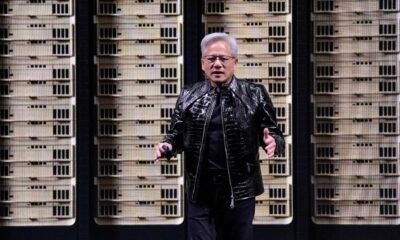
Donald Trump is facing mounting bipartisan criticism after claiming he personally persuaded Nvidia’s board to reinstate Jensen Huang as chief executive, triggering fresh questions about national security, political influence and the administration’s relationship with the artificial intelligence industry.
Nvidia confirmed that Jensen Huang had returned as president, CEO and board director following a unanimous board vote. The decision came just days after the company had reportedly rejected his offer to resume leadership following his departure on November 12.
Trump subsequently told CNBC that he had spoken with Nvidia directors and convinced them to bring Huang back. His intervention has now placed the White House, one of America’s most valuable technology companies, and its controversial leadership decision under intense scrutiny.
The controversy is particularly significant because Huang is scheduled to face questions from congressional committees in December, with lawmakers already demanding explanations about the administration’s involvement.
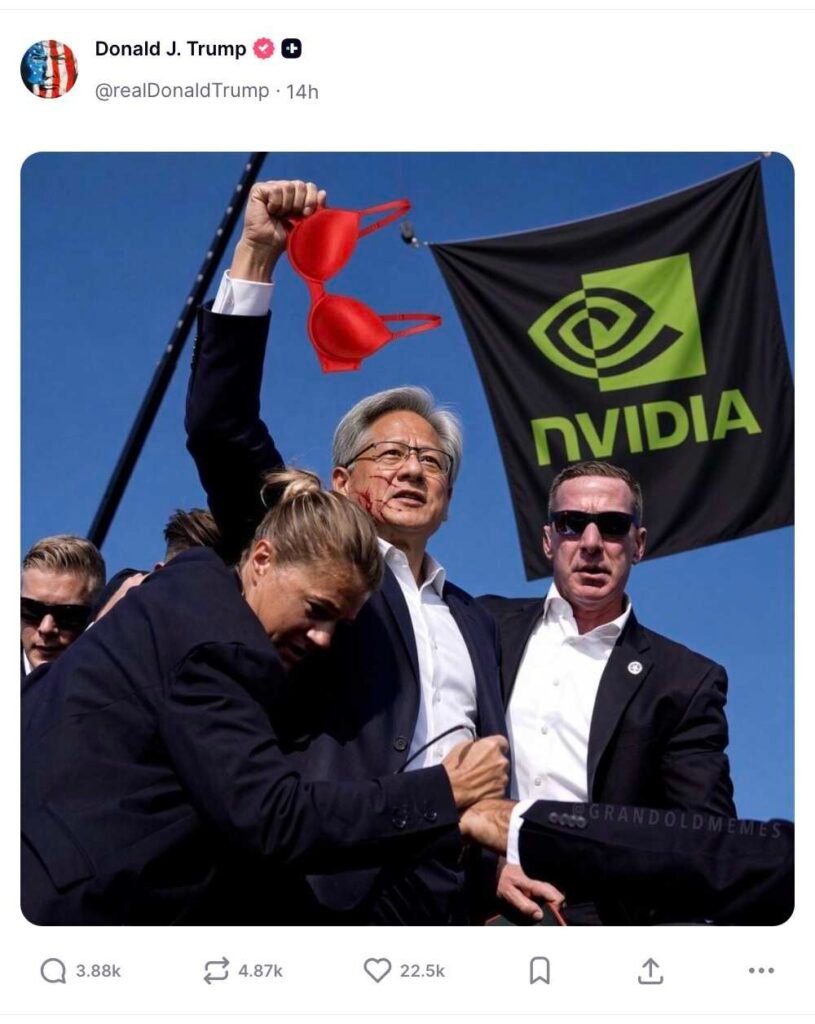
Donald Trump on Truth Social
Trump Claims He Persuaded Nvidia Board to Reinstate Jensen Huang
Speaking to CNBC, Donald Trump defended the decision and praised Nvidia’s board for what he described as responsible action. He said the directors had sought assurances about potential national security concerns before approving Huang’s return.
Trump argued that losing Jensen Huang would represent a greater threat to America’s technology leadership than allowing him to remain in charge.
Asked whether Nvidia’s falling share price influenced his intervention, the president acknowledged that it probably did.
Nvidia’s board said it had unanimously approved Jensen Huang’s reinstatement after discussions and meetings that satisfied directors about his candor and leadership capabilities. Chairman Harvey C. Jones said the decision was in the best interests of shareholders, employees, business partners and customers.
The company also confirmed that senior US government officials had provided input during the process. Based on that information, the board said it was confident that Huang’s return did not create a national security risk.
Nvidia added that its investigation into reports that Huang had been targeted by a foreign intelligence effort would continue. The company has established an independent committee to oversee the investigation, alongside a separate committee focused on national security and export controls.
View this post on Instagram
Nvidia Faces Political Backlash Over National Security Questions
Trump’s involvement has drawn criticism from both Democrats and Republicans, with several lawmakers questioning whether commercial interests have influenced decisions involving national security.
Hakeem Jeffries, expected to become House Speaker when Democrats take control in January, described the reinstatement as indefensible and irresponsible. He promised a comprehensive congressional investigation into the decision and the administration’s role.
Senator Elizabeth Warren, who is expected to chair the Senate Banking Committee, also criticized the move. She demanded that the administration disclose what information government officials provided to Nvidia’s board and identify the senior officials involved.
Republican Representative Don Bacon argued that Nvidia should have moved forward without Huang rather than responding to pressure from the administration. He warned that America’s ambition to lead the artificial intelligence race must not come at the expense of technology security.
Senator Tom Cotton, chairman of the Senate Intelligence Committee, also cautioned that the controversy surrounding Nvidia and its Singapore-based customer Megaspeed remained unresolved despite Huang’s return.
The US Commerce Department’s announcement that it was preparing to blacklist Megaspeed has added another layer to the growing dispute. The company was reportedly led by Alice Huang, a woman the supplied reports allege has links to Chinese intelligence. Those allegations should not be treated as established findings.
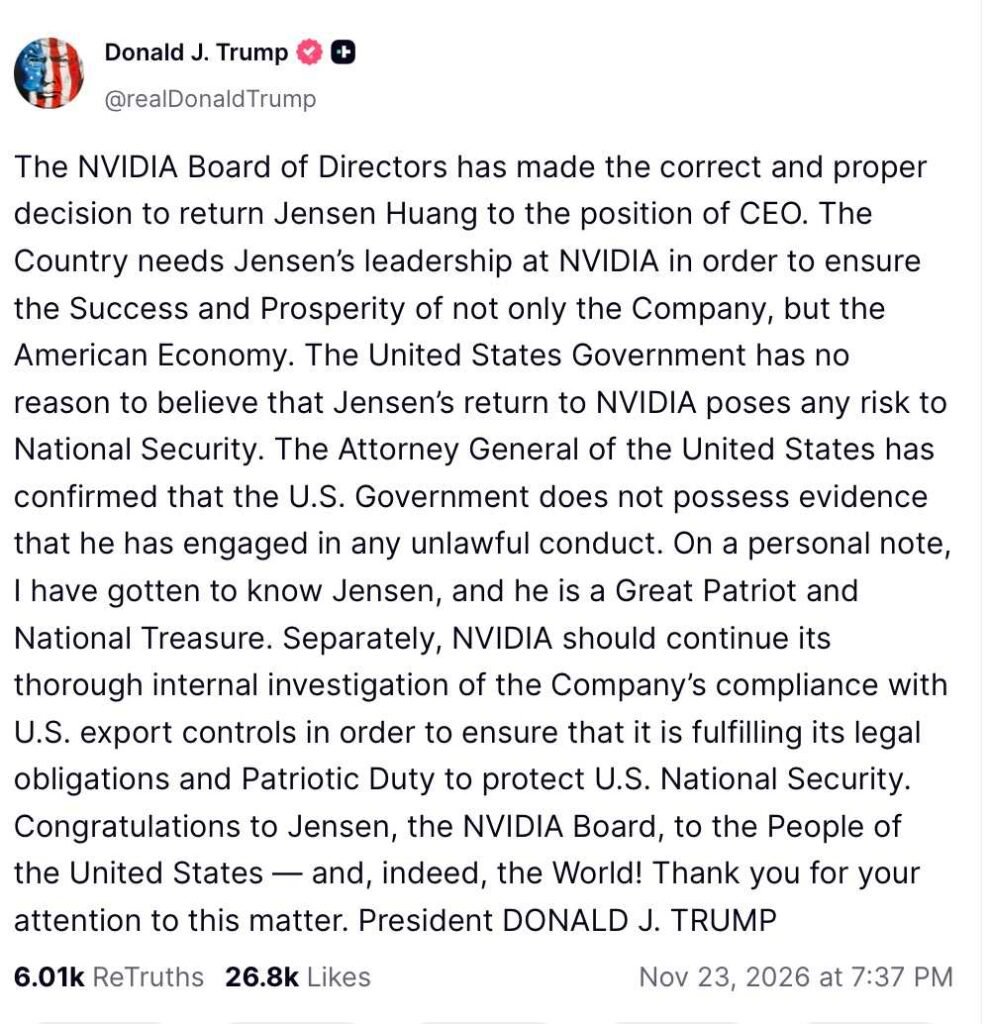
Donald Trump on Jensen Huang Reinstatement
Congress Prepares to Question Jensen Huang
Jensen Huang’s return does little to remove the political pressure surrounding Nvidia. He is scheduled for a closed-door interview with three House committees on December 1. Two days later, he has been asked to testify before the Senate Banking Committee.
The hearings are expected to bring renewed attention to US semiconductor export restrictions, the protection of advanced artificial intelligence technology and the risks associated with overseas business relationships.
Nvidia has also announced plans to appoint a chief compliance officer to oversee company-wide compliance and report to its governance committee.
Trump’s Nvidia Investments Add Another Layer of Controversy
The president’s financial disclosures have created additional questions about his intervention.
According to the supplied report’s review of government disclosures, Trump has purchased Nvidia shares repeatedly through multiple investment accounts. The reported value of those purchases falls within a broad range of $23 million to $86 million.
The disclosures also indicate that he has sold portions of his Nvidia holdings since returning to the White House, generating reported proceeds of between $3.5 million and $10.2 million.
The figures have attracted attention because Nvidia’s share price reportedly plunged following Huang’s departure before surging after his reinstatement. The recovery reportedly added nearly $1 trillion to the company’s market value, although the stock’s closing price was still slightly below its Friday morning opening level.
Trump and the White House have repeatedly denied that the president has profited from his position. The administration has also said his business interests are held in a trust managed by his sons.
With Huang preparing to face Congress, the controversy is far from over. The central question now extends beyond Nvidia’s leadership: lawmakers want to know whether the White House’s intervention was driven by national security considerations, economic concerns, or the financial consequences of a falling technology stock.