





News
Erdogan Secures Major Saudi Energy Deal at COP31 as Six Global Leaders Arrive for High-Stakes Talks
Türkiye signs a new electricity cooperation agreement with Saudi Arabia as Erdogan uses the COP31 summit to strengthen diplomatic ties and push a major renewable energy agenda.

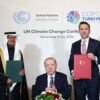
Turkish President Recep Tayyip Erdogan has turned the COP31 climate summit into a major diplomatic and energy platform, holding meetings with six international leaders and senior officials while overseeing a new electricity agreement with Saudi Arabia.
The agreement, signed in Antalya on Tuesday, November 10, advances plans for a second phase of renewable energy projects with a targeted capacity of 3,000 megawatts. The developments came as world leaders and climate delegates gathered in Türkiye for discussions on energy transition, transport and climate action.
Erdogan’s meetings included UN Secretary-General Antonio Guterres, Saudi Energy Minister Prince Abdulaziz bin Salman, Ethiopian Prime Minister Abiy Ahmed Ali, Brazilian President Luiz Inacio Lula da Silva, Bangladesh’s Prime Minister Tarique Rahman and Turkmenistan’s Gurbanguly Berdimuhamedov, chairman of the country’s People’s Council.
The diplomatic activity placed Türkiye’s energy ambitions and international partnerships at the center of the conference ahead of the Leaders’ Summit.
Türkiye and Saudi Arabia Advance 3,000 MW Renewable Energy Plan
The biggest announcement of Erdogan’s meetings was the electricity cooperation agreement between Türkiye and Saudi Arabia.
Turkish Energy Minister Alparslan Bayraktar and Saudi Energy Minister Prince Abdulaziz signed a memorandum of understanding in the Turkish president’s presence. It advances a second phase of projects targeting 3,000 megawatts of renewable electricity generation.
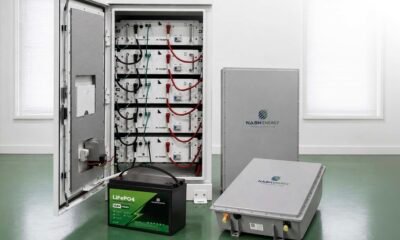
The proposed projects are expected to combine wind power plants with high-voltage direct-current transmission infrastructure and battery storage systems.
The agreement builds on an intergovernmental arrangement signed in Riyadh on February 3, which came into force on October 21. That earlier framework provides for 5,000 megawatts of renewable energy projects developed by Saudi company ACWA Power.
The first phase involves approximately 2,000 megawatts of solar capacity in the Turkish provinces of Sivas and Karaman.
No financial value was disclosed for the latest agreement. Bayraktar said the objective was to convert international confidence in Türkiye’s energy transition into tangible projects.
Erdogan Meets Six Leaders as COP31 Becomes a Diplomatic Hub
Erdogan’s meeting with Guterres focused on climate cooperation and wider international issues, including Gaza, Cyprus and Libya. The Turkish president also discussed efforts to reduce tensions between Iran and the United States and expressed readiness to support renewed dialogue concerning the Russia-Ukraine war.
During talks with Ethiopia’s Prime Minister Abiy Ahmed Ali, Erdogan congratulated the country on hosting COP32. Both sides discussed expanding trade and investment cooperation, as well as regional peace and stability.
Brazilian President Lula da Silva also met Erdogan, with discussions covering trade, defense industry cooperation and the countries’ diplomatic relationship, which will mark its 100th anniversary in 2027.
Erdogan said Türkiye wanted to build on Brazil’s experience during its COP30 presidency, while positioning COP31 around implementing commitments made at earlier climate conferences.
In talks with Bangladesh’s Tarique Rahman, the Turkish president highlighted the humanitarian situation in Cox’s Bazar, where Rohingya refugees are based. Flood management and resilient infrastructure were also discussed as priorities.
Erdogan later hosted Turkmenistan’s Berdimuhamedov for dinner, calling for stronger cooperation in energy, trade, defense and investment.
COP31 Puts Electrification and Energy Security in the Spotlight
The conference’s second day focused on Energy and Transport, with approximately 370 sessions scheduled, including 140 dedicated to those subjects.
Türkiye promoted its proposed 35×35 target, which aims to increase electricity’s share of final energy consumption from around 23% to 35% by 2035.
Guterres urged governments to move beyond climate commitments and focus on financing and delivering the transition away from fossil fuels. The European Union co-hosted an Electrification Forum, while the Powering Past Coal Alliance announced partnerships intended to unlock more than $23 billion for coal phase-out programs in developing countries.
Other initiatives included an Australian-led rooftop solar declaration targeting 300 million solar-powered households by 2030 and a coalition ambition to raise electricity’s share of shipping energy to 20% by 2035.
The Global Carbon Project projected that fossil fuel-related carbon dioxide emissions could decline by 0.4% in 2026 to 38.2 billion tonnes, although its forecast range allows for a small increase.
COP31 Faces Transport Disruptions as Leaders Arrive
Despite the diplomatic momentum, conference organizers faced logistical challenges. More than 68,500 participants registered for the summit, alongside approximately 24,500 workers.
Crowded buses and trams disrupted travel to the venue, located around 25 kilometers from central Antalya. Some events were rescheduled, and organizers warned of further disruption, advising delegates arriving on Wednesday to reach the venue by 7 a.m.
Forty-two leaders were expected to address the summit on Wednesday afternoon, including Lula, European Commission President Ursula von der Leyen and Chinese Vice President Han Zheng.
The conference continues until November 20. While the Saudi electricity agreement represents a concrete bilateral development, the wider climate pledges remain voluntary initiatives rather than negotiated COP31 outcomes.
For Türkiye, the summit is emerging as an opportunity to combine climate diplomacy with energy investment and stronger international partnerships.