




News
Solar Eclipse 2026: When to Watch, Where to See It and How to Protect Your Eyes
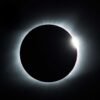
People in Iceland, Greenland, northern Russia, Spain and parts of Portugal are expected to experience a total solar eclipse, meaning the Moon will completely cover the Sun’s visible disk. NASA plans to deploy scientific instruments, including balloons and a high-altitude aircraft, to examine atmospheric changes during the eclipse.

Skywatchers across Europe and parts of the United States are preparing for a rare solar eclipse on Wednesday, August 12, with some locations set to experience total darkness and others a dramatic partial eclipse.
A solar eclipse occurs when the Moon moves between Earth and the Sun, temporarily blocking some or all of the Sun’s light. The extent of the eclipse depends on the observer’s location.
People in Iceland, Greenland, northern Russia, Spain and parts of Portugal are expected to experience a total solar eclipse, meaning the Moon will completely cover the Sun’s visible disk.
Parts of the northern United States, stretching from Alaska toward North Carolina, will instead experience a partial solar eclipse.
London Could See Up to 90% of the Sun Covered
London is among the locations expected to witness a particularly deep partial eclipse. Around 90% of the Sun could be obscured from the UK capital, according to Royal Museums Greenwich.
The event is expected to be the most significant solar eclipse visible from the UK since 1999. Although the Moon will cover most of the Sun in London, the event will not produce the complete darkness associated with totality.
The eclipse is expected to begin in London at approximately 6:17 p.m. BST, reach its maximum at around 7:12 p.m., and finish at approximately 8:06 p.m.
Because the event occurs late in the day, observers are advised to find locations offering a clear view toward the west or west-northwest.
Best Places to Watch the Eclipse in London
Several elevated or open locations could provide good views of the eclipse, particularly where buildings do not obstruct the horizon.
Potential viewing locations include Primrose Hill, Parliament Hill, Alexandra Palace, Telegraph Hill, Crystal Palace Park and Greenwich Park.
Greenwich Park is also expected to host a public viewing session near the Dolphin Sundial, with the Royal Observatory and the Flamsteed Astronomy Society involved in organised activities.
Astronomical societies elsewhere in London are also planning viewing events, including sessions around Kenley Airfield, Warlingham, Addiscombe, Chingford and Theydon Bois.
Eclipse Viewing Requires Special Eye Protection
Experts are warning skywatchers not to look directly at the Sun without appropriate protection.
Even when much of the Sun is covered, the remaining visible sunlight can cause serious retinal damage. Ordinary sunglasses do not provide sufficient protection.
Royal Museums Greenwich recommends using ISO 12312-2-certified eclipse glasses or other approved solar-viewing equipment.
People without suitable glasses can also observe the eclipse indirectly using a pinhole projector. A simple household colander can create multiple projected images of the eclipsed Sun when its shadow is viewed on a suitable surface.
Those planning to photograph the event with a smartphone should also take precautions. A solar filter should be placed over the camera lens, rather than pointing an unprotected camera directly at the Sun.
Scientists Will Study the Sun During the Eclipse
The solar eclipse is not only an opportunity for the public to observe a rare astronomical event. Scientists will also use the temporary darkness to study the Sun and Earth’s atmosphere.
NASA plans to deploy scientific instruments, including balloons and a high-altitude aircraft, to examine atmospheric changes during the eclipse.
A total solar eclipse offers researchers an especially valuable opportunity to study the Sun’s corona, the outer atmosphere that is normally difficult to observe because of the Sun’s intense brightness.
When Is the Next Solar Eclipse?
The next major opportunities will arrive in the coming years. A partial solar eclipse will be visible from parts of the United States on August 2, 2027, while totality will cross areas of Spain, the Middle East and North Africa.
For the contiguous United States, another total solar eclipse is expected on August 23, 2044.
In the UK, another deep partial eclipse will not occur until 2050, while the next total solar eclipse visible from the country is not expected until 2090.
For viewers hoping to catch this year’s event, the message is simple: choose an unobstructed location, check the local timing and, most importantly, never look directly at the Sun without certified solar protection.