









Business
Tulu Health Launches AI-Powered Longevity OS as It Targets U.S. Healthcare Expansion
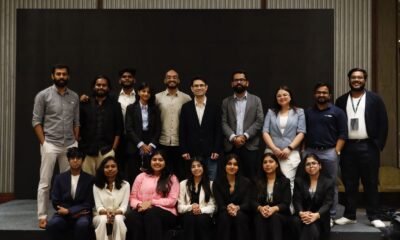
Tulu Health is taking its AI-powered healthcare platform into the fast-growing longevity economy with a new operating system designed to turn patient data into daily actions, boost engagement and help clinics protect revenue.
The healthcare industry is generating more patient data than ever from laboratory reports and clinical records to wearable devices and digital engagement. But for longevity and preventive-health clinics, the bigger challenge is increasingly what to do with that information.
Indian healthcare technology company Tulu Health believes artificial intelligence can close that gap.
The company has launched Longevity OS, an AI-native platform designed to unify fragmented healthcare data and convert it into actionable tasks for care teams. At the same time, Tulu Health is preparing to expand its presence in the United States, one of the world’s largest healthcare and longevity markets.
AI That Does More Than Report Data
Tulu Health’s pitch is straightforward: healthcare providers need technology that doesn’t just tell them what happened, but helps them decide what to do next.
Tulu Health’s Longevity OS brings together clinical, laboratory, wearable, and patient-engagement information to create what the company calls a unified patient twin.
The system then uses artificial intelligence to identify patients who may be at risk of disengaging before they reach renewal.
Those insights can be activated through AI voice calls, SMS and other communication channels, creating automated workflows for clinics and their teams.
For longevity practices, where long-term patient engagement and recurring care can be critical to business performance, the technology aims to connect clinical intelligence with day-to-day operations.
From Healthcare Automation to Longevity
Tulu Health was founded by physician entrepreneur Dr. Adil Khan, who holds an MBBS from Delhi University and a fellowship from Stanford-India Biodesign.
The company’s engineering team includes professionals with experience at Innovaccer, a U.S. healthcare technology company valued at more than $3 billion.
Unlike many healthcare startups that have relied heavily on venture funding during their early growth, Tulu Health says it has been fully bootstrapped since inception.
The company currently supports more than 40 healthcare sites and 500 providers across four countries the United States, United Arab Emirates, Malaysia and India.
Its AI systems have also automated more than 100,000 healthcare operational tasks, while the company reports year-on-year growth of more than 90%.
Longevity OS represents the company’s move to apply that operational expertise to preventive healthcare and longevity clinics.
The Longevity Economy Is Getting Bigger
The launch timing reflects a broader transformation in healthcare.
Consumers are increasingly spending on preventive health, personalized wellness, diagnostics, fitness, nutrition, and longevity services. For clinics operating in this space, retaining patients can be just as important as acquiring them.
Tulu Health argues that fragmented data can make it difficult for healthcare teams to recognize when a patient is becoming disengaged.
Longevity OS is designed to flag those signals earlier and generate a daily workflow for providers.
“Longevity is the next frontier in healthcare,” said Dr. Adil Khan, adding that the company’s ambition is to support more than 30,000 clinics by helping providers turn patient data into timely action and stronger engagement.
Doctors Say the Difference Is Action
Practitioners are also highlighting the platform’s value proposition.
Dr. Luke Sorrell, MD, FACP, founder of SorrellMD, a longevity clinic, described the distinction between conventional analytics and Tulu’s approach as the ability to operate rather than simply report.
For healthcare providers, that could mean moving from dashboards filled with information to automated daily work queues that identify which patients require attention.
The company is also targeting another major pain point: healthcare finances.
A.S. Pillai, former Group CFO and CEO of banks and hospital chains across the Middle East, said Tulu Health is addressing financial sustainability through improved cash flow, reduced revenue leakage and greater predictability.
U.S. Expansion Could Be the Big Test
Tulu Health is now preparing for its first institutional financing round, with the capital expected to support U.S. market expansion and further product development.
The United States will be a critical test for the company’s ambitions.
The country’s highly fragmented healthcare ecosystem, sophisticated digital-health market and growing interest in longevity medicine create a potentially large opportunity — but also a highly competitive environment.
Tulu’s existing international footprint gives it experience operating across multiple healthcare markets. Its next challenge will be scaling that model in the U.S. while maintaining the clinical and operational performance that has driven its growth so far.
If successful, Longevity OS could position Tulu Health at the intersection of AI healthcare, preventive medicine and the emerging longevity economy.
The company’s larger bet is that the future of healthcare will not simply be about collecting more data.