







Book Adaptation
Jenna Ortega’s New Sci-Fi Movie Gets Mixed Reviews Despite Taika Waititi’s Star Power

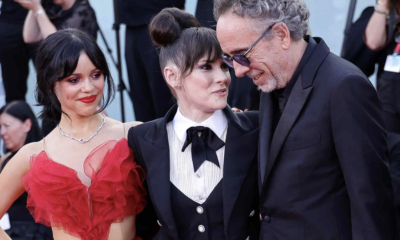
Jenna Ortega is taking on one of her most unusual roles yet, but her latest film is already dividing audiences and critics. Klara and the Sun, directed by Taika Waititi and adapted from Nobel Prize-winning author Kazuo Ishiguro’s 2021 novel, has drawn criticism for turning a thought-provoking science-fiction story into an overly sweet, emotionally heavy drama.
Many reviews have awarded the film two out of five stars, arguing that its exaggerated humor and sentimental storytelling undermine the ideas at the heart of Kazuo Ishiguro’s book. The criticism puts Taika Waititi’s latest project under scrutiny, particularly given the director’s reputation for blending eccentric comedy with emotional storytelling.
The film opens in theatres on October 23, 2026, according to the supplied release information.
Why Critics Are Turning Against Jenna Ortega’s Klara and the Sun
Jenna Ortega plays Klara, an artificial companion designed to befriend teenagers. After spending her early existence in a store alongside other androids, Josie chooses her, a teenage girl dealing with serious health challenges and a complicated family situation.
Klara approaches the world with curiosity and an unusually literal understanding of human behavior. She also believes the sun has a mysterious power that can help the people she loves.
The premise offers opportunities to explore artificial intelligence, emotional dependence, and the boundaries between human and machine. However, the critical response argues that the film leans too heavily on broad comedy and obvious emotional cues instead of developing these themes.
Jenna Ortega’s performance has also attracted criticism. Her exaggerated expressions and physical mannerisms are intended to communicate Klara’s unfamiliarity with the human world, but critics argue that the approach becomes distracting rather than convincing.
The result is a performance that has become one of the film’s most debated elements.
Taika Waititi’s Humor May Be the Film’s Biggest Problem
Waititi has built a distinctive career by mixing irreverent comedy with unexpectedly emotional stories. His 2016 film Hunt for the Wilderpeople and Marvel’s Thor: Ragnarok demonstrated how effectively his humor can work when balanced with character development.
However, his approach drew a more divided response with Thor: Love and Thunder, and the criticism surrounding Klara and the Sun raises similar questions about whether his comic instincts overwhelm the material.
Kazuo Ishiguro’s novel is a restrained examination of loneliness, mortality and the human desire to connect. The film reportedly adds slapstick moments, exaggerated supporting characters and sentimental scenes that some critics believe weaken its more serious ideas.
The screenplay, co-written by Taika Waititi and Dahvi Waller, also faces criticism for leaving its dystopian setting underdeveloped. References to a devastating global conflict and the disappearance of the internet hint at a transformed society, but the film reportedly spends little time examining the consequences.
Amy Adams and Mia Tharia Add Emotional Weight
The supporting cast includes Amy Adams as Josie’s mother, Chrissie, and Mia Tharia as Josie. Rachel House and Aran Murphy also appear.
Chrissie initially seems emotionally distant, but her character gradually reveals deeper grief and fear about her daughter’s future. Meanwhile, Josie’s illness and complicated relationships provide the emotional foundation for Klara’s determination to help her.
According to the critical response, the film becomes increasingly sentimental as the story progresses. Josie also reportedly becomes less central as the narrative shifts towards Klara’s attempts to protect her.
That imbalance matters because the relationship between the android and the teenager should be the film’s emotional center.
Kazuo Ishiguro’s Novel Raises Bigger Questions About AI
The adaptation arrives at a time when artificial intelligence is generating renewed debate about companionship, emotional attachment and the possibility of machines simulating human relationships.
Ishiguro’s novel explores these questions through Klara’s limited understanding of the world. Rather than presenting straightforward answers, the story examines how people interpret love, loss and consciousness.
The film’s reception suggests that translating those themes into cinema is challenging. A story that works through quiet observation and ambiguity can lose some of its power when adapted with a more overtly comic or sentimental approach.
Nevertheless, the divided response is not the whole story. Some younger viewers reportedly responded enthusiastically to the film during its festival run, highlighting the subjective nature of its emotional appeal.
For now, Klara and the Sun stands as a potentially divisive addition to Waititi’s filmography. Ortega’s star power and Ishiguro’s literary reputation may attract audiences, but whether the film’s blend of science fiction, comedy and melodrama ultimately works will depend on viewers’ expectations.