




Analysis
EU elections: how Italy’s far-right leader Giorgia Meloni framed her politics
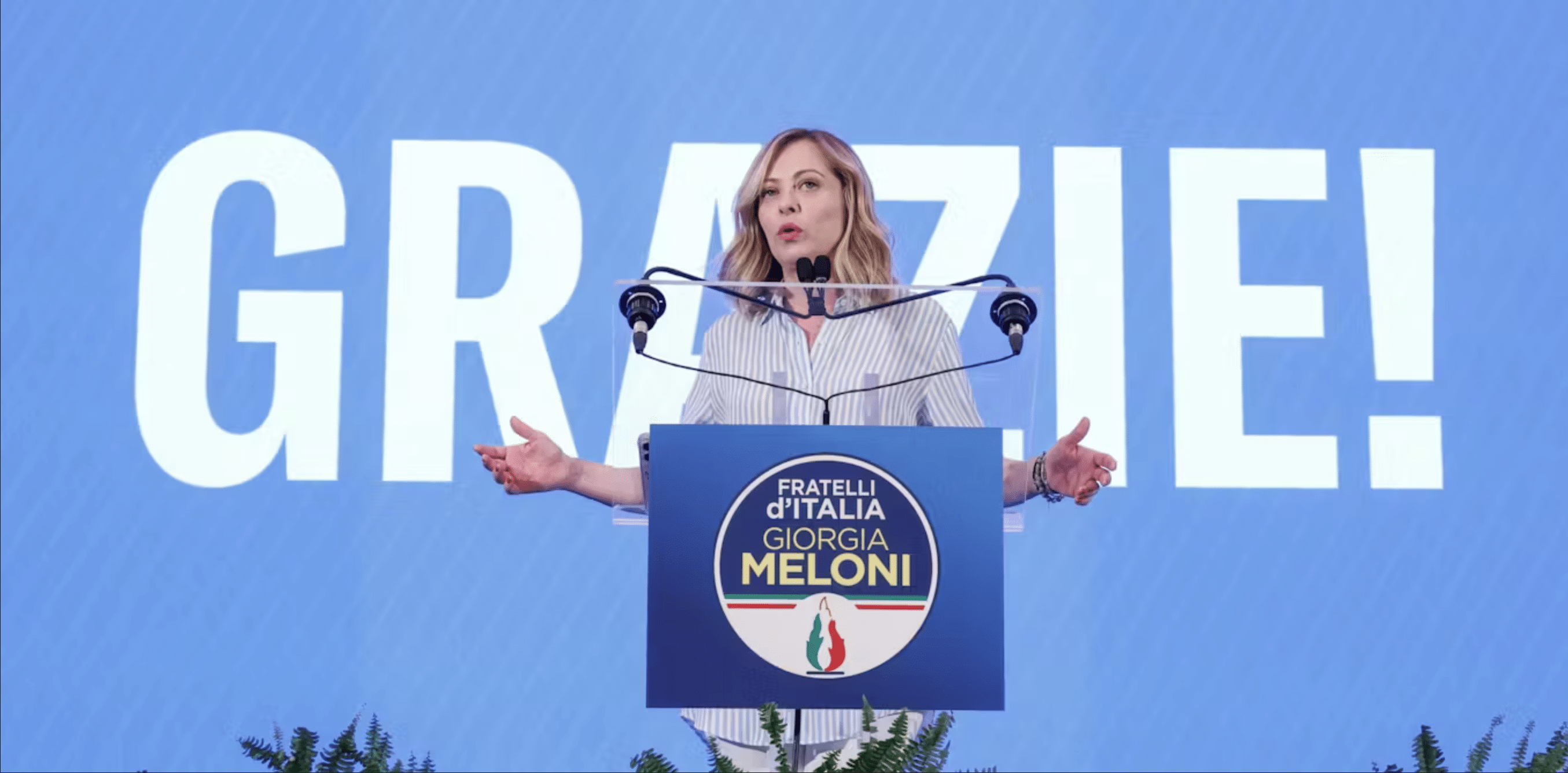
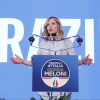
Brothers of Italy, a far-right party with neo-fascist roots, has won over 28% of Italy’s vote in the European parliamentary elections. The party is expected to get 24 seats in parliament, quadrupling what it took in 2019. Italian Prime Minister Giorgia Meloni has led the party since 2014.

Brothers of Italy, a far-right party with neo-fascist roots, has won over 28% of Italy’s vote in the European parliamentary elections. The party is expected to get 24 seats in parliament, quadrupling what it took in 2019. These results in Italy reflect broader gains for far-right parties in several EU member states. Italian Prime Minister Giorgia Meloni has led the party since 2014. She now plays the role of “kingmaker,” holding the balance of power between the center-right and far-right groupings in the European Parliament.
Elections to the European Parliament are of comparatively less importance than national elections. They are characterized by low voter turnout, so the results should not be viewed as a widespread popular endorsement of Meloni’s politics.
However, an increased far-right presence in the European Parliament could have a severe impact on the EU’s policy agenda. Moreover, the discourse in these campaigns also plays a key role in shifting the range of policies voters find acceptable toward the far right.
The EU has long been a useful ideological resource for far-right parties, allowing them to reframe their exclusionary politics as more acceptable and in defense of Europe. Meloni’s pre-election social media campaign proved no exception.
In the days and weeks leading up to the polls, her party’s social media posts centered on two key messages: “scrivi Giorgia” (write Giorgia) and “L’Italia cambia l’Europa” (“Italy changes Europe”).
The first takes its cue from Meloni’s instruction to voters at the official launch of her campaign in April to “just write Giorgia” on their ballot. She stated that, despite being prime minister, she will “always be one of the people”. This attempt to personalize politics and merge party and nation-state was meant to lend her far-right ideas the veneer of popular legitimacy.
The second was the Brothers of Italy’s party slogan for the European elections. It encapsulates, or so the party argues, a “pragmatic and non-ideological vision”. This specious claim, however, was immediately betrayed by the party’s pledge to “defend [Europe’s] identity from every cultural subjugation that sees Europe renounce its history to adopt that of others”.
This thinly veiled Islamophobic and racist statement hints at the so-called “great replacement”, a racist conspiracy theory that white European populations are being deliberately replaced by non-white migrants. Italy’s minister of agriculture (and Meloni’s brother-in-law), Francesco Lollobrigida, has endorsed the theory.
Meloni’s calculated ambivalence
“Just write Giorgia” and “Italy Changes Europe” are deliberately vague slogans. They convey a double message that pushes the limits of what political rhetoric is acceptable. This is a well-worn trope of the far right that enables the mainstreaming of reactionary politics.
Meloni gained prominence at a 2019 rally where she dog-whistled towards anti-gender, anti-LGBTQ+, and racist or Islamophobic politics. At the rally, she declared: “I am a Giorgia, I am a mother, I am Christian, and you cannot take that away from me.”
In a similar way, the seemingly innocuous messages of “just write Giorgia” and “Italy changes Europe” serve as a cover for pledges to repatriate migrants and stop boat landings. These pledges, which were central to Meloni’s campaign, sustain the status quo of racialized borders while endorsing the great replacement conspiracy.
Further accompanying these slogans are pro-natalist and anti-surrogacy politics, which depict gender-normative models as the “traditional” European family. The Meloni government has tightened norms against same-sex couples by demanding local councils only list biological parents on birth certificates. It has also passed legislation that criminalizes surrogacy abroad. These measures disproportionately affect LGBTQ+ families.
At the same time, it should not be forgotten that Meloni maintains a “tacit connection with the fascist regime” via nods towards Italy’s fascist past and her continued use of the tricolor flame. This was the logo used by her neo-fascist predecessors, the Italian Social Movement.
Meloni’s shifting of her extreme rhetoric to the European level gives the lie to the popular narrative that there are two sides of Giorgia Meloni: one that uses a more radical tone in domestic politics and another that adopts a more moderate tone abroad.
Yet, despite the far-right dog-whistling of her social media campaign, Meloni has been courted not only by French far-right leader Marine Le Pen but also by the current EU Commission chief, Ursula von der Leyen.
They are both attempting to woo her into supporting their respective Identity and Democracy and center-right European People’s Party parliamentary groupings. Le Pen’s reconfiguration of the far-right in the European Parliament needs Meloni’s support. Meanwhile, von der Leyen is relying on the backing of the Italian prime minister in her bid for re-election.
Attacks on “Brussels bureaucrats” have often been a key feature in far-right messaging leading up to European parliamentary elections. But they were largely absent from Meloni’s campaign.
On the one hand, this reflects Meloni’s willingness to toe the EU line and work with von der Leyen on several issues. But, on the other, it shows how the lines between the mainstream and far-right have become increasingly blurred.
Meloni’s far-right views, which she has depicted as “non-ideological pragmatism” or “center-right conservatism”, are now being parroted by centrist political commentators. And von der Leyen, as a representative of the liberal mainstream, has promoted policies on migration that imitate and draw praise from the far right.
Meloni’s gains in these elections may not pose an immediate threat to the EU establishment. But this is scant consolation to those at the sharp end of her politics, which many in Brussels are quickly accommodating and mainstreaming.
Whether Meloni is more receptive to the overtures of Le Pen or von der Leyen, therefore, barely seems relevant when her unacceptable politics continue to be widely accepted.
George Newth, Lecturer in Politics and member of Reactionary Politics Research Network, University of Bath
This article is republished from The Conversation under a Creative Commons license. Read the original article.


Disclaimer: The views and opinions expressed in this article are those of the authors and do not necessarily reflect the official policy or position of the publication



















































Pingback: RN party's Marine Le Pen’s Conviction, is it a Far-Right War Cry?
Pingback: Giorgia Meloni Moves to Ban Burqas and Niqabs in Italian Schools