


immigration Politics
Italy’s Meloni Announces School Crackdown on Burqas, Niqabs and Foreign Students

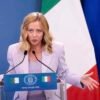
Italy is preparing a major new package of school measures after Prime Minister Giorgia Meloni announced plans to ban burqas and niqabs in schools, limit foreign pupils in classrooms, and require some parents of foreign students to learn Italian.
The proposals were announced at a youth event organized by Meloni’s Brothers of Italy party in Rome. They are not yet law: the measures would first need government approval, then parliamentary approval, before taking effect.
Meloni Targets Face Coverings in Schools
The proposed legislation would specifically target full-face coverings, including the burqa and niqab. A burqa traditionally covers the entire body and includes a mesh covering the eyes, while a niqab covers the face but leaves the eyes visible. The hijab, which leaves the face uncovered, is not covered by the proposal.
Italy does not currently have an explicit nationwide ban on burqas or niqabs. Existing rules dating back to 1975 restrict garments that make identification difficult, although subsequent legal interpretations have allowed religious or cultural coverings in certain circumstances provided the face can be revealed for identification.
Giorgia Meloni said the government would soon bring the new measures before the cabinet.
Foreign Students Could Face New Classroom Limits
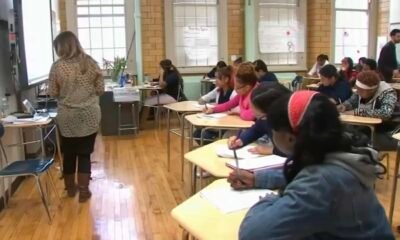
The announcement also includes plans to limit the number of foreign students in individual classes.
The government has not yet specified the precise new limit. Italy, however, has already had a 30% guideline for non-Italian pupils since 2010, although the rule has not always been strictly applied because of local demographic and practical considerations. Foreign students currently account for roughly 12% of enrolment nationally.
Meloni also proposed compulsory Italian-language lessons for parents of foreign pupils who are considered to be experiencing serious difficulties integrating into the Italian school system.
“For us, anyone who comes to Italy and wants to build their future here must learn our language, understand our culture, and respect our rules,” Giorgia Meloni said at the Rome gathering.
Italy’s Election Politics Add Pressure
The proposals arrive as immigration and integration remain major political issues in Italy ahead of the next general election.
Meloni’s government has also faced competition from politicians and parties further to the right. Retired general and MEP Roberto Vannacci has backed tougher restrictions on full-face coverings, while his political movement has pushed related proposals.
The timing has therefore placed the school measures firmly within Italy’s wider debate over migration, national identity and integration.
Legal Questions Could Follow
The proposed foreign-pupil restrictions are already attracting scrutiny from legal experts and opposition politicians.
Constitutional law professor Salvatore Curreri told ANSA that Italy’s Constitution establishes that schools are open to everyone, including foreign children. He cautioned that restrictions could raise constitutional questions if they forced children and families to relocate and interfered with the broader goal of integration.
Opposition politician Angelo Bonelli has also criticized the government’s approach, arguing that the focus should instead be on broader problems facing Italy’s education system.
The debate is likely to intensify once the government publishes the detailed legislation, particularly over how a new classroom limit would interact with the existing 30% framework and constitutional protections.
Italy Joins Wider European Face-Veil Debate
Italy would not be the first European country to restrict full-face coverings.
France, Belgium, Denmark, Austria, the Netherlands and Switzerland have introduced varying restrictions on face coverings, while Germany has narrower rules applying to particular occupations and circumstances. Portugal also completed legislation banning face coverings in public spaces in 2026.
For now, Meloni’s proposals remain subject to the Italian legislative process. The coming cabinet and parliamentary debates will determine the exact scope of the measures and whether they become enforceable law.