




Trump Presidency
Small Businesses Sue Trump Administration Over New Global Tariffs

Two American companies have launched a legal challenge against the administration of Donald Trump, arguing that the government’s latest tariffs on imported goods are unlawful.
The lawsuit, filed in New York, challenges a 10% global tariff on imports that the administration introduced after earlier tariffs were struck down by the Supreme Court of the United States.
The case was brought by spice importer Burlap & Barrel and toy company Basic Fun, which claim the tariffs could harm small businesses and increase costs for American consumers.
Small Businesses Say Tariffs Hurt U.S. Companies
According to the complaint, the Trump tariffs place a heavy burden on smaller companies that rely on imported goods to operate.
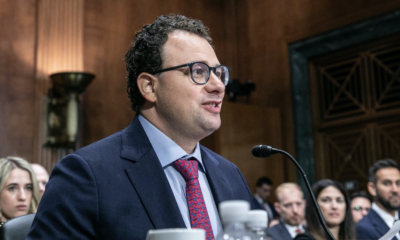
Ethan Frisch, co-founder of Burlap & Barrel, said the policy could disrupt global supply chains and make products more expensive in the U.S. market.
He argued that the tariffs primarily hurt American importers and their customers rather than foreign governments.
Small businesses often have fewer resources to absorb sudden cost increases, making them particularly vulnerable to changes in trade policy.
Legal Challenge Led by Liberty Justice Center
The lawsuit was filed by the Liberty Justice Center, a nonprofit legal organization that has previously challenged government policies related to trade and economic regulation.
Legal advocates say the case focuses on whether the administration has properly interpreted an existing trade law to justify the tariffs.
The plaintiffs argue that the government is misapplying a decades-old statute originally designed to address balance-of-payments problems, rather than ordinary trade deficits.
This lawsuit marks the first private legal challenge to the new tariffs.
View this post on Instagram
Supreme Court Ruling Set the Stage
The legal dispute follows a major ruling earlier this year from the Supreme Court that invalidated several tariffs imposed under the International Emergency Economic Powers Act (IEEPA).
That law historically allowed the U.S. government to respond to national emergencies but had rarely been used as a basis for tariffs.
The court concluded that the statute did not authorize the sweeping import taxes previously imposed by the administration, forcing policymakers to seek alternative legal pathways.
New Tariffs Based on a Different Trade Law
In response to the court’s decision, the administration introduced the new tariffs under Section 122 of the Trade Act of 1974, which allows limited tariffs to address balance-of-payments issues.
However, critics argue that the United States does not currently face the kind of monetary imbalance the law was designed to address.
Opponents say the administration is redefining the term “balance-of-payments deficit” to justify tariffs targeting trade deficits instead.
Wider Legal and Political Implications
The new lawsuit adds to a growing wave of legal challenges to the administration’s trade policies.
A coalition of 24 U.S. states has also filed a similar case questioning the legality of the tariffs.
Both cases are expected to be heard by the U.S. Court of International Trade, which specializes in disputes related to customs, tariffs, and global commerce.
Meanwhile, the federal government is still working through refund claims related to billions of dollars in tariffs invalidated by the Supreme Court’s earlier decision.
What Comes Next
The outcome of the case could have major implications for U.S. trade policy, international commerce, and the authority of the executive branch to impose tariffs.
If the court sides with the businesses, it could limit the administration’s ability to use existing laws to impose broad import taxes without congressional approval.
For small businesses and consumers alike, the ruling may determine whether the latest tariffs remain in place or face the same fate as earlier ones.











































Pingback: Trump’s Favorite Shoe Brand Florsheim Is Now Suing Him