







A24
‘The Drama’ Twist Explained: Why the Controversy Misses the Film’s Real Message

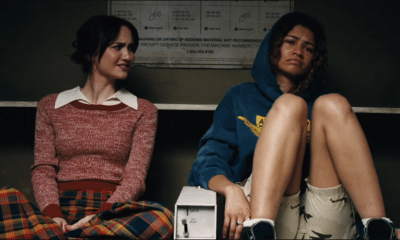
The latest film from A24, The Drama, starring Zendaya and Robert Pattinson, has ignited intense online debate, even before its theatrical release. Directed by Kristoffer Borgli, the film was marketed as a contemporary romantic comedy, but quickly became the center of controversy due to its shocking narrative twist.
Speculation on social media platforms, particularly Reddit, fueled outrage after alleged spoilers hinted at a deeply unsettling revelation involving Zendaya’s character, Emma. The backlash intensified when critics and commentators weighed in without having seen the film, turning The Drama into a lightning rod for online discourse.
The Twist That Sparked Outrage
At the heart of the controversy is a pivotal scene where Zendaya’s character, Emma. confesses to having had violent fantasies as a child, including thoughts of committing a school shooting, something she never acted upon. This revelation becomes the emotional and psychological catalyst for the film.
While the twist is undeniably provocative, its purpose is often misunderstood. Critics online have labeled it “distasteful” or “unnecessary,” but such reactions largely focus on the shock value rather than the narrative intent.
The film doesn’t glorify or justify violence. Instead, it uses the confession as a storytelling device to explore deeper emotional truths and moral dilemmas within relationships.
A Story About Love, Perception, and Uncertainty
Beneath its controversial surface, A24’s The Drama is fundamentally a story about intimacy and the unknowns that come with it. Pattinson’s character, Charlie, spirals into doubt after Emma’s confession, questioning everything he thought he knew about his partner.
The film raises uncomfortable yet universal questions:
-
Can you truly know another person?
-
How much of love is based on trust versus perception?
-
What does unconditional acceptance really mean?
Emma’s past becomes less important than Charlie’s reaction to it. His struggle reflects a broader human tendency to judge, fear, and project insecurities onto others—especially when confronted with unsettling truths.
Euphoria Season 3 Trailer Unleashes a Dark, Grown-Up Future for Zendaya and Company
Internet Backlash vs Cinematic Intent
Much of the controversy surrounding The Drama highlights a growing trend in digital culture—reacting before understanding. Early outrage, driven by partial information and viral speculation, overshadowed the film’s nuanced storytelling.
Director Borgli appears to intentionally challenge audiences by presenting a morally complex scenario. The twist is not the destination but the starting point for a deeper exploration of human relationships.
In fact, reducing the film to its most shocking moment undermines its core message. The narrative isn’t about the confession itself, but about how people process uncomfortable truths and whether love can survive them.
Ultimately, The Drama stands out not because of its controversy but because of its willingness to provoke meaningful conversation. It refuses to offer easy answers, instead presenting characters who grapple with ambiguity, fear, and emotional vulnerability.
In an era dominated by quick judgments and viral outrage, the film serves as a reminder that stories, and people, are rarely as simple as they seem.