









News
US Midterm Elections 2026: Trump’s Reckoning as Democrats Move to Take Control?
All 435 seats in the U.S. House of Representatives are being contested, along with 35 of the Senate’s 100 seats. Republicans currently control both chambers, leaving Democrats needing a net gain of three House seats and four Senate seats to take majority control.

Millions of Americans are heading to polling stations as the 2026 midterm elections threaten to deliver a major political setback for President Donald Trump. With control of both chambers of Congress at stake, Tuesday’s vote could determine how much freedom the Republican administration has to pursue its agenda during the final two years of Trump’s presidency.
Democrats enter Election Day with a reported nine-point advantage in the generic congressional ballot, according to CNN’s Poll of Polls. But turning that national polling lead into actual victories will be difficult, particularly in the Senate, where Republicans are defending a map dominated by traditionally conservative states.
Democrats Need Three House Seats and Four Senate Seats
All 435 seats in the U.S. House of Representatives are being contested, along with 35 of the Senate’s 100 seats. Republicans currently control both chambers, leaving Democrats needing a net gain of three House seats and four Senate seats to take majority control.
The House battle appears more favorable to Democrats, with dozens of competitive districts potentially determining the outcome. Republicans have attempted to strengthen their position through mid-decade congressional redistricting, but the strategy faces a crucial test as voters deliver their verdict.
The Senate contest is considerably more complicated. Democrats must defend competitive seats while attempting to flip Republican-held states, including Alaska, Iowa, Kansas, Maine, Ohio, South Carolina, and Texas.
Several races remain close enough that the final outcome is hard to predict.
Rising Gas Prices Put Trump Under Pressure
The economy and cost of living have emerged as central issues for voters. The conflict with Iran, which began in February, has pushed fuel prices higher, placing additional pressure on American households.
According to AAA figures cited in election coverage, the national average price of gasoline reached $4.15 per gallon on Election Day. A recent New York Times-Siena poll also found that nearly three-quarters of voters disapproved of Trump’s handling of gas prices.
Trump has repeatedly promised that fuel costs will fall, but the economic pressure has become a vulnerability for Republican candidates.
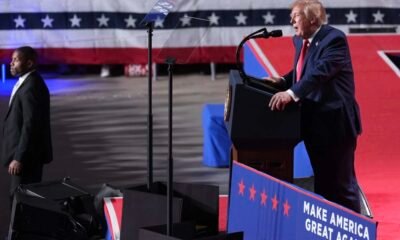
The president has responded with an aggressive campaign schedule, holding more than two dozen rallies since October. He has also urged supporters to treat the election as though he himself were on the ballot.
Senate Battlegrounds Could Decide Washington’s Future
Several Senate contests are attracting national attention, particularly in states that backed Trump in 2024.
In Texas, Democrat James Talarico is challenging Republican Ken Paxton, while Kansas Democrat Adam Hamilton is attempting to overcome the state’s strong Republican voting history against Senator Roger Marshall.
Maine’s contest between Republican Senator Susan Collins and Democrat Troy Jackson is another closely watched race. Michigan has also become a major battleground after Democrat Haley Stevens surprised many with an endorsement of Republican Mike Rogers, after losing her party’s primary to Abdul El-Sayed.
The results could determine whether Democrats gain the power to block presidential appointments and launch investigations into the administration.
Election Monitoring and Legal Battles Add to Tensions
The election is unfolding amid an extraordinary series of legal disputes involving the Trump administration and state election officials.
The Justice Department says it has deployed approximately 1,000 election monitors across all 50 states. Their role is to observe compliance with federal voting laws, including protections against discrimination and voter intimidation.
Meanwhile, courts have restricted several administration efforts involving voter eligibility lists and demands directed at election officials. The Supreme Court also rejected an emergency request concerning California mail ballots.
Severe weather has added another complication, forcing polling locations to move in parts of Florida and disrupting access in flood-affected areas.
Trump’s Final Two Years Could Look Very Different
A Democratic victory in either chamber would significantly complicate Trump’s legislative agenda. Control of the House could let Democrats launch investigations and block legislation, while a Senate majority would give them greater influence over presidential appointments.
History also presents a challenge for Republicans: the president’s party has lost congressional ground in nearly every US midterm election since World War II.
However, polling errors, Republican strength in conservative states and unexpected victories in key battlegrounds could still preserve GOP control.
The results will determine more than the balance of power in Washington. They will offer a nationwide verdict on Trump’s second presidency and establish the political conditions heading into the 2028 presidential election.