





Trump Presidency
Trump Claims Kim Jong Un Mocked Biden’s Mental Fitness, Called Him R*****ed
Trump reiterated that Kim Jong Un had “said very nice things” about him, contrasting that with the alleged remarks about Joe Biden.

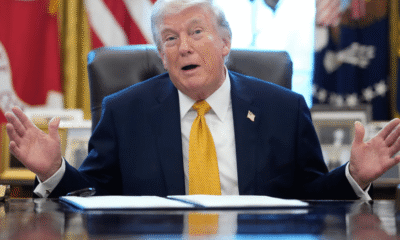
Donald Trump has ignited fresh controversy after claiming that Kim Jong Un used a derogatory term to describe former U.S. President Joe Biden. Speaking during a White House press conference focused on escalating tensions involving Iran, Trump alleged that the North Korean leader had repeatedly insulted Biden’s mental fitness in private remarks but greatly respects him.
According to Trump, Kim “was so nasty” toward Joe Biden, while maintaining a more favorable view of Trump himself.
A Complex Trump-Kim Relationship
Trump emphasized his historically unusual relationship with Kim Jong Un, describing it as positive despite longstanding geopolitical tensions.
During his first term, Trump became the first sitting U.S. president to meet a North Korean leader, engaging in high-profile summits aimed at denuclearization. While those talks ultimately failed to produce lasting agreements, they marked a significant shift in diplomatic engagement.
Trump reiterated that Kim Jong Un had “said very nice things” about him, contrasting that with the alleged remarks about Biden.
History of Rhetoric Between Nations
North Korea has a long history of using harsh rhetoric toward U.S. leaders. Officials and state media have frequently criticized American presidents, often using personal insults as part of broader political messaging.
While Trump’s claim has not been independently verified, it aligns with past instances where North Korean officials used inflammatory language to criticize U.S. policy and leadership.
At the same time, Trump himself has previously been the target of insults from Pyongyang, including being labeled with derogatory terms during periods of heightened tensions.
View this post on Instagram
Remarks Come Amid Rising Global Tensions
Trump’s comments were made during a broader discussion about international conflicts, particularly the ongoing tensions involving Iran. He also used the opportunity to criticize U.S. allies, suggesting that some countries have not provided sufficient support.
In the same briefing, Trump addressed military operations and strategic decisions, including a recent mission to rescue U.S. personnel. He acknowledged that there had been internal disagreements within military leadership before proceeding with the operation.
The president also issued strong warnings regarding potential escalation, raising concerns among observers about the risk of broader conflict.
The claim has quickly drawn attention across political and media circles, with critics questioning both the accuracy and the appropriateness of repeating such remarks.
Supporters, however, argue that Trump’s comments highlight the nature of global diplomacy and the often blunt language used behind closed doors.
The episode adds to a long-running narrative of political rivalry between Trump and Biden, with both figures frequently exchanging criticism over leadership and policy.
A Renewed Focus on Leadership and Diplomacy
As the 2026 political landscape continues to evolve, statements like these underscore the highly personal nature of modern geopolitics.
Whether or not Trump’s claim is substantiated, it has once again placed global leadership dynamics under scrutiny, particularly the relationships between major powers and unpredictable regimes like North Korea.
With tensions simmering across multiple regions, the intersection of diplomacy, rhetoric, and personal dynamics remains a critical factor shaping international relations. But then many believe that a country, once the leader of the free world, is being run by an unhinged madman of a President, Donald Trump.