






AI and Deepfakes
Trump Faces Backlash Over AI Image Depicting Himself as Jesus After Pope Criticism

Donald Trump is facing widespread backlash after sharing an AI-generated image portraying himself as Jesus Christ on his Truth Social platform. The post quickly went viral, drawing sharp criticism from political commentators, religious figures, and social media users.
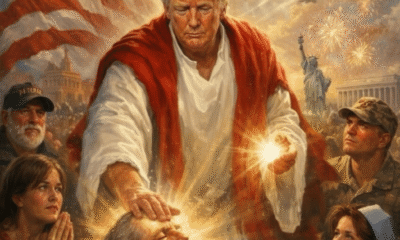
The image depicts Trump in white robes, appearing to heal a man in a hospital setting, surrounded by symbolic imagery including American flags, military personnel, and a heavenly backdrop. Some viewers speculated that the figure being healed resembled Jeffrey Epstein, while others interpreted it as a generic patient or wounded veteran.
Timing Intensifies Controversy
The AI-generated image was posted shortly after Trump launched a strong critique of Pope Leo XIV, intensifying the controversy. Trump had accused the pope of being “weak on crime” and “terrible for foreign policy,” particularly over his stance on the Iran conflict.
The juxtaposition of religious imagery with political criticism fueled accusations that the post was inappropriate or offensive, especially among religious communities.
Public and Political Reactions
The reaction online was swift and polarized. Critics described the image as “blasphemous,” arguing that it trivialized religious beliefs by merging sacred symbolism with political messaging.
Some conservative voices also expressed concern, suggesting the post could alienate religious voters. Others, however, defended Trump, framing the image as symbolic or satirical rather than literal.
The controversy highlights the growing role of AI-generated content in political communication, where visual media can amplify messages and backlash within minutes.
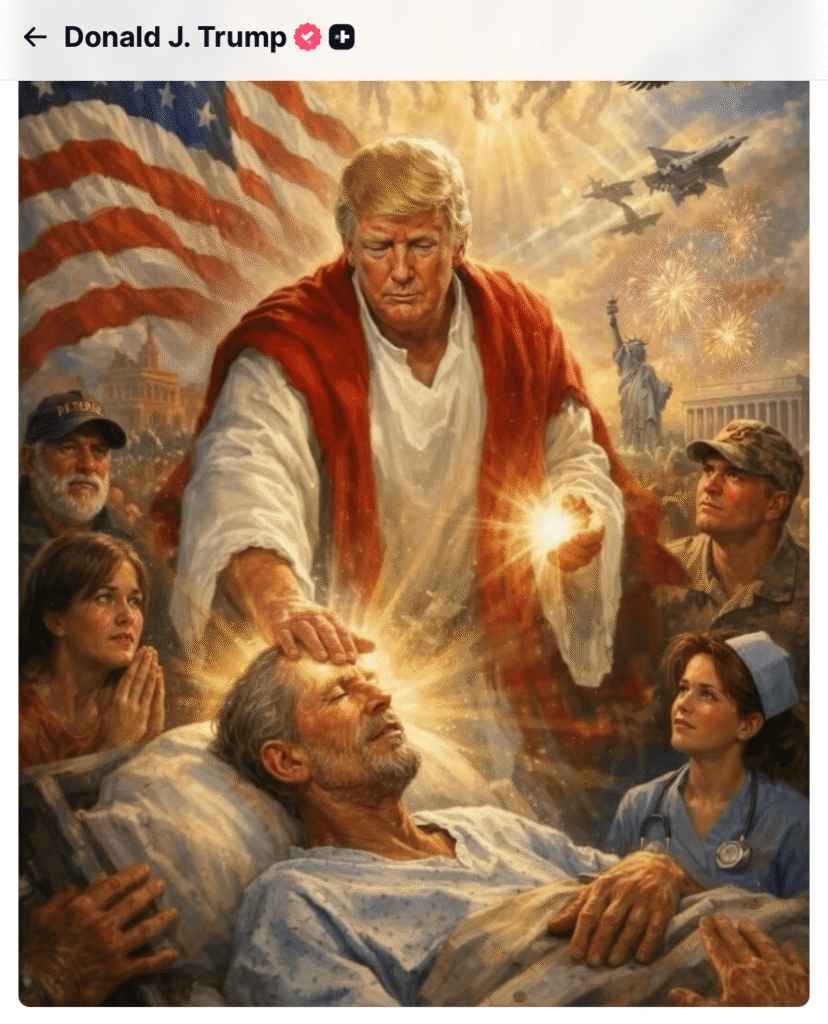
Donald Trump Posts an AI Image of Himself as Jesus Healing an Epstein Look-Alike
Ongoing Tensions With the Vatican
Trump’s criticism of Pope Leo XIV is part of a broader pattern of tension between the White House and Catholic leadership. The pope has recently called for peace and diplomacy in global conflicts, including the Iran crisis, and has warned against the use of religion to justify war.
These positions have put him at odds with Trump’s more aggressive foreign policy stance. The latest exchange underscores a deep divide between political and religious perspectives on global issues.
The Rise of AI in Political Messaging
The incident also reflects a broader trend: the increasing use of artificial intelligence in shaping political narratives. AI-generated images, videos, and content are becoming powerful tools for communication, but they also raise ethical questions.
Critics argue that such content can blur the line between satire and misinformation, especially when shared by influential public figures. Supporters, meanwhile, see it as a new form of expression in the digital age.
Beyond the immediate backlash, the controversy raises larger questions about the intersection of technology, religion, and leadership. When political figures use powerful imagery tied to faith, the reactions can extend far beyond partisan lines.
As debates continue, the incident serves as a reminder of how quickly digital content can shape public discourse, and how sensitive topics like religion can amplify its impact.










































Pingback: No Fear: Pope Leo on Trump’s Attack, As he Posts Him As Jesus