





Trump Presidency
Trump’s Mail-Ballot War Explodes at Supreme Court as Midterms Race Clocks Down

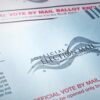
Donald Trump’s administration has taken its fight over mail-in voting straight to the Supreme Court, seeking to revive sweeping Postal Service restrictions that critics warn could disrupt ballot delivery just weeks before the 2026 midterm elections.
The Justice Department filed an emergency application asking the nation’s highest court to allow the U.S. Postal Service to enforce new requirements for federal election mail after a Massachusetts judge blocked the rules. The Supreme Court has demanded a response by September 8, putting the justices on a remarkably tight timeline as states begin sending ballots.
The battle could determine how millions of Americans cast their votes and how much power the federal government can exercise over a process traditionally administered by states.
Trump Wants USPS to Enforce New Ballot Rules
The controversy began with Trump’s March executive order targeting mail-in voting.
Under the USPS rule, states would have to provide lists of mail-ballot recipients and comply with new envelope requirements, including unique barcodes. Ballots that fail to meet the standards or are associated with voters missing from the required lists could potentially be refused delivery.
The administration argues the changes are limited postal requirements intended to protect election mail and prevent fraud.
Critics see something much bigger: a federal attempt to interfere with state election administration.
Federal Judge Blocks the Plan
U.S. District Judge Indira Talwani in Massachusetts initially issued a temporary order blocking the mandatory requirements.
On September 4, she went further, issuing a preliminary injunction against enforcement. Her ruling concluded that the USPS likely lacked authority to impose the requirements and that the changes raised constitutional and legal problems, particularly given how close they came to Election Day.
That ruling adds another obstacle for the Trump administration as it asks the Supreme Court to intervene.
The Supreme Court docket shows the emergency application was filed September 3. Justice Ketanji Brown Jackson requested a response from the opposing states by 10 a.m. EDT on September 8.
States Warn of Election Chaos
The states challenging the rule argue that election officials are already deep into preparations for November.
They say changing mail-ballot procedures this late could create confusion, delays and potentially prevent legitimate voters from receiving ballots.
North Carolina has been a particularly urgent example because the state was scheduled to begin sending mail ballots on September 4.
Opponents have also highlighted USPS’s readiness problems. According to the states’ Supreme Court filing, a key online portal for submitting voter lists was not expected to be operational until the following week.
That has fueled the argument that the administration is demanding emergency implementation of a system that is not even fully ready.
Millions of Votes Could Be Caught in the Middle
The potential consequences are what make the fight so explosive.
The new system would tie ballot delivery to voter-specific data and technical envelope requirements. Election officials fear that mistakes, mismatches or system failures could prevent ballots from reaching eligible voters.
A whistleblower report has separately alleged that USPS was developing a highly restrictive implementation process that could result in entire batches of ballots being rejected because of discrepancies. Reuters reported that critics warned such a system could jeopardize thousands of legitimate ballots.
The administration disputes the characterization of the rules as an attempt to control elections and says USPS has broad authority to regulate how mail is prepared and processed.
The Fraud Argument Is at the Center
The Trump administration says the restrictions are necessary to prevent election fraud involving the mail.
Trump has repeatedly questioned the security of mail-in voting and has made unsupported claims of widespread election fraud, including regarding his 2020 defeat.
Voting-rights groups counter that widespread voter fraud is rare and argue the new restrictions could create a far more immediate threat by disrupting legitimate voting.
The dispute therefore goes beyond ballot envelopes. At its core is a constitutional question over who controls the mechanics of federal elections, Washington or the states.
Supreme Court Already Weighed In Once
This is not the first time the Supreme Court has been pulled into Trump’s mail-voting battle.
In August, the court lifted an earlier injunction against Trump’s executive order, but that decision did not finally resolve the underlying legal questions. The three liberal justices dissented. The administration is now asking the court to go further and permit enforcement of the USPS regulations themselves.
With the November 3 midterms rapidly approaching, the timing could hardly be more consequential.
For now, the new USPS restrictions remain blocked by the federal court’s preliminary injunction.
But the Supreme Court could soon decide whether they return to force.
The result could reshape mail-in voting just as millions of Americans prepare to use it — turning Trump’s postal fight into one of the biggest election-law battles of the 2026 midterms.