










Big Tech
MapQuest Just Beat Google Maps: Trump’s ‘Lake America’ Fight Sends 30-Year-Old App to No. 1

MapQuest has staged an astonishing comeback, reaching No. 1 on the U.S. Apple App Store after refusing to rename Lake Ontario as “Lake America,” turning a political map dispute into a viral download frenzy.
Remember MapQuest?
The mapping service many people thought had disappeared has just pulled off one of the biggest app-store comebacks of the year.
MapQuest climbed to No. 1 overall on the U.S. Apple App Store, jumping from No. 8 the previous day and leaving its much larger rivals far behind in the attention generated by a political naming controversy.
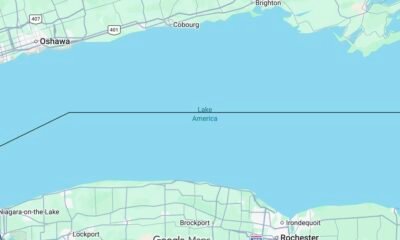
The unlikely revival was sparked by MapQuest’s decision to keep calling Lake Ontario by its familiar name rather than adopting “Lake America,” following an executive order from Donald Trump directing the U.S. geographic naming system to use the new designation.
MapQuest Turns ‘Lake America’ Into a Viral Comeback
After the Aug. 27 order, MapQuest announced on social media that it would not rename Lake Ontario.
The decision immediately created a stark contrast with Google Maps and Apple Maps, which moved toward reflecting the government-backed naming changes.
Consumers responded by downloading MapQuest.
According to estimates from market intelligence firm Sensor Tower cited by TechCrunch, the app’s U.S. ranking jumped from No. 128 on Aug. 28 to No. 92 the following day, before exploding to No. 3 on Aug. 31.
By Tuesday, MapQuest had reached the top of the entire U.S. App Store chart.
The app was also No. 1 in the Navigation category.
Downloads Explode More Than 50 Times
The numbers behind the comeback are staggering.
Sensor Tower estimated that MapQuest received approximately 632,000 U.S. downloads following the executive order.
MapQuest itself reported more than 1.5 million installs across the U.S. and Canada combined.
Sensor Tower’s estimates indicate that 56% of MapQuest’s U.S. downloads for the entire year through Sept. 1 occurred between Aug. 27 and Sept. 1.
During that period, U.S. downloads jumped 123% day over day and were more than 50 times higher than during the comparable period last year.
The company said usage has surged alongside downloads.
Users Aren’t Just Downloading, They’re Demanding Features
MapQuest General Manager Doug Berger said the company has been surprised by how actively new users are engaging with the service.
According to Doug Berger, users have been submitting feature requests, reporting bugs and communicating with the company through social media and app reviews.
For a company competing against tech giants with vastly larger resources, the sudden flood of users is both an opportunity and a challenge.
MapQuest says its small team has been working rapidly to respond to user feedback.
View this post on Instagram
Google Maps and Apple Maps Took a Different Route
The controversy became particularly powerful because of the contrast between MapQuest and its Big Tech competitors.
Google said it updates geographic names to reflect changes in official government sources, including the U.S. Geographic Names Information System.
Apple did not provide a public comment on its approach.
MapQuest, meanwhile, took the opposite route and turned the decision into a marketing moment.
The company continues to use the historical name Gulf of Mexico rather than “Gulf of America” and has created an online tool allowing users to generate their own humorous alternative names for Lake Ontario.
From Internet Pioneer to Forgotten Brand and Back
MapQuest’s comeback is especially remarkable because the service was once synonymous with online directions.
Launched in 1996, MapQuest was one of the pioneers of internet mapping and turn-by-turn navigation.
But Google Maps eventually dominated the category, pushing MapQuest into the shadow of Silicon Valley’s biggest technology companies.
The brand is now owned and operated by System1, which acquired MapQuest from Verizon in 2019. Verizon had previously acquired AOL, MapQuest’s parent company, in 2015.
Now, three decades after launching, MapQuest is suddenly back at the top of the App Store.
A Political Fight Became a Marketing Jackpot
MapQuest’s App store surge demonstrates how quickly a seemingly niche political dispute can translate into consumer behaviour.
What began as a disagreement over the naming of a major North American lake has turned into a massive publicity boost for a legacy technology brand.
The company says its apps remain available free on iOS and Android and that tens of millions of people use MapQuest each month.
Whether the extraordinary download surge lasts is another question.
But for now, MapQuest has achieved something few expected: the forgotten mapping giant has returned to the top of the app charts powered by a fight over what to call a lake.













































Pingback: The World Map Is Wrong About Africa, UN Just Voted to Fix It
Pingback: ‘South Park’ Is Now ‘South America’ and Trump Is the Joke