
News
Trump’s Signature to Appear on U.S. Currency in Historic First Since 1861
Since paper money was first issued during the Civil War era, U.S. banknotes have followed a consistent design framework. While portraits of past presidents like Abraham Lincoln and George Washington appear on bills, current leaders have not traditionally been included.

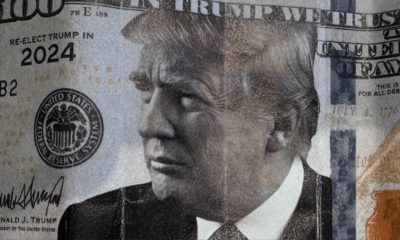
In a move that is already sparking national debate, Donald Trump will have his signature printed on U.S. paper currency, marking the first time a sitting president’s name will appear on dollar bills in this manner.
The announcement, made by the U.S. Treasury Department, comes as part of preparations to commemorate America’s 250th anniversary in 2026. Traditionally, U.S. currency features only the signatures of the Treasury secretary and the treasurer, a practice dating back to the 19th century.
Why the Change Is Happening Now
According to Treasury officials, the decision is intended to honor the milestone anniversary of the United States. Treasury Secretary Scott Bessent described the move as a symbolic recognition of what he called a defining economic era.
Supporters argue that adding the president’s signature is a fitting tribute during a historic national celebration. However, critics see the move as an unprecedented shift in how political figures are represented on American currency.
Historical Context of U.S. Currency Design
Since paper money was first issued during the Civil War era, U.S. banknotes have followed a consistent design framework. While portraits of past presidents like Abraham Lincoln and George Washington appear on bills, current leaders have not traditionally been included.
Signatures on currency have historically been limited to Treasury officials, reinforcing the non-political nature of U.S. money design. This new decision represents a notable departure from that convention.
Trump Unveils Plans for ‘Arc de Trump’ as Part of Massive Washington Overhaul
Political and Economic Reactions
The announcement arrives at a time of economic uncertainty, with inflation concerns and rising living costs dominating public discourse. Some lawmakers and analysts have questioned the timing, suggesting that symbolic changes to currency may not resonate with Americans facing financial pressure.
Others argue the move is largely ceremonial and does not impact the functionality or value of the currency itself. Still, it has ignited a broader conversation about the intersection of politics, symbolism, and national identity.
More Trump-Themed Currency on the Way?
The currency update is not the only initiative linked to the president’s image. A federal commission has also approved a design for a commemorative gold coin featuring Trump’s likeness, though final authorization is still pending.
If approved, it would mark another significant moment, as U.S. law traditionally restricts the depiction of living presidents on standard circulating coins.
A Pattern of Personal Branding in Government
This is not the first time Trump’s name has appeared on official government-related materials. During the COVID-19 pandemic, his signature was included on stimulus checks sent to millions of Americans, a move that also drew widespread attention.
From public institutions to policy initiatives, the president has consistently sought to leave a visible imprint on federal programs and national symbols.
The rollout of new currency featuring Trump’s signature is expected to begin gradually, with older bills remaining in circulation. Over time, the updated notes could become collector’s items, particularly given their historical significance.
As the U.S. approaches its 250th anniversary, this decision ensures that the conversation around currency design and presidential legacy will remain front and center.