
News
Beauty Filter Glitch Sparks Debate Over Social Media Standards

A viral social media clip showing a beauty influencer’s filter malfunction has ignited intense online debate about digital authenticity, unrealistic beauty standards, and the pressure faced by content creators in the livestream era.
According to widely circulated posts on TikTok, Threads, and other platforms, an unnamed Chinese influencer livestreamer allegedly lost 140,000 followers after a brief technical glitch exposed her unfiltered appearance mid-broadcast. However, the reported follower drop has not been independently verified.
The Viral Moment
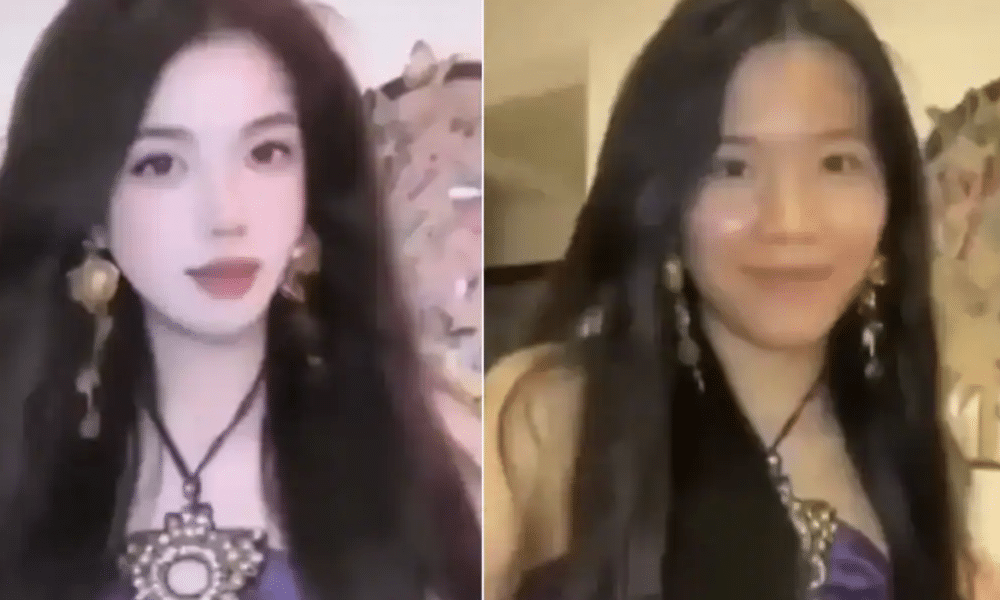
In circulating footage, the Chinese influencer is seen adjusting her hair and makeup when the beauty filter she was using suddenly disappears. For a few seconds, viewers see her natural complexion and features before the digital enhancement snaps back into place.
The restored filter dramatically alters her look — smoothing skin texture, brightening her complexion, enlarging her eyes, and sharpening her facial symmetry. The stark contrast between filtered and unfiltered appearances fueled rapid reposts and commentary across social media platforms.
While some viewers expressed shock, many others defended the influencer, arguing that she looked better without the artificial enhancements.
“I think she’s so much prettier than the filter,” one commenter wrote. Others criticized the use of heavy digital editing tools that promote unrealistic ideals, particularly within East Asian beauty standards.
The Power — and Problem — of AI Beauty Filters
The beauty filter malfunction incident has renewed scrutiny of increasingly advanced AI-driven filters that can transform facial features in real time. Critics argue these tools create unattainable standards that distort perceptions of beauty and self-worth.
In recent years, filters such as TikTok’s controversial Bold Glamour feature have drawn backlash for hyper-realistic enhancements that dramatically alter users’ appearances. Many influencers and mental health advocates have warned that constant exposure to such digital perfection can damage self-esteem, particularly among younger audiences.
The viral glitch underscores how seamlessly technology can reshape identity online — and how fragile that illusion can be.
View this post on Instagram
Not the First Filter Controversy
This is not the first time a livestream malfunction has triggered public debate. In 2019, Chinese internet personality Qiao Biluo — known online as “Your Highness Qiao Biluo” — shocked viewers when a filter failure revealed that she did not match the youthful persona presented on screen.
That incident sparked widespread discussion about authenticity and digital deception in influencer culture.
Authenticity in the Age of Algorithms
Whether the alleged 140,000-follower drop is accurate or exaggerated, the broader conversation highlights a growing tension in the creator economy: audiences crave authenticity, yet platforms reward hyper-polished perfection.
For influencers, filters are often viewed as standard tools of the trade — similar to lighting or makeup. But as AI technology grows more sophisticated, the line between enhancement and illusion becomes increasingly blurred.
The viral glitch serves as a reminder that behind every curated livestream is a real person — and that the digital mask can slip at any moment.