





News
US Submarine Sinks Iranian Warship Near Sri Lanka After India Naval Event
The sinking has drawn particular attention because the IRIS Dena had recently participated in the International Fleet Review (IFR) and the multilateral naval exercise MILAN-2026 hosted by the Indian Navy in Visakhapatnam.

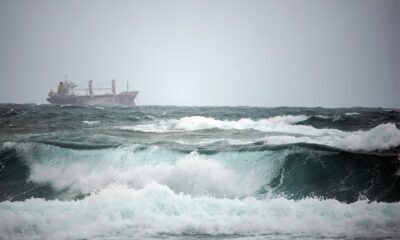
In a dramatic escalation of tensions in the Indian Ocean, a United States submarine has sunk Iran’s naval frigate IRIS Dena near Sri Lanka’s southern coast, marking what US officials described as the first American torpedo strike on an enemy vessel since World War II.
The incident occurred roughly 40 nautical miles off the coastal city of Galle, just outside Sri Lanka’s territorial waters but within its designated search-and-rescue zone.
Pentagon Confirms Submarine Strike
US Defense Secretary Pete Hegseth confirmed the operation during a Pentagon briefing, stating that an American submarine targeted the Iranian warship in international waters.
“An American submarine sunk an Iranian warship that thought it was safe in international waters,” Hegseth said, adding that the vessel was destroyed by a torpedo.
The warship has been identified as the IRIS Dena, a domestically built Moudge-class frigate belonging to Iran’s Southern Fleet.
Heavy Casualties and Rescue Efforts
Sri Lankan authorities reported that approximately 180 personnel were aboard the vessel at the time of the strike. At least 80 bodies have been recovered, while 32 sailors were rescued and transported to Karapitiya Teaching Hospital in Galle, many in critical condition.
According to Sri Lanka’s navy spokesman Commander Buddhika Sampath, the vessel issued a distress call around 5:30 a.m. local time. The Sri Lankan Navy and Air Force launched immediate rescue operations in accordance with international maritime obligations.
Sri Lanka’s Foreign Minister Vijitha Herath confirmed in parliament that the ship sank just beyond territorial waters but within the country’s assigned search-and-rescue region.
Returning From India’s Naval Exercise
The sinking has drawn particular attention because the IRIS Dena had recently participated in the International Fleet Review (IFR) and the multilateral naval exercise MILAN-2026 hosted by the Indian Navy in Visakhapatnam.
The frigate had docked in India in February as part of diplomatic naval engagements, alongside vessels from multiple countries. The development has sparked political debate within India, with opposition figures questioning regional influence and maritime security dynamics.
The vessel, named after Mount Dena in southwestern Iran, displaced approximately 1,300–1,500 tons and was equipped with anti-ship missiles, a 76-mm naval gun, torpedo systems, radar tracking capabilities, and a helicopter landing pad.
Rising Geopolitical Tensions
The submarine strike comes amid an intensifying conflict involving the United States, Israel, and Iran. Recent US and Israeli airstrikes reportedly killed Iran’s Supreme Leader, Ali Khamenei, along with senior regime officials, significantly escalating hostilities in the region.
Maritime analysts note that the waters south of Sri Lanka sit along some of the world’s busiest shipping corridors connecting Asia, the Middle East, and Europe. Naval patrols by the US, China, India, and other regional powers are routine in the area.
Officials are now examining maritime tracking data, including reports of US Navy Ohio-class submarines operating in the Indian Ocean from the Diego Garcia base.
Iran’s $20,000 Drones vs US $4 Million Patriots: The High-Stakes Math of Modern Warfare
Strategic Fallout in the Indian Ocean
Sri Lanka has maintained neutrality, urging restraint and de-escalation from all sides. However, the strike underscores the island nation’s strategic significance along global trade routes.
With more than half the crew still unaccounted for, authorities warn that the death toll could rise in the coming days. The sinking of the IRIS Dena may prove to be a pivotal moment in modern naval warfare — and a stark reminder that the Indian Ocean is increasingly central to global power struggles.










































Pingback: Sri Lanka Tries to Protect Iranian Sailors After US Submarine Attack