




Energy
Middle East Conflict Escalates as Missiles Fly and Oil Fears Grip Global Markets
Donald Trump issued a strong warning to Iran, stating the United States would respond “twenty times harder” if Tehran attempted to block tanker traffic through the strategically vital Strait of Hormuz.

Tensions across the Middle East have escalated sharply as missile and drone attacks continue amid the ongoing conflict involving the United States, Israel, and Iran.
Saudi Arabia confirmed that its air defenses intercepted multiple drones over the kingdom’s eastern region, highlighting the expanding scope of hostilities across the Gulf. Meanwhile, several Gulf states reported missile alerts and defensive actions in response to incoming threats linked to Iranian retaliation.
Iran’s elite military force, the Islamic Revolutionary Guard Corps (IRGC), said the country would determine when the conflict ends, signaling that Tehran is prepared for a prolonged confrontation.
Trump Warns of Severe Response if Oil Routes Are Disrupted
Donald Trump issued a strong warning to Iran, stating the United States would respond “twenty times harder” if Tehran attempted to block tanker traffic through the strategically vital Strait of Hormuz.
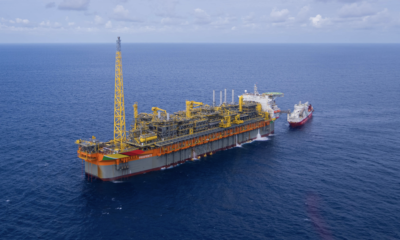
The narrow waterway handles roughly one-fifth of the world’s oil supply, making it one of the most critical energy corridors globally. Any disruption to shipping routes could trigger major shocks to global oil prices and supply chains.
Donald Trump suggested the conflict could ultimately prove short-lived, describing the military operation as potentially a “short-term” campaign aimed at eliminating threats to regional stability.
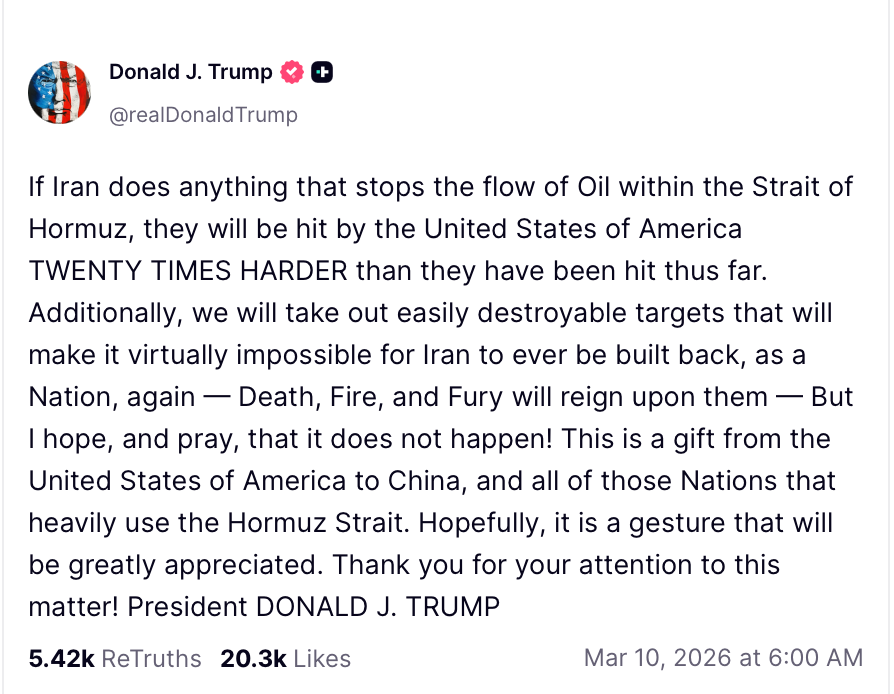
Trump Threatening Iran on Truth Social
Iran Signals Determination to Continue Strikes
Iranian officials have maintained that their military actions are defensive responses to attacks by the United States and Israel. Tehran has launched waves of missiles targeting Israeli territory, U.S. military installations in the region, and strategic energy infrastructure.
Iran’s leadership has warned that if attacks continue, the conflict could expand further across the region.
Officials from Iran’s foreign ministry have also ruled out negotiations with Washington at this stage, emphasizing that Iran intends to continue its retaliatory actions for as long as necessary.
Regional Impact Spreads Beyond the Battlefield
The ripple effects of the conflict are being felt across several countries in the region. Missile alerts and interceptions have been reported in multiple Gulf nations, while military operations have also extended into Lebanon as Israel targets positions linked to the Iran-backed militant group Hezbollah.
Elsewhere, NATO defense systems intercepted a ballistic missile that briefly entered Turkish airspace, underscoring the widening geographic footprint of the crisis.
At the same time, diplomatic efforts to secure a ceasefire are underway, with countries including China, Russia, and France reportedly contacting Iranian officials to reduce tensions.
Global Energy and Market Concerns Grow
The escalating conflict has already triggered volatility in global energy markets. Oil prices surged earlier in the week amid fears that supply disruptions could occur if tanker traffic through the Gulf is halted.
Energy analysts warn that prolonged instability could drive oil prices significantly higher, increasing inflationary pressures worldwide and affecting everything from transportation costs to manufacturing supply chains.
Financial markets have also reacted to the geopolitical uncertainty, with global stocks fluctuating as investors attempt to gauge the potential duration and consequences of the conflict.
What Happens Next?
While Donald Trump has suggested the operation could conclude soon, Iran’s leadership appears determined to continue its response, raising concerns that the conflict may persist longer than expected.
With missile exchanges continuing and global oil routes under scrutiny, the evolving situation in the Middle East remains one of the most closely watched geopolitical crises worldwide.