









Anthropic
Anthropic Unveils Claude Duet AI Agent to Challenge OpenAI and Meta

Anthropic has introduced Claude Duet, a proactive AI agent designed to manage work, monitor connected apps, and complete tasks with less human prompting. The new service intensifies competition with OpenAI and Meta as technology companies race to build AI assistants that can act on users’ behalf.
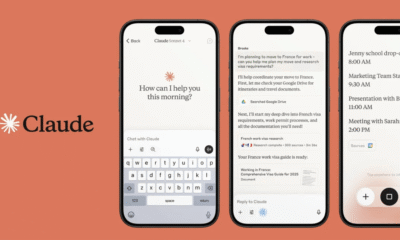
Anthropic is taking its artificial intelligence ambitions beyond chatbots with the launch of Claude Duet, a standalone AI agent aimed at professionals and small-business owners. Unlike conventional assistants that wait for instructions, the new product is designed to identify tasks that need attention, prepare daily briefings, and keep working toward goals while users focus elsewhere.
Announced on October 21, 2026, Claude Duet is initially available through a waitlisted research preview for eligible subscribers in the United States. Users can access it through iOS, Android, and Claude’s website, although availability and features may evolve during testing.
The launch puts Anthropic directly into a rapidly developing market where AI companies are competing to create digital assistants capable of carrying out multi-step tasks across applications.
Claude Duet Can Schedule Meetings, Build Forecasts and Create Apps
Anthropic says Claude Duet can handle a range of professional tasks, including scheduling meetings, preparing financial forecasts, building dashboards and developing web applications.
The central idea is to make AI more proactive. Rather than requiring users to repeatedly open a chatbot and submit prompts, Claude Duet can monitor connected services, provide a daily briefing, and flag information that may need a response.
The system is designed to continue working when users step away, then seek approval before taking sensitive actions. This approach could make AI useful for professionals managing multiple projects, communications, and operational responsibilities.
For small businesses, potential applications include organizing information, tracking outstanding tasks, and producing financial or operational materials. However, the practical value will depend on how reliably the agent interprets instructions and handles connected services.
Anthropic Takes Aim at OpenAI and Meta
Claude Duet enters a competitive market alongside OpenAI’s Dots agents and Meta’s Muse AI agent.
OpenAI has positioned Dots around persistent assistance across applications, including workplace tools such as Slack and Microsoft Teams. Meta, meanwhile, has promoted Muse as a personal AI agent, attracting attention from consumers and investors.
Meta CEO Mark Zuckerberg reportedly told analysts that more than 10 million people in the United States and Canada had set up Muse personal agents over the preceding six weeks. The figure highlights the potential scale of interest in AI systems that can do more than generate text or answer questions.
Anthropic is approaching the opportunity with a stronger workplace focus. The company says Claude Duet is designed primarily for professionals and businesses, acknowledging that everyday personal errands, such as booking tickets, are not yet among its strongest capabilities.
That distinction could help differentiate the product, particularly for users seeking AI support for complex work rather than general personal assistance.
More Than 6,000 Connectors Expand Claude Duet’s Reach
Claude Duet integrates with more than 6,000 connectors available through the Claude Marketplace, Anthropic says. These include widely used workplace services such as Gmail and Slack.
The company also says the agent can facilitate purchases through Stripe’s Link digital wallet and Shopify’s Shop Pay, extending its potential capabilities beyond information retrieval and productivity tasks.
Such integrations are important because an AI agent becomes more useful when it can work across the applications where people already communicate, manage projects, and conduct business.
However, access to connected services also introduces risks. An agent that misunderstands a message, misidentifies a priority, or takes an inappropriate action could create problems instead of saving time.
Anthropic has acknowledged that Claude Duet may misinterpret conversations or incorrectly judge how urgent a task is. Sensitive actions require user approval, but the system remains a work in progress.
Who Can Use Claude Duet?
Claude Duet is initially available to eligible US subscribers on Anthropic’s Pro and Max plans through a waitlisted research preview. The agent shares the usage limits of users’ existing subscriptions, rather than operating with a separate allowance.
The service is built around Anthropic’s Opus 5.5 model, according to the supplied announcement. The material provided has not confirmed wider availability, final pricing arrangements, or the product’s long-term feature set.
The launch reflects a broader shift in AI development. Technology companies are increasingly trying to turn powerful models into systems that can plan, coordinate and execute work across multiple applications.
Claude Duet’s success will depend on whether it can perform those tasks consistently, protect users from costly mistakes, and justify its place in everyday workflows.
For Anthropic, the challenge is clear: compete not just on how intelligently an AI responds, but on how dependably it gets work done.