







News
Panama Seizes Key Canal Ports, Escalating U.S.-China Tensions

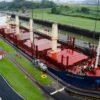
In a dramatic move with global trade implications, the government of Panama has seized control of two strategic ports at the entrances of the Panama Canal following a final Supreme Court ruling that declared the operator’s concession unconstitutional. The affected terminals — Balboa on the Pacific side and Cristóbal on the Atlantic — had been operated for decades by CK Hutchison Holdings, through its subsidiary Panama Ports Company. This has now been handed over to Maersk.
A government decree authorized the Panama Maritime Authority to immediately occupy the ports for “urgent social interest,” taking control of all movable assets, including cranes, vehicles, and digital operating systems.
Decades-Long Concession Declared Unconstitutional
The legal shift stems from a January ruling by Panama’s Supreme Court, which struck down the law approving the original concession granted in 1997 and the 2021 extension. The decision effectively stripped the port operator of its legal standing.
CK Hutchison Holdings confirmed it ceased operations after officials arrived to enforce the order, stating it strongly objects to the takeover and has not received compensation for decades of investment. The company has initiated arbitration proceedings under the auspices of the International Chamber of Commerce, signaling a potentially lengthy legal battle.
Interim Control Handed to Global Shipping Giants
To ensure operational continuity at the Panama Canal, one of the world’s most vital maritime trade routes, Panama has appointed temporary operators.
APM Terminals, a subsidiary of A.P. Moller-Maersk, will oversee the Balboa terminal, while Terminal Investment, linked to Mediterranean Shipping Co., will manage Cristóbal during an interim period of up to 18 months.
The government has pledged to maintain job stability and uninterrupted cargo operations while it prepares to award a new concession contract.
A Geopolitical Flashpoint
The port dispute has unfolded amid intensifyingrivalry between the United States and China. U.S. President Donald Trump previously accused China of exerting undue influence over canal operations, a claim that heightened scrutiny around CK Hutchison Holdings’ presence in Panama.
A proposed multibillion-dollar sale of the ports to a consortium including U.S. investment giant BlackRock was reportedly halted after Beijing intervened, further deepening geopolitical tensions.
Analysts view Panama’s Supreme Court decision and subsequent takeover as a significant development in the broader struggle over strategic infrastructure and global supply chains.
What This Means for Global Trade
The Panama Canal handles roughly 6% of global maritime trade, making stability at its entry points critical to international shipping, logistics, and energy markets.
While operations continue without reported disruption, arbitration proceedings and potential lawsuits could introduce uncertainty for investors and shipping firms. Shares of Hong Kong-listed CK Hutchison Holdings dipped following the announcement, reflecting market concerns.
For Panama, the move underscores a commitment to legal sovereignty and control over infrastructure. For global powers, it signals that strategic trade corridors remain central to geopolitical competition.
As arbitration unfolds and new concession bids emerge, the world will be watching one of global trade’s most vital chokepoints.