






Australian GP
Aston Martin’s F1 Crisis: Adrian Newey Reveals Shocking Vibration Issues Before Australian GP
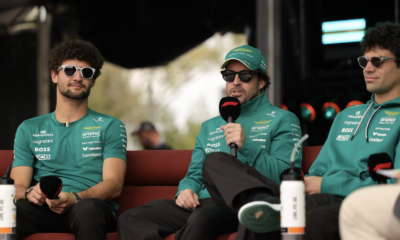
Two-time world champion Fernando Alonso reportedly believes he cannot drive more than about 25 consecutive laps without risking permanent nerve damage to his hands. Meanwhile, teammate Lance Stroll, who has previously dealt with wrist injuries, feels he cannot safely exceed roughly 15 laps in one stint.

The 2026 Formula 1 season has not even begun, yet Aston Martin is already confronting a major crisis. The team’s highly anticipated new car is battling severe vibration problems linked to its Honda power unit, which could restrict running and even threaten driver safety at the season-opening Australian GP.
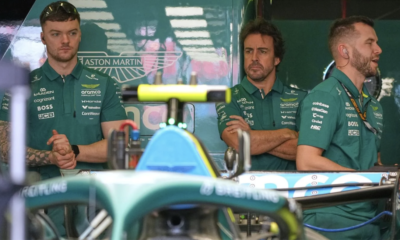
During a dramatic media briefing, team leader and legendary designer Adrian Newey revealed that the vibration problem could force Aston Martin to drastically limit laps during the race weekend.
Severe Engine Vibrations Threaten Performance
The core problem lies within the Honda engine system. During pre-season testing, intense vibrations repeatedly damaged the car’s battery pack, severely limiting track running.
These issues meant the team completed fewer laps than any of its rivals and ended testing several seconds off the pace. The limited mileage has left Aston Martin with little understanding of its new car heading into the opening race.
Adrian Newey suggested the car itself may not be as slow as the testing data indicates. According to him, the chassis could potentially compete for top-10 qualifying positions if the engine problems are resolved.
However, the responsibility for the current performance deficit appears to fall largely on Honda’s side of the partnership.
Temporary Fixes but No Root Cause
Honda engineers have attempted short-term countermeasures to protect the battery system from the violent shaking, but the underlying cause of the vibrations remains unknown.
Koji Watanabe confirmed that while testing on dyno equipment has shown some improvement, the fix has not yet been validated under real racing conditions.
As a precaution, the team may need to limit engine operation during the race weekend. That means Aston Martin could run reduced power levels or restrict the total number of laps its cars complete in Melbourne.
The uncertainty creates a major headache for a team that had entered the season hoping to fight near the front of the grid.
View this post on Instagram
Drivers Face Potential Health Risks
Perhaps the most alarming revelation concerns driver safety. The intense vibrations travel through the car’s chassis and steering wheel directly into the driver’s hands.
Two-time world champion Fernando Alonso reportedly believes he cannot drive more than about 25 consecutive laps without risking permanent nerve damage to his hands.
Meanwhile, teammate Lance Stroll, who has previously dealt with wrist injuries, feels he cannot safely exceed roughly 15 laps in one stint.
Newey admitted that the vibrations are also causing reliability problems across the car, with parts such as mirrors and taillights literally shaking loose during running.
Aston Martin’s Ambitious Project Under Pressure
The crisis is particularly striking given the massive investment behind Aston Martin’s F1 program. The team has built a new factory at Silverstone and recruited top engineering talent, including Adrian Newey, to lead its technical direction.
Owner Lawrence Stroll had targeted the new 2026 regulations as the moment Aston Martin would become a championship contender.
Instead, early testing suggests the team could be fighting near the back of the grid, possibly even behind new entrant Cadillac.
Despite the bleak start, Adrian Newey remains optimistic that the chassis itself has strong development potential and could become competitive later in the season if the power-unit issues are solved.
A Crucial Weekend in Melbourne
As the grid prepares for the Australian GP, Aston Martin’s primary objective may simply be survival.
With lap counts likely restricted and the root cause of the vibration still unknown, the team faces an uncertain opening race. Whether Honda can deliver a quick fix may determine whether Aston Martin’s ambitious F1 project begins as a temporary setback—or a full-blown disaster.


































Pingback: Aston Martin Drivers Fear Nerve Damage: Honda Engine Crisis