






News
Merriam-Webster Names ‘Slop’ as Word of the Year 2025, Reflecting the Age of AI Overload
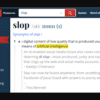
According to Merriam-Webster, slop is defined as “digital content of low quality that is produced usually in quantity by means of artificial intelligence.”

Merriam-Webster has announced its Word of the Year 2025, and the choice is as blunt as it is revealing: “slop.” Far from its traditional association with farm feed or kitchen waste, the term has taken on a distinctly modern meaning—one deeply intertwined with artificial intelligence and the digital chaos of the past year.
Pronounced like “slope” but unrelated in meaning, slop reflects a collective frustration with the overwhelming volume of low-quality online content that has flooded social media, search results, and even professional workplaces.
What Does ‘Slop’ Mean in 2025?
According to Merriam-Webster, slop is defined as “digital content of low quality that is produced usually in quantity by means of artificial intelligence.” In simpler terms, it is the sub-par, mass-generated material that fills timelines and feeds—often slick at first glance, but hollow on closer inspection.
The dictionary notes that, like slime, sludge, and muck, slop has an unappealing, “wet” sound. Historically, the term dates back to the 1700s, when it referred to soft mud. In 2025, that metaphor feels uncomfortably accurate as digital slop “oozes” into nearly every corner of online life.
View this post on Instagram
How AI Supercharged the Slop Problem
The rise of AI slop is closely tied to the rapid expansion of generative tools from major tech players such as OpenAI, Google, Microsoft, and xAI. Text-to-image and image-to-video generators have lowered the barrier to content creation—but also to content pollution.
In 2025 alone, the internet was inundated with absurd viral videos, distorted advertisements, junk AI-written books, fake news that looked convincingly real, and so-called “workslop”—auto-generated reports and presentations that waste time rather than add value. Even talking AI cats became part of the cultural shorthand for meaningless yet addictive content.
Why ‘Slop’ Resonated With Everyone
What made slop stand out wasn’t just annoyance—it was ubiquity. People complained about it endlessly, yet continued to consume it. The contradiction became part of the joke and the problem. As Merriam-Webster observed, people found slop irritating, but they “ate it up” anyway.
That tension captures the defining paradox of the AI age: unprecedented creative power paired with unprecedented noise. Slop became the word people reached for when scrolling fatigue, mistrust, and digital overload collided.
A Cultural Warning Sign
By naming slop its Word of the Year, Merriam-Webster has effectively issued a cultural warning. The term doesn’t just describe bad content—it reflects growing anxiety about authenticity, quality, and meaning in an AI-saturated world.
As debates around regulation, ethics, and responsible AI continue, slop may endure as the shorthand for what happens when quantity overwhelms quality—and when the internet starts to feel less like a tool and more like a mess.