



FIFA World Cup
World Cup 2026 Boycott Talks Emerge After Trump Actions Spark European Backlash
The 2026 FIFA World Cup, set to be co-hosted by the United States, Canada, and Mexico, is facing unprecedented political scrutiny after a senior German football official called for serious discussions about a potential boycott over US President Donald Trump’s actions.
Oke Göttlich, a vice president of the German Football Association (DFB) and president of Bundesliga club St. Pauli, said the time had come to “seriously consider and discuss” whether participation in the tournament aligns with European values. His comments follow escalating tensions between the US and several European nations over Donald Trump’s controversial stance on Greenland and the threat of trade tariffs against countries opposing American ambitions.
Why Trump’s Policies Are Fueling Boycott Calls
Trump has unsettled NATO allies with remarks and actions surrounding Greenland, a semi-autonomous territory of Denmark and a NATO member. His administration’s threats to impose tariffs on multiple European countries have amplified fears of a deepening transatlantic rift — one that could spill into global sport.
“What were the justifications for the Olympic boycotts in the 1980s?” Oke Göttlich asked in a German media interview. “By my reckoning, the potential threat is greater now than it was then.” His remarks suggest football may no longer be able to separate itself from geopolitics if core democratic norms and international stability are perceived to be at risk.
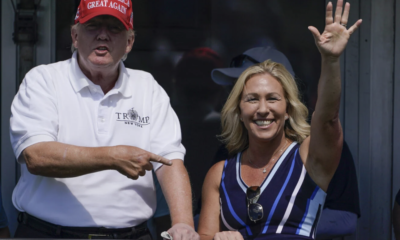
Trump Booed at Club World Cup Final as Chelsea Players React to Bizarre Trophy Stage Cameo
World Cup 2026: A Tournament Under Pressure
The United States is scheduled to host the majority of matches from June 11 to July 19, 2026, welcoming 48 teams in the expanded format. However, concerns are already mounting beyond politics. Fans have raised alarms over high ticket prices, while US travel bans imposed under Trump’s administration could prevent supporters from certain countries from attending matches.
These issues, combined with Trump’s close relationship with FIFA president Gianni Infantino, have led critics to argue that football’s governing body is increasingly entangled with political power rather than remaining neutral.
Divided Reactions Across Europe
Not all European leaders are ready to embrace boycott discussions. France’s sports minister Marina Ferrari said there is currently “no desire” to boycott the World Cup, though she stopped short of ruling it out entirely. Within Germany, federation president Bernd Neuendorf and FIFA leadership are expected to resist calls for drastic action.
Yet history looms large. Germany previously voiced strong objections to Qatar hosting the 2022 World Cup on human rights grounds, setting a precedent for ethical scrutiny of tournament hosts.
View this post on Instagram
Football, Values, and the Limits of Neutrality
Oke Göttlich, whose St. Pauli club is known for its left-wing politics and punk identity, argues that sport cannot ignore moral boundaries. “As organizations and as a society, we are forgetting how to set taboos and boundaries,” he said. For him, the lives of people affected by political aggression outweigh the professional interests of footballers who might miss out on a World Cup.
Whether the boycott talks gain real momentum remains uncertain. But the fact that senior figures are openly raising the idea shows how deeply Trump’s actions have unsettled European football — and how fragile the line between sport and politics has become ahead of World Cup 2026.