






AI and Deepfakes
Is Iran Winning the Meme War? AI Propaganda and Name Calling Catches Up with Trump
While it’s difficult to measure success in this content warfare, one thing is clear: the playing field has leveled. The same tactics that once gave Trump an edge are now being used globally, often with equal or greater impact, and many will say Iran is effectively trolling Trump.

A new form of geopolitical conflict is unfolding online, and it’s powered by memes, artificial intelligence, and viral videos – in recent weeks, Iran-linked digital creators have launched a wave of AI-generated propaganda trolling Donald Trump, marking a dramatic escalation in what experts call “content warfare.”
This digital battle follows heightened tensions after U.S.-Israel military actions earlier this year. Instead of conventional messaging, the response has taken a strikingly modern turn: meme-driven narratives, videos, etc., designed to influence public perception and dominate attention across platforms with Trump at the center. Somewhere he likes to be, but maybe not this time.
Content Warfare: Trump’s Tactics Turned Against Him
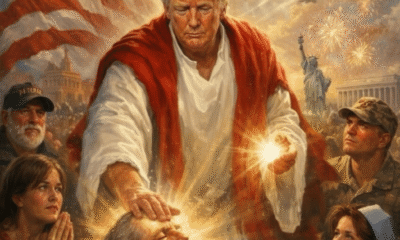
For years, Donald Trump has been known for leveraging provocative visuals, videos, viral content, and pop culture references to shape political discourse. From stylized images portraying himself as a superhero to controversial AI-generated posts where he is Jesus, Trump has embraced what analysts describe as “memetic warfare.”
Now, similar tactics are being used against him.
Iran-linked accounts and creators have produced a flood of AI-generated clips, videos trolling Trump in satirical and often humiliating scenarios, from cartoon-like animations to exaggerated cinematic parodies. These Iran-titled videos mimic the tone and style Trump himself popularized, turning his digital strategy into a mirror.
Trump the (fake) Jesus. pic.twitter.com/6YHxhWRPif
— Iran Embassy SA (@IraninSA) April 15, 2026
Viral Videos and the Power of Satire
One standout example includes a retro-style music video parody supporting Iran, inspired by the 1989 hit “Voyage, voyage,” originally performed by Desireless. In the AI-generated version, Trump appears as a fictional singer promoting a blockade narrative, blending humor with political messaging.
Other viral videos with Iran trolling Trump feature stylized characters, exaggerated slogans, and rapid-fire editing, all optimized for engagement in the attention economy. Many have racked up millions of views across platforms like X, Instagram, and TikTok.
The strategy is simple: entertain first, persuade second.
And today’s popular music: “blockade” by Trump. pic.twitter.com/7EYQ1nSTm7
— Iran Embassy SA (@IraninSA) April 13, 2026
A New Era of Digital Propaganda
Experts say this wave of “AI slop”, mass-produced, low-cost content, reflects a broader shift in global communication. Digital propaganda is no longer limited to official statements or traditional media. Instead, it thrives on virality, humor, and emotional triggers.
This raises ethical concerns. Critics argue that such content trivializes real-world conflicts, turning serious geopolitical issues into entertainment. Others warn that AI-generated misinformation could blur the line between satire and deception.
Yet its effectiveness is undeniable. By tapping into internet culture, these campaigns resonate with younger audiences who consume news through memes and short-form videos. But it also needs to be accounted for that the US under Trump has been gamifying the war, which is far more dangerous and morally corrupt compared to trolling videos.
Who’s Winning the Online Battle?
While it’s difficult to measure success in this content warfare, one thing is clear: the playing field has leveled. The same tactics that once gave Trump an edge are now being used globally, often with equal or greater impact, and many will say Iran is effectively trolling Trump.
This digital arms race highlights how influence is shifting in the modern age. Power is no longer just about military strength or political authority; it’s about who can capture attention, shape narratives, and go viral.
As AI tools become more accessible, content warfare is likely to intensify, blurring the boundaries between politics, entertainment, and propaganda.