








Electric Vehicle
Canada’s EV Mandate Isn’t Gone—It’s Been Rebranded
Under the previous policy, all new passenger vehicles sold in Canada were required to be zero-emission by 2035. The new framework abandons that explicit mandate but replaces it with stricter tailpipe emissions standards. According to the government, the revised rules aim to achieve 75% EV sales by 2035 and 90% by 2040.

Canada’s controversial electric vehicle (EV) mandate may be officially repealed, but critics argue the policy lives on under a different name. Prime Minister Mark Carney’s newly announced auto strategy has been framed as a pragmatic reset, yet a closer look suggests Ottawa has merely swapped a hard deadline for equally demanding emissions targets that still steer the market toward electric cars.
From 100% EVs to Emissions by Another Route
Under the previous policy, all new passenger vehicles sold in Canada were required to be zero-emission by 2035. The new framework abandons that explicit mandate but replaces it with stricter tailpipe emissions standards. According to the government, the revised rules aim to achieve 75% EV sales by 2035 and 90% by 2040.
Supporters say this gives automakers more flexibility to choose how they cut emissions. Detractors counter that the outcome is largely the same: manufacturers must still push EVs aggressively, regardless of consumer demand or infrastructure readiness.
Incentives Return, Spending Rises
Alongside the regulatory changes, Ottawa under Mark Carney is reinstating purchase incentives through a five-year EV Affordability Program worth $2.3 billion. Buyers can receive up to $5,000 for battery electric or fuel-cell vehicles and up to $2,500 for plug-in hybrids. The government has also earmarked $1.5 billion to expand charging and hydrogen refuelling infrastructure nationwide.
Critics argue these incentives may primarily benefit foreign manufacturers, particularly U.S.-made EVs, as large-scale Canadian EV production remains limited. While Canadian-made vehicles are exempt from certain price caps, the domestic supply gap raises concerns about subsidizing imports rather than strengthening the local industry.
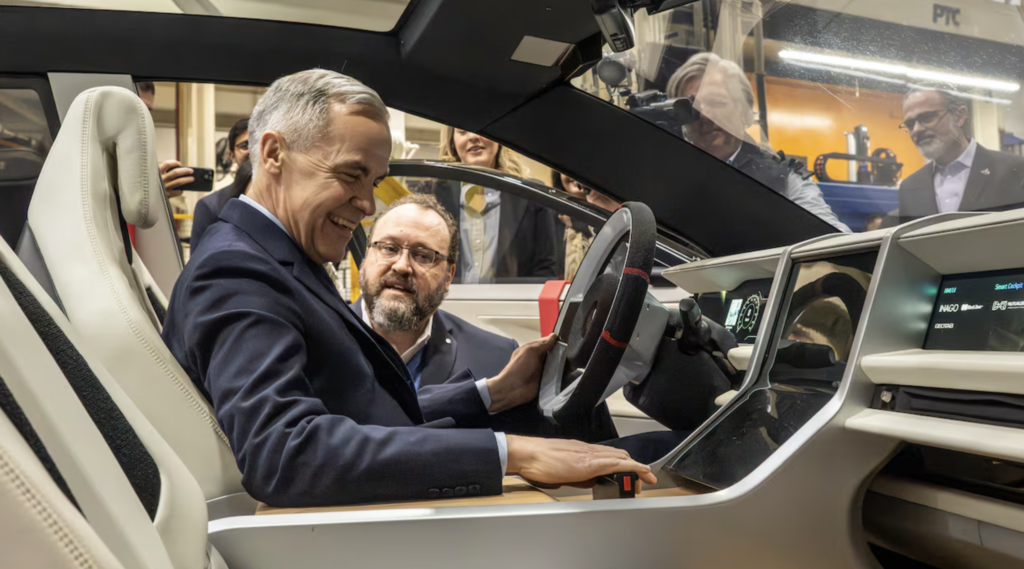
Mark Carney EV Policy Reset
Auto Industry Caught Between Policy and Reality
Canada’s auto sector employs more than 500,000 people and exports the vast majority of its vehicles and parts, mainly to the United States. With American protectionism rising and tariffs already squeezing manufacturers, some analysts warn that tougher emissions rules could make Canadian plants less competitive.
Stricter standards could also limit which vehicles can legally be sold in Canada, potentially forcing automakers to prioritize U.S. markets with looser regulations. That scenario risks undermining Carney’s parallel promise to incentivize companies to produce vehicles domestically.
Climate Goals vs. Consumer Demand
Another unresolved issue is whether Canadian consumers are ready—or willing—to make the EV leap. Cold winters, long distances, and charging reliability remain key barriers, particularly outside major cities. Despite incentives, EV adoption has consistently lagged behind government targets, raising questions about whether regulation can outpace market reality.
Environmental groups have criticized the new plan for softening the original mandate, while skeptics argue it still places ideology ahead of economics. Either way, the revised policy keeps Canada firmly on a path toward electrification, even if the branding has changed.
While the government insists it has repealed the EV mandate, the practical effect of the new emissions standards tells a different story. For automakers and consumers alike, the pressure to go electric remains—suggesting Canada hasn’t abandoned its EV ambitions so much as repackaged them.