









Artificial Intelligence
OpenAI’s C-Suite is Resigning Ahead of The IPO Denise Dresser Brad Lightcap
OpenAI confidentially filed paperwork for an IPO in June, according to reports, while the company has been valued at roughly $852 billion in its latest financing. That makes leadership stability increasingly important as OpenAI moves toward the public markets.
OpenAI faces an uncomfortable question as it prepares for what could become one of the biggest technology IPOs in history: Why are so many senior leadership executives leaving?
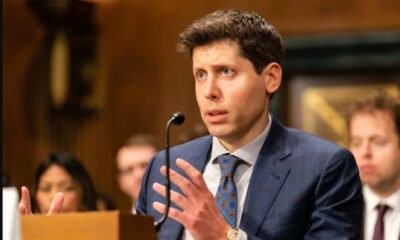
The latest shock came Thursday, when Chief Revenue Officer Denise Dresser announced she was stepping down less than a year after joining the ChatGPT maker. Her departure followed former Chief Operating Officer Brad Lightcap’s exit just days earlier, intensifying scrutiny of CEO Sam Altman’s leadership and OpenAI’s plans for its next phase.
The company has appointed Dali Rajic, the former president and COO of cybersecurity company Wiz, as Denise Dresser’s replacement. OpenAI says Rajic will lead its global revenue organization as the company pushes aggressively into enterprise AI.
OpenAI’s IPO timing makes the departures more explosive
Executive turnover is hardly unusual at a rapidly expanding technology company. But the timing is what has investors and industry observers watching closely.
OpenAI confidentially filed paperwork for an IPO in June, according to reports, while the company has been valued at roughly $852 billion in its latest financing. That makes leadership stability increasingly important as OpenAI moves toward the public markets.
“The executives leaving OpenAI ahead of their IPO is a huge red flag,” AI entrepreneur Kevin McCormick said in a post cited in the supplied reporting.
That does not prove OpenAI is in trouble. But a succession of high-profile departures can raise questions about strategy, culture, and the company’s ability to execute while competing in an increasingly brutal AI market.
Dresser’s exit comes just days after Lightcap
Denise Dresser joined OpenAI in December after building a major enterprise reputation at Salesforce and Slack. She joined as the company’s first chief revenue officer, with a mandate to expand AI adoption across businesses.
Her role became even more important after Lightcap moved away from his COO position earlier this year. Dresser subsequently took on additional responsibilities.
Now both executives are leaving.
Brad Lightcap, who spent eight years at OpenAI, announced Tuesday that he was moving on to pursue something new. Dresser followed two days later.
OpenAI has portrayed the changes as part of its evolution, not a crisis. Greg Brockman, OpenAI’s president and co-founder, praised Dresser for helping establish the company’s commercial foundation. The company also says enterprise adoption is accelerating.
A much bigger leadership shake-up is underway
The departures are not isolated.
Fidji Simo, once one of OpenAI’s most senior executives, stepped away from her full-time role after previously taking medical leave. Other prominent executives have also departed or changed roles in recent months, adding to the perception that the company is undergoing a sweeping internal reset.
Recent reporting has described the 2026 executive turnover as extensive, spanning areas including product, marketing, safety, ethics and science.
That matters because OpenAI is simultaneously trying to scale its enterprise business, develop increasingly powerful AI models and fend off rivals such as Anthropic and Google.
OpenAI insists the business is still surging
The company is pushing back against the instability narrative with aggressive growth figures.
OpenAI says its enterprise business has reached 2 million customers, double the level from a year earlier. The company has also positioned Rajic’s appointment as a move toward more disciplined, repeatable global sales execution.
Dali Rajic brings experience from Wiz, Zscaler and AppDynamics. His appointment suggests OpenAI wants a commercially hardened executive to take charge as competition for corporate AI spending intensifies.
But the bigger question remains: Can OpenAI convince Wall Street that executive turnover represents strategic evolution rather than instability?
With an IPO potentially approaching, every resignation now carries considerably more weight.
For Sam Altman, the stakes could hardly be higher. OpenAI isn’t simply racing to build the world’s most powerful AI models anymore. It is racing to prove that the company behind ChatGPT can become a stable, enormously valuable public corporation.
And investors will be watching who stays almost as closely as who leaves.











































Pingback: GPT-6 Astra : OpenAI’s Most Powerful AI Yet Has a Major Warning