





Climate Change
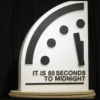
Doomsday Clock 2026: Scientists Set New Time at 85 Seconds to Midnight
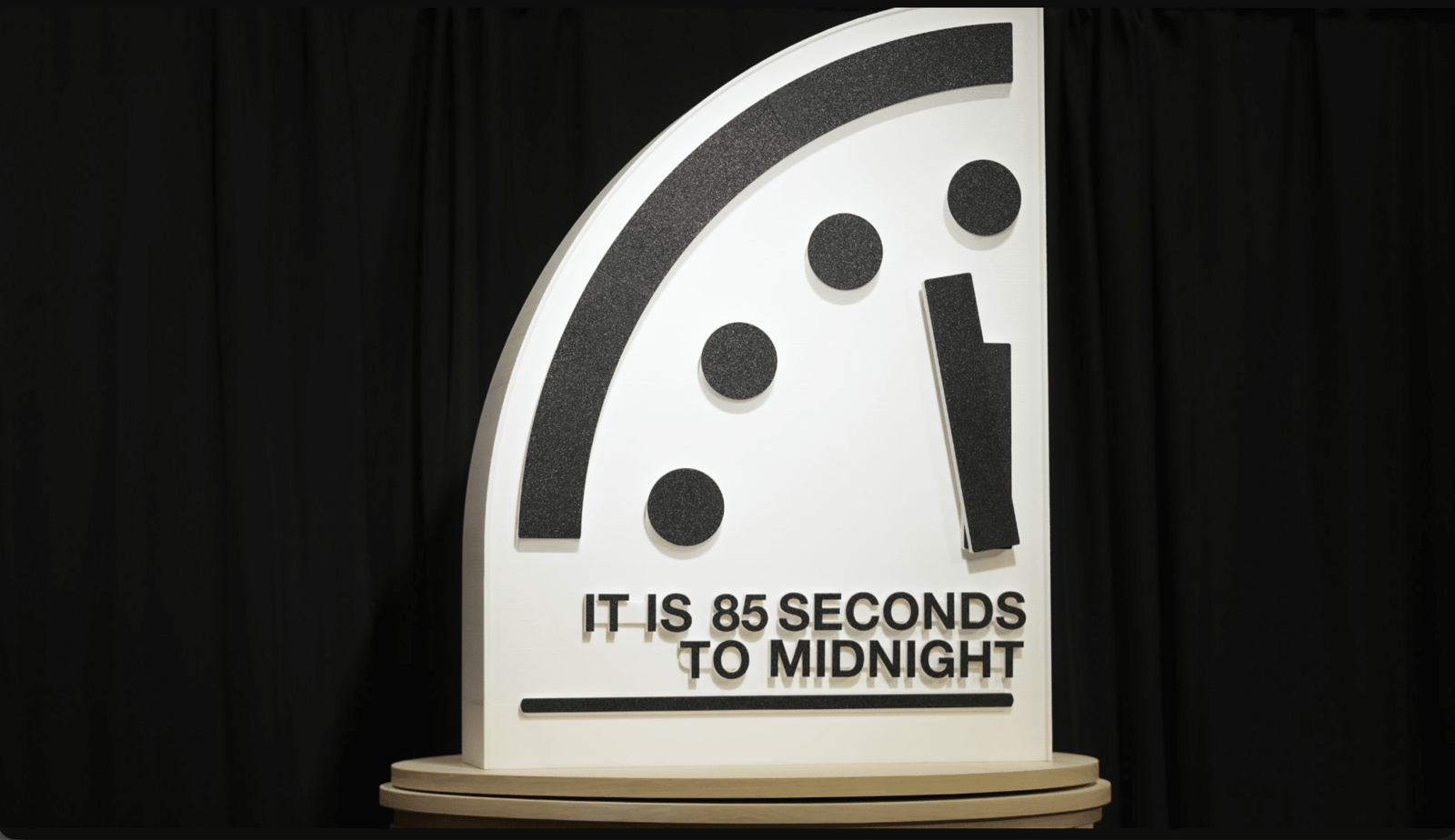
Midnight marks a point at which Earth becomes effectively uninhabitable due to human-made threats. Last year, the clock was set at 89 seconds to midnight. The four-second shift may seem small, but experts warn it reflects accelerating dangers across nuclear conflict, climate change, artificial intelligence, and biological risks.

The Doomsday Clock has moved closer to midnight than ever before. On Tuesday, the Bulletin of the Atomic Scientists announced that the symbolic clock now stands at just 85 seconds to midnight, marking the closest humanity has ever come to what scientists describe as a global catastrophe.
Midnight marks a point at which Earth becomes effectively uninhabitable due to human-made threats. Last year, the Dommsday clock was set at 89 seconds to midnight. The four-second shift may seem small, but experts warn it reflects accelerating dangers across nuclear conflict, climate change, artificial intelligence, and biological risks.
Why the Clock Moved Forward in 2026
According to the Bulletin, humanity has failed to make meaningful progress in reducing existential risks. “The risks we face from nuclear weapons, climate change, and disruptive technologies are all growing,” said Bulletin President and CEO Alexandra Bell. “Every second counts, and we are running out of time.”
Scientists cited rising geopolitical tensions, particularly involving nuclear-armed states, as a major concern. Conflicts intensified in 2025, while global cooperation weakened. Adding to the alarm, the last remaining nuclear arms control treaty between the United States and Russia is set to expire in early February, potentially opening the door to an unrestrained nuclear arms race for the first time in decades.
Climate Crisis, AI, and Biological Threats
Beyond nuclear risk, the climate crisis remains a central driver of the Doomsday clock’s movement. Scientists warned that worsening heatwaves, droughts, and floods, along with the continued failure of governments to adopt strong climate policies, are pushing the planet toward irreversible damage.
Artificial intelligence also emerged as a growing threat. Experts cautioned that the rapid expansion of AI tools—without adequate regulation—supercharges misinformation and disinformation, undermining trust and global decision-making. These technologies, scientists argue, exacerbate nearly every other risk humanity faces.
In the life sciences, researchers flagged emerging dangers such as synthetic “mirror life” and the absence of coordinated international plans to manage biological threats, leaving the world dangerously unprepared.

What is Doomsday Clock
A Warning, Not a Prediction
First introduced in 1947 by scientists involved in the Manhattan Project, the Doomsday Clock is not a precise measurement tool. Instead, it is meant to spark global conversation and action. Over time, its scope expanded from nuclear weapons to include climate change and disruptive technologies.
The clock has never reached midnight. Its furthest point—17 minutes to midnight—occurred in 1991, after the US and the Soviet Union signed the Strategic Arms Reduction Treaty. That moment remains proof, scientists say, that progress is possible.
Can the Clock Be Turned Back?
Despite the grim outlook, experts insist the future is not fixed. “Because humans created these threats, we can reduce them,” said former Bulletin president Rachel Bronson. Doing so, however, requires international cooperation, strong leadership, and public engagement.
Scientists also emphasize individual responsibility—combating misinformation, demanding accountability from leaders, and making sustainable lifestyle choices. As Nobel laureates and global experts agree, the Doomsday Clock’s message is urgent but not hopeless.
At 85 seconds to midnight, the warning is clear: humanity still has time—but not much.