



News
Scott Bessent Dismisses Denmark as ‘Irrelevant’ Amid Greenland and Bond Market Tensions
The debate intensified after AkademikerPension, a Danish pension fund, announced it would divest roughly $100 million in U.S. Treasurys, citing concerns about U.S. fiscal health and Trump’s rhetoric about Greenland. The move was highlighted in a note by Deutsche Bank FX strategist George Saravelos, who suggested Europe’s exposure to U.S. assets could become a geopolitical vulnerability.

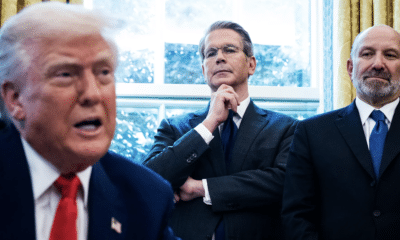
U.S. Treasury Secretary Scott Bessent ignited controversy at the World Economic Forum 2026 in Davos after bluntly dismissing Denmark — and Europe’s potential leverage over U.S. debt markets — as “irrelevant.” Speaking to reporters on Wednesday, Bessent rejected growing speculation that European governments could pressure Washington by selling off U.S. Treasury bonds in response to escalating tensions over Greenland and proposed new U.S. tariffs.
“Denmark’s investment in U.S. Treasury bonds, like Denmark itself, is irrelevant,” Scott Bessent said. “They’ve been selling treasuries for years. I am not concerned at all.”
Greenland Dispute Fuels Market Anxiety
Scott Bessent’s remarks come amid renewed geopolitical strain after Donald Trump reiterated his interest in annexing Greenland, a Danish territory viewed by Washington as strategically vital as Arctic trade routes open due to climate change. Trump has also threatened 10% tariffs on eight European countries, with rates potentially rising to 25%, adding further pressure to already fragile transatlantic relations.
Those tensions rattled markets earlier this week, triggering a sharp sell-off in U.S. stocks and bonds as investors weighed the risk of a revived U.S.-Europe trade conflict. Analysts warned that Europe’s vast holdings of U.S. debt — estimated at trillions of dollars — could, in theory, be weaponized against Washington.
Danish Pension Fund Divestment Sparks Debate
The debate intensified after AkademikerPension, a Danish pension fund, announced it would divest roughly $100 million in U.S. Treasurys, citing concerns about U.S. fiscal health and Trump’s rhetoric about Greenland. The move was highlighted in a note by Deutsche Bank FX strategist George Saravelos, who suggested Europe’s exposure to U.S. assets could become a geopolitical vulnerability.
Trump Calls Off Europe Tariffs After Reaching ‘Framework’ on Greenland Deal
Bessent quickly pushed back, saying the argument was overblown and fueled by what he called the “fake news media.” He revealed that Deutsche Bank CEO Christian Sewing personally contacted him to clarify that Saravelos’ comments did not represent the bank’s official stance.
Markets, Japan, and ‘Noise’ Around Greenland
According to Bessent, recent volatility in U.S. markets was driven as much by Japanese bond market instability as by Greenland-related fears. Concerns over Japan’s long-term debt sustainability, he said, spilled into global markets and amplified investor anxiety.
“It’s very difficult to disaggregate any of the noise around Greenland,” Bessent noted, adding that Japan’s government had reassured Washington it would act to stabilize its bond market.
Sharp Words for Europe Ahead of Trump Speech
Scott Bessent also criticized European leaders for what he called “inflammatory” rhetoric and questioned the symbolism of deploying military personnel to Greenland. “For those countries to activate their troops, I’m not sure what signal that is supposed to send,” he said, calling the move “quixotic.”
The comments landed just hours before a highly anticipated speech by Trump in Davos, delayed due to technical issues with Air Force One. As markets and diplomats brace for the president’s next move, Bessent’s blunt dismissal underscores Washington’s confidence — and Europe’s uncertainty — in an increasingly strained global order.
















































Pingback: Trump's ‘Big Retaliation’ - Europe's U.S. Treasury Bond Divestment