






Hip Hop/ Rap
Kanye West Issues Lengthy Apology for ‘Psychotic’ Behavior, Cites Bipolar Manic Episode

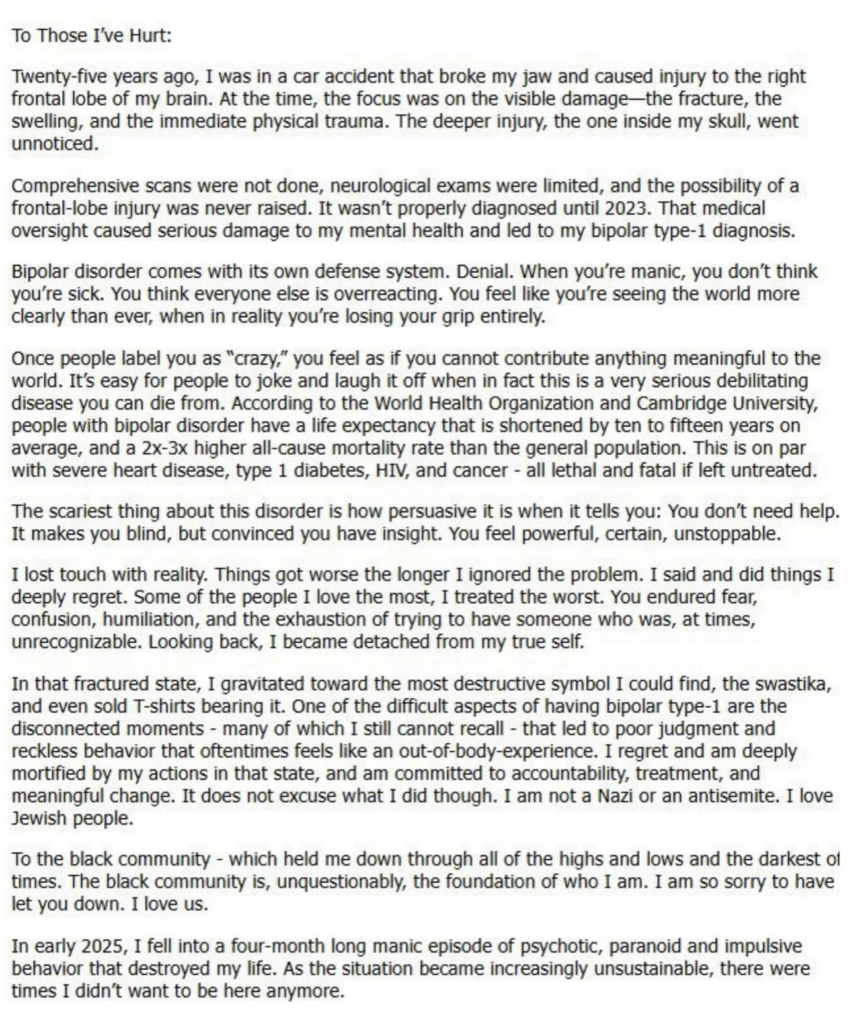
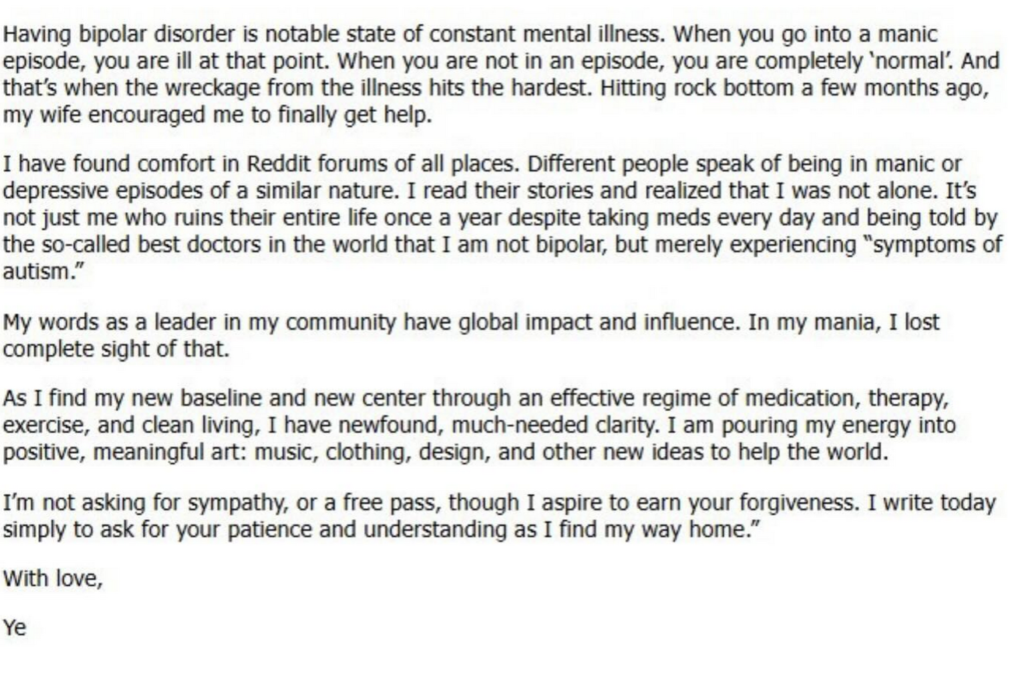
Kanye West, also known as Ye, has issued his most extensive and personal apology to date, publicly addressing years of deeply controversial behavior in a full-page advertisement published in The Wall Street Journal. In the statement, the hip-hop icon acknowledged that a prolonged bipolar manic episode in 2025 led to what he described as “psychotic, paranoid and impulsive behavior that destroyed my life.”
The apology arrives just days ahead of the long-delayed release of Ye’s upcoming album, Bully, signaling what may be an attempt at personal and professional reckoning after years of public backlash.
“I Lost Touch With Reality”
Writing directly “to those I’ve hurt,” Kanye West said he suffered a four-month-long manic episode last year that pushed him to rock bottom, including moments when he no longer wanted to live. He attributed his condition to a traumatic brain injury sustained during a 2002 car accident—an incident that famously inspired his breakout single Through the Wire, but he claims, left more serious neurological damage undiagnosed for decades.
According to Kanye West, the frontal-lobe injury was not properly identified until 2023, leading to a renewed acceptance of his bipolar type-1 diagnosis after years of denial. “The scariest thing about this disorder is how persuasive it is when it tells you: You don’t need help,” he wrote. “It makes you blind, but convinced you have insight.”
Addressing Antisemitism and Nazi Imagery
Central to Ye’s statement was an unambiguous condemnation of his own antisemitic remarks, pro-Hitler rhetoric, and use of Nazi symbolism, including the sale of swastika-bearing merchandise and the release of a song titled Heil Hitler in 2025.
“I regret and am deeply mortified by my actions in that state,” Kanye West wrote. “It does not excuse what I did though. I am not a Nazi or an antisemite. I love Jewish people.”
The apology follows renewed outrage after the incendiary song resurfaced last week when it was reportedly played at a Miami nightclub attended by far-right figures, reigniting criticism of Kanye West’s influence and associations.
Accountability, Not a Free Pass
Ye stressed that his apology was not a plea for sympathy, but an appeal for patience as he seeks treatment through medication, therapy, exercise, and what he called “clean living.” He also apologized to the Black community, acknowledging that his past statements and actions—including remarks about slavery and political symbolism—had caused harm.
“The Black community is, unquestionably, the foundation of who I am,” he wrote. “I am so sorry to have let you down.”
A Turning Point Ahead of Bully?
While Kanye West has apologized before, this statement stands out for its length, medical detail, and explicit acknowledgment of responsibility. Whether it marks a genuine turning point remains to be seen, particularly as Bully prepares for release after multiple delays.
“I’m not asking for a free pass,” Ye concluded. “I aspire to earn your forgiveness.”
As fans and critics alike weigh his words, the apology underscores the ongoing tension between mental health accountability, public harm, and redemption—especially for an artist whose influence remains global.











































Pingback: March 20: Kanye West Sets Date for ‘Bully’ Album with Gamma
Pingback: Kanye West Comeback? Announces LA SoFi Stadium Mega Show