





News
US and India Strike Major Trade Deal: Tariffs Cut After Commitment to End Russian Oil Imports
White House official clarified that the additional 25% tariff applied over Russia-linked oil purchases will be dropped, provided India fully ceases buying Russian crude. The remaining reciprocal tariff will stay at 18%, bringing U.S. duties closer to the rates charged on goods from countries like the European Union and Japan.

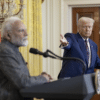
In a major diplomatic and economic development, the United States and India have reached a trade agreement after a phone call between US President Donald Trump and Indian Prime Minister Narendra Modi, involving significant cuts to tariffs and India’s pledge to halt purchases of Russian oil.
The deal, announced by President Trump on social media and confirmed by multiple White House sources, immediately reduces existing United States tariffs on Indian exports from previously elevated levels down to 18%, easing long-running trade tensions that hit a peak in 2025.
Deep Tariff Reduction and Russian Oil Concessions
Under the new understanding, the United States will reverse the punitive tariffs it imposed in August 2025, which had pushed the effective levy on Indian goods as high as 50%—a combination of standard tariffs and extra duties linked to India’s prior purchases of Russian crude oil.
A senior White House official clarified that the additional 25% tariff applied over Russia-linked oil purchases will be dropped, provided India fully ceases buying Russian crude. The remaining reciprocal tariff will stay at 18%, bringing U.S. duties closer to the rates charged on goods from countries like the European Union and Japan.
President Trump framed the agreement as a strategic move to strengthen U.S.–India economic ties and reduce Western dependence on Russian energy. He also claimed on social media that Modi agreed to significantly increase Indian purchases of U.S. oil and energy products, potentially including Venezuelan crude.
Wonderful to speak with my dear friend President Trump today. Delighted that Made in India products will now have a reduced tariff of 18%. Big thanks to President Trump on behalf of the 1.4 billion people of India for this wonderful announcement.
When two large economies and the…
— Narendra Modi (@narendramodi) February 2, 2026
India’s Response and Economic Impact
Narendra Modi responded positively on X (formerly Twitter), saying he was “delighted” with the tariff reduction and thanked President Trump on behalf of India’s 1.4 billion people. While the formal legal text of the trade deal has not been published, Modi’s endorsement boosted market sentiment, leading to an uptick in Indian stock indices and strengthening the rupee in early trading.
The tariff relief comes shortly after India signed a landmark free-trade agreement with the European Union, highlighting New Delhi’s broader strategy to diversify its trade relationships amid shifts in global geopolitics.
Broader Strategic Implications
Economists and policy analysts see the deal as a move to reset relations between two of the world’s largest democracies, especially after months of strain over energy policy and tariff escalation. It could deepen economic cooperation and position both nations more closely on trade and strategic fronts.
The deal also reflects shifting global energy dynamics. For years, India sourced a significant portion of its crude oil from Russia at discounted prices. In exchange for tariff relief, India’s shift toward U.S. and other Western energy supplies may reshape regional trade flows.
However, not all details are fully confirmed. Some aspects of the trade commitments, including the scale of Indian purchases of American goods—reported by Trump to be over $500 billion—have yet to be independently verified by Indian government sources.
The agreement marks a notable reset in US-India trade relations, easing tensions from the past year and potentially opening doors for deeper economic integration. With tariffs lowered and energy ties shifting, the new deal could influence global supply chains and broader geopolitical balances in the coming years.