




News
How the US-Israel War on Iran Could Transform Gulf Security Forever

The unfolding US-Israel war on Iran is already reshaping the Middle East’s strategic landscape. Within days of the conflict’s eruption, Gulf states, including Saudi Arabia, the United Arab Emirates, Qatar, Bahrain, Kuwait, and Oman, have faced missile and drone strikes.
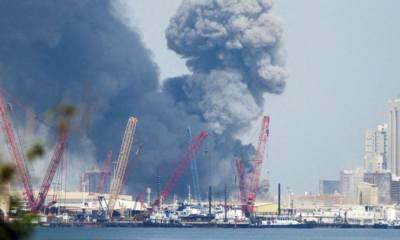
In the United Arab Emirates, authorities reported intercepting waves of ballistic missiles and drones targeting airports, ports, and US-linked military facilities. In Bahrain, explosions were reported near strategic sites, including areas associated with the US Navy’s Fifth Fleet.
Iranian officials have insisted they are targeting US military assets rather than Gulf governments directly. However, the physical and psychological impact on civilian infrastructure — airports, commercial hubs, and residential districts — is undeniable.
GCC at a Strategic Crossroads
For decades, the Gulf Cooperation Council (GCC) relied on a familiar formula: US security guarantees, managed rivalry with Iran, and cautious regional coordination.
That formula is now under strain.
Recent years saw a diplomatic thaw between Tehran and Gulf capitals, including the China-brokered Saudi-Iran rapprochement in 2023. Countries like Oman and Qatar favored mediation and dialogue, while Saudi Arabia and the UAE balanced deterrence with de-escalation.
A prolonged conflict complicates that strategy. Gulf states face mounting pressure to clarify their alignment with Washington while managing domestic expectations and economic risks. Strategic ambiguity — once a diplomatic asset — now risks being perceived as vulnerability.
Energy Markets and the Strait of Hormuz
Any war involving Iran inevitably puts the Strait of Hormuz at the center of global attention. Roughly a fifth of the world’s oil passes through this narrow chokepoint.
Even limited disruptions can spike oil prices, raise shipping insurance costs, and trigger global market volatility. While short-term price surges may boost Gulf revenues, sustained instability could deter foreign investment, complicate infrastructure megaprojects, and accelerate global diversification away from Gulf energy supplies.
Major Asian economies, heavily reliant on Gulf oil, may reassess long-term energy dependencies if instability persists.
Trump Fires National Security Advisor Mike Waltz Over Secret Talks with Netanyahu on Iran
Internal GCC Divisions or Deeper Unity?
The war could either fracture the GCC or push it toward unprecedented security cooperation.
Threat perceptions differ. Oman and Qatar traditionally prioritize mediation. Saudi Arabia and the UAE have historically emphasized deterrence. Kuwait often adopts a cautious balancing role.
An escalating crisis may expose these differences — or drive deeper integration in missile defense, intelligence sharing and maritime coordination. The direction will depend on whether member states interpret the conflict as a moment for competition or consolidation.
Global Powers and Regional Realignment
Beyond the Gulf, broader geopolitical dynamics are in play. China, heavily invested in Gulf energy flows, could expand its diplomatic footprint. Russia may leverage instability to strengthen arms sales and influence.
Meanwhile, deeper US military engagement could increase Gulf reliance on Washington even as regional capitals seek to diversify economic and diplomatic partnerships to avoid overdependence.
A Defining Moment for Gulf Strategy
The most profound transformation may be cultural and strategic rather than purely military. Gulf states have spent decades prioritizing modernization, economic diversification, and calculated geopolitical maneuvering.
A sustained regional war forces painful trade-offs between development ambitions and hard security imperatives. It challenges the long-standing model of balancing alliances while avoiding direct confrontation.
The Gulf now stands at a pivotal crossroads. Whether it emerges as the front line of prolonged great-power confrontation or as a stabilizing diplomatic actor will shape not only regional security calculations but the broader Middle Eastern political order for years — possibly decades — to come.