





Trump Presidency
Trump Revives 2020 Election Claims, Alleges China Meddling in National Address Amid Midterm Push
He alleged that China acquired approximately 220 million U.S. voter files and accused government agencies of concealing the scale of the activity. However, several of Trump’s claims were quickly challenged by election experts and fact-checkers, who pointed to previously released intelligence assessments that reached different conclusions.

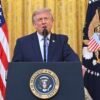
U.S. President Donald Trump reignited controversy over the 2020 presidential election during a nationally televised address on Thursday, alleging that newly declassified intelligence exposed vulnerabilities in America’s election infrastructure and claiming China interfered in the election process.
The 25-minute primetime speech comes as the White House and Republican allies intensify efforts to overhaul election laws ahead of the November midterm elections, with Trump urging Congress to approve stricter voting measures while repeating long-standing allegations about the 2020 election.
Trump cites declassified intelligence
In the primetime address from the White House, Trump claimed newly released intelligence documents showed China obtained millions of U.S. voter records and attempted to influence the 2020 presidential election.
According to Trump, the documents revealed “shocking vulnerabilities” in election systems and suggested foreign actors sought to manipulate electoral outcomes. He alleged that China acquired approximately 220 million U.S. voter files and accused government agencies of concealing the scale of the activity.
However, several of Trump’s claims were quickly challenged by election experts and fact-checkers, who pointed to previously released intelligence assessments that reached different conclusions.
Intelligence findings differ from president’s claims
A declassified assessment from the U.S. intelligence community, originally prepared following the 2020 election, concluded that China considered influence operations but ultimately did not attempt to alter the election outcome.
The report stated that investigators found no evidence that Beijing interfered with election infrastructure, vote counting systems, or the transmission of election results.
Experts also noted that voter registration databases in many U.S. states are publicly accessible under existing election laws, allowing political campaigns and researchers to obtain voter information legally.
China has consistently denied interfering in U.S. elections, describing American elections as an internal matter.
Donald Trump is a feeble, unhinged conspiracy-peddling 80-year old failed President.
The economy is a disaster under this guy and the American people know it.
Pathetic.
— Hakeem Jeffries (@RepJeffries) July 17, 2026
Renewed push for election reforms
During the address, Trump once again urged lawmakers to pass the SAVE America Act, legislation aimed at tightening voter identification and citizenship verification requirements.
The SAVE America Act proposal includes provisions requiring photo identification for voting, proof of U.S. citizenship for voter registration, and additional safeguards for election administration. Supporters argue the legislation would strengthen election integrity, while opponents contend it could create additional barriers for eligible voters, particularly low-income Americans, minorities and naturalized citizens.
Trump also referenced a Department of Homeland Security review that he said identified hundreds of thousands of non-citizens registered to vote. However, he did not present evidence that those individuals had cast ballots, and federal law already prohibits non-citizens from voting in federal elections.
Multiple studies have found documented cases of non-citizen voting to be rare.
Political backdrop ahead of midterms
The speech arrives as both major parties prepare for high-stakes congressional elections later this year. Polling has suggested Democrats could make gains in the House of Representatives, while Republicans seek to retain control of Congress.
Trump framed election security as one of his administration’s top priorities, arguing that confidence in electoral systems must be restored before Americans head to the polls.
He also reiterated concerns about electronic voting machines and advocated broader use of paper ballots, repeating claims that critics say remain unsupported by publicly available evidence.
Democrats reject allegations
Democratic leaders dismissed the president’s remarks, accusing him of revisiting unproven claims about the 2020 election rather than focusing on economic and national issues.
Several lawmakers argued that repeated allegations of election fraud risk undermining public confidence in democratic institutions.
California Governor Gavin Newsom and other Democratic officials called on voters to remain engaged in the electoral process, while emphasizing that election systems have repeatedly withstood legal and administrative scrutiny.
China’s embassy also rejected Trump’s accusations, reiterating that Beijing does not interfere in U.S. domestic affairs.
Election debate likely to continue
Trump’s latest address signals that election integrity will remain a central issue in the administration’s political agenda heading into the midterms.
Whether Congress advances the proposed election reforms remains uncertain, but Thursday’s speech ensures that debates over voting security, foreign interference and election administration will continue to dominate American political discourse in the months ahead.