






FIFA World Cup
UEFA Declares World Cup Boycott if FIFA Sells Stakes to Investors
The Asian Football Confederation (AFC) questioned the absence of prior consultation, while Concacaf, representing North and Central America and the Caribbean, also raised governance concerns after learning of the proposal through media reports.

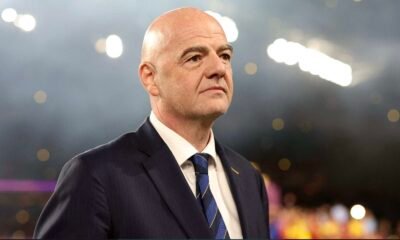
European football has taken an unprecedented stand against FIFA after UEFA’s 55 member associations unanimously agreed to boycott FIFA competitions, including the FIFA World Cup, if governing body president Gianni Infantino proceeds with controversial plans to introduce private investment into the commercial rights of football’s biggest tournaments.
The decision, reached during an emergency online meeting on Thursday, marks the strongest opposition yet to FIFA’s proposal to establish a new commercial subsidiary and sell a minority stake to outside investors.
UEFA Draws a Firm Line
Following the meeting, UEFA released a strongly worded statement confirming that its member associations would refuse to participate in FIFA competitions if the proposal moves ahead.
According to UEFA, the World Cup is a sporting institution built over generations by players, national teams and supporters across the globe, and should never become an investment vehicle for private capital.
The governing body argued that football’s most prestigious tournament belongs to the global football community rather than commercial investors, insisting that no ownership stake should ever be transferred to private entities.
The boycott would extend to all FIFA competitions, including the men’s and women’s World Cups, youth tournaments and the FIFA Club World Cup.
FIFA’s Proposal Sparks Worldwide Opposition
The dispute centers on FIFA’s proposal to create a new commercial entity that would oversee its major competitions, including the FIFA World Cup.
Under the plan, minority ownership in the new company would be offered to private investors. Reports indicate the overall venture could be valued at approximately $20 billion, with around 20% of the business made available for investment.
Member associations have reportedly been offered financial incentives, including up to $40 million in funding, with an initial payment available for federations supporting the proposal before a September deadline.
FIFA has described the initiative as an opportunity to generate greater investment for football development worldwide rather than a mandatory restructuring.
Infantino has defended the proposal, saying it represents “an opportunity, not an obligation,” and argued that additional commercial revenue could help fund infrastructure, youth development and women’s football across member nations.
View this post on Instagram
Concerns Over Governance and Transparency
UEFA’s objections extend beyond the commercial structure itself.
The organization criticized what it described as a lack of consultation before the proposal became public, arguing that a decision of such significance should have involved confederations, national associations, clubs and other stakeholders from the outset.
Several football authorities outside Europe have also expressed concern over the process.
The Asian Football Confederation (AFC) questioned the absence of prior consultation, while Concacaf, representing North and Central America and the Caribbean, also raised governance concerns after learning of the proposal through media reports.
The growing criticism suggests resistance is spreading well beyond Europe.
Potential Impact on Future FIFA Tournaments
If UEFA follows through with its threat, the consequences for FIFA could be enormous.
European nations have historically dominated international football, winning the majority of FIFA World Cups and consistently supplying many of the tournament’s strongest teams. A World Cup without European participation would dramatically affect both the sporting quality and commercial appeal of the competition.
Industry observers believe such a boycott would represent one of the biggest governance disputes in football since the failed European Super League proposal.
However, many officials continue to hope a compromise can be reached before any tournaments are affected.
Pressure Mounts on FIFA Leadership
The controversy has also intensified scrutiny of FIFA President Gianni Infantino ahead of future leadership decisions.
Critics argue that introducing private ownership into football’s flagship competitions could permanently alter how international tournaments are managed, potentially placing investor returns ahead of sporting priorities.
Supporters of UEFA’s position maintain that football’s global competitions should remain under independent governance focused on players, fans and national associations rather than commercial shareholders.
With FIFA’s member associations expected to decide on the proposal in the coming months, the future of international football governance now hangs in the balance.
Whether negotiations lead to compromise or a historic split between FIFA and UEFA, the outcome could shape the World Cup and the global game for decades to come.






































Pingback: Concacaf, CFU Challenge FIFA Over Controversial Investment Plan