









News
Anthony Fauci Invokes Fifth Amendment, Republicans Threaten Contempt Vote

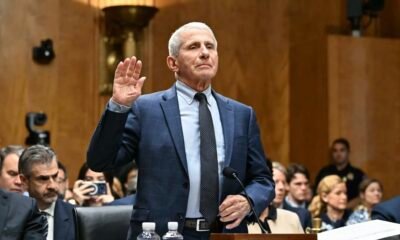
Former U.S. public health official Dr. Anthony Fauci repeatedly invoked his Fifth Amendment right against self-incrimination during a tense Republican-led Senate hearing on Wednesday, declining to answer more than 100 questions related to the federal government’s handling of the COVID-19 pandemic and its origins.
The hearing, chaired by Senator Rand Paul of Kentucky before the Senate Homeland Security and Governmental Affairs Committee, marked another chapter in the years-long political and scientific debate surrounding the pandemic. Fauci, who served as director of the National Institute of Allergy and Infectious Diseases (NIAID) for nearly four decades, appeared under subpoena and refused to answer most questions on the advice of his legal team.
Fauci cites legal advice for invoking the Fifth Amendment
In an opening statement, Anthony Fauci argued that the hearing was less about oversight and more about efforts to build a criminal case against him. He said he believed answering questions under oath could expose him to potential legal risks despite receiving a broad presidential pardon in early 2025 covering federal offenses committed before that date.
The Fifth Amendment protects individuals from being compelled to provide testimony that could incriminate them in criminal proceedings. Legal experts generally note that invoking the constitutional protection does not constitute an admission of wrongdoing.
Republican lawmakers, however, argued that because the pardon applies only to past conduct, Fauci could still face legal exposure if he made false statements during the current hearing.
Rand Paul renews criticism over COVID response
Rand Paul used the nearly three-hour hearing to revisit longstanding allegations regarding the origins of COVID-19, U.S.-funded scientific research involving laboratories in Wuhan, China, and Fauci’s previous testimony before Congress.
The Kentucky senator accused Anthony Fauci of misleading lawmakers and suggested the committee would vote next week on whether to hold him in contempt of Congress for refusing to answer questions.
Rand Paul also questioned whether Anthony Fauci could legitimately invoke Fifth Amendment protections for actions already covered by a presidential pardon, describing the issue as one that courts may ultimately need to resolve.
The hearing became increasingly confrontational when Capitol Police escorted Fauci’s attorney, David Schertler, from the hearing room after he attempted to address the committee without recognition from the chair.
Following the hearing, David Schertler criticized the proceedings, calling them politically motivated and defending his client’s constitutional rights.
Democrats defend former health official
Democratic members of the committee sharply criticized the hearing, arguing that it was designed to reach predetermined political conclusions rather than uncover new evidence.
Several senators praised Fauci’s decades of public service, noting his leadership during multiple public health crises, including HIV/AIDS, Ebola, anthrax attacks and the COVID-19 pandemic.
They also argued that invoking the Fifth Amendment is a constitutional safeguard available to all Americans and should not be interpreted as evidence of guilt.
COVID origins remain under debate
One of the central issues raised during the hearing was the continuing debate over how the coronavirus first emerged.
Many scientists continue to support the theory that the virus originated through natural animal-to-human transmission, with early cases linked to a wildlife market in Wuhan.
However, some U.S. intelligence agencies have assessed, with varying levels of confidence, that a laboratory-related incident remains a possible explanation. Other intelligence agencies continue to favor a natural origin or remain undecided.
Republican lawmakers also revisited questions surrounding gain-of-function research and National Institutes of Health grants awarded through EcoHealth Alliance to support coronavirus research involving Chinese laboratories.
Anthony Fauci has consistently denied allegations that the NIH funded research responsible for causing the pandemic, maintaining that previous grants did not involve experiments capable of producing SARS-CoV-2.
Pandemic diaries draw renewed attention
Ahead of the hearing, Senator Rand Paul released more than 1,000 pages of Anthony Fauci’s pandemic-era diary entries, arguing they revealed differences between Fauci’s private discussions and his public statements during the health crisis.
Supporters of Fauci countered that the entries reflected the uncertainty scientists faced during the earliest months of an unprecedented global outbreak, when understanding of the virus was rapidly evolving.
The hearing also comes amid renewed debate over pandemic preparedness and federal oversight of high-risk biological research, with the U.S. government recently announcing tighter regulations governing certain virus-related experiments.
Whether the Senate ultimately pursues contempt proceedings against Fauci remains uncertain. Even if the committee approves such a measure, additional legal and procedural steps would be required before any potential enforcement action could move forward.
The hearing underscores how the political and legal disputes surrounding the COVID-19 pandemic continue years after the public health emergency first reshaped governments, healthcare systems and societies around the world.




































Pingback: Deadly Superbug Spreads to 23 States as CDC Sounds Alarm
Pingback: States Subpoena Anthony Fauci as Senate Contempt Vote Nears