


News
US Officially Withdraws from World Health Organization, Ending Decades of Membership
The US has also declined to pay outstanding membership fees for 2024 and 2025, estimated at $260 million, despite WHO officials arguing those payments remain legally owed.

Donald Trump’s United States has formally withdrawn from the World Health Organization (WHO), completing a process set in motion by Trump during the early days of his second term. The decision marks the first time since the WHO’s founding in 1948 that the US is no longer a member, dealing a significant financial and political blow to the UN’s global health agency.
Washington has long been one of the WHO’s largest donors, but the US Department of Health and Human Services confirmed that all funding has now been terminated, American personnel recalled, and hundreds of collaborative engagements suspended worldwide. The US has also declined to pay outstanding membership fees for 2024 and 2025, estimated at $260 million, despite WHO officials arguing those payments remain legally owed.
Trump Warns Europe of ‘Big Retaliation’ Over U.S. Treasury Sell-Offs
Pandemic Disputes at the Core
US officials cited what they described as the WHO’s “mishandling” of the Covid-19 pandemic, an alleged failure to reform, and undue political influence from member states—particularly China—as reasons for the withdrawal. A joint statement from US Health Secretary Robert F Kennedy Jr and Secretary of State Marco Rubio accused the organisation of abandoning its core mission and acting against American interests.
The WHO has firmly rejected those claims. Director-General Tedros Adhanom Ghebreyesus described the US exit as “a loss for the United States and the world,” highlighting the agency’s role in combating polio, HIV/AIDS, maternal mortality, and tobacco-related disease.
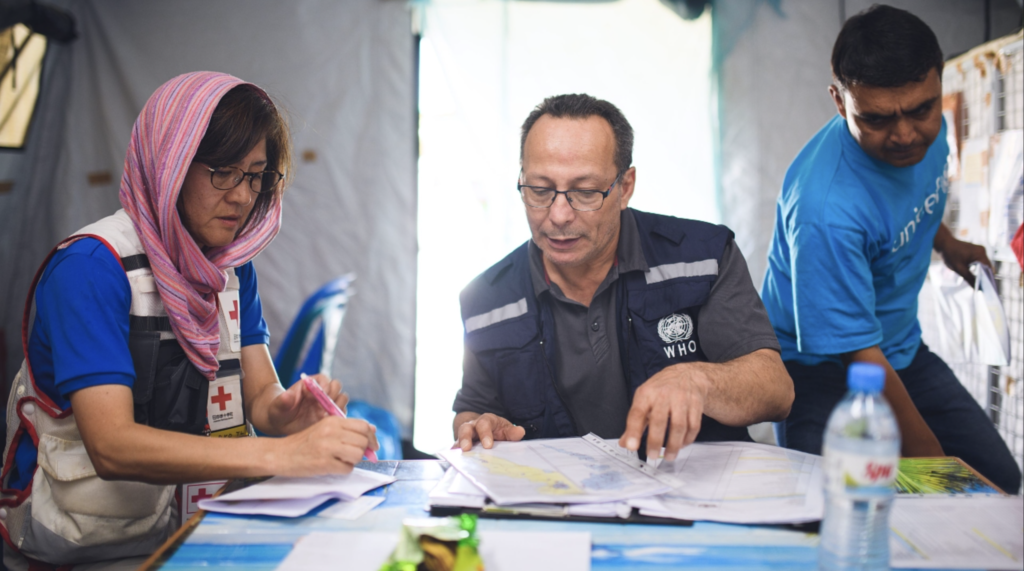
WHO in Action
Funding Fallout and Job Losses
The financial impact of the US withdrawal is already being felt. The WHO has confirmed widespread job losses as it adjusts to funding shortfalls caused by the absence of American contributions. Legal advisers within the organisation have argued that the US remains obligated to settle its arrears, though Washington has dismissed that position.
Trump Pulls U.S. Out of Paris Agreement Again, Reigniting Climate Concerns
The withdrawal also leaves the WHO without the support of one of its most influential members at a time when global health coordination is under renewed scrutiny.
Pandemic Treaty and Future Risks
The decision comes amid efforts by WHO member states to strengthen pandemic preparedness through a new international treaty designed to ensure faster responses and fairer sharing of vaccines and treatments. The treaty was finalised in April 2025, but the US declined to sign on.
Public health experts warn that stepping away from the WHO could weaken global surveillance systems and delay responses to future outbreaks. Questions remain over whether the US will continue to participate in key initiatives, such as the annual global influenza vaccine programme.
A Politicised Legacy
Critics argue the withdrawal reflects domestic political disputes rather than institutional failures. Studies examining the US response to Covid-19 have pointed to delayed lockdowns, inconsistent mask guidance, and politicisation of public health measures as major contributors to America’s high death toll during the pandemic.
Former US public health official Drew Altman previously described the response as a “failure of policy and leadership,” rather than of international coordination.
The WHO confirmed that the US withdrawal will be discussed at its executive board meeting in early February. While American officials say future disease surveillance will be handled through bilateral agreements and partnerships with NGOs, details remain scarce.
As global health threats continue to transcend borders, the long-term consequences of America’s departure from the WHO are only beginning to unfold.