







Auto
Lamborghini Defends Hybrid Strategy After Ferrari EV Backlash Sparks Industry Debate

Luxury automaker Lamborghini is standing firmly behind its decision to abandon plans for a fully electric supercar after rival Ferrari faced heavy criticism over its newly unveiled EV, the Ferrari Luce.
Speaking to CNBC, Lamborghini CEO Stephan Winkelmann said the company’s move to focus on plug-in hybrid electric vehicles instead of all-electric models was “the right way to go” for the brand and its customers.
Lamborghini Shifts Away From Full EVs
Lamborghini had previously explored launching an all-electric version of its planned Lanzador model as well as an electric variant of the popular Urus SUV. However, the automaker recently reversed course amid slowing demand for luxury EVs and growing uncertainty in the high-performance electric vehicle market.
Stephan Winkelmann explained that Lamborghini’s customer base still strongly prefers the emotional driving experience tied to combustion engines and hybrid technology.
“By observing the market, we saw that the acceptance curve for EVs among our customers is not increasing,” he said during the interview.
Instead of going fully electric, Lamborghini is now doubling down on plug-in hybrid technology, blending electric efficiency with the performance and engine sound luxury supercar buyers still demand.
Ferrari Luce Faces Investor and Fan Criticism
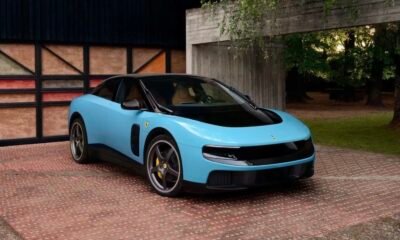
The comments come just days after Ferrari introduced the Ferrari Luce, its first-ever fully electric vehicle, during a major launch event in Rome.
The unveiling triggered immediate backlash from investors, auto enthusiasts, and even former Ferrari executives. Ferrari shares reportedly dropped sharply following the reveal, with analysts pointing to disappointment over both the EV strategy and the vehicle’s unconventional design.
The Ferrari Luce was designed by former Apple executive Jony Ive and features a futuristic, minimalist interior, multiple digital screens, and a softer exterior shape that differs from Ferrari’s traditional aggressive styling.
Critics argued that the design strayed too far from Ferrari’s racing heritage and iconic combustion-engine identity.
Former Ferrari chairman Luca di Montezemolo reportedly criticized the vehicle publicly, while Italian Deputy Prime Minister Matteo Salvini also voiced concerns about the direction of the brand.
View this post on Instagram
Luxury Car Brands Split on EV Future
The growing divide between Ferrari and Lamborghini highlights a broader debate across the automotive industry about the future of high-performance luxury vehicles.
While governments worldwide continue pushing electric vehicle adoption, some luxury automakers are discovering that wealthy performance-car buyers remain emotionally attached to traditional engines and driving dynamics.
Winkelmann emphasized that innovation remains essential but warned against forcing technological changes onto customers before the market is fully ready.
“Innovation is paramount,” he said, “but it should not be innovation for innovation’s sake.”
Industry analysts say Lamborghini’s cautious approach could resonate more strongly with supercar enthusiasts who value sound, power delivery, and mechanical engagement over silent electric acceleration.
What This Means for the Supercar Industry
The contrasting reactions to Ferrari and Lamborghini’s strategies could shape the next phase of the luxury automotive market.
As mainstream automakers continue electrifying their lineups, premium brands may increasingly adopt hybrid solutions rather than fully abandoning internal combustion technology.
For now, Lamborghini appears confident that its hybrid-first strategy aligns better with consumer expectations — especially after Ferrari’s rocky EV debut ignited one of the biggest automotive debates of 2026.