







Religion
Pete Hegseth Sparks Controversy After Quoting ‘Pulp Fiction’ as Bible Verse at Pentagon Prayer

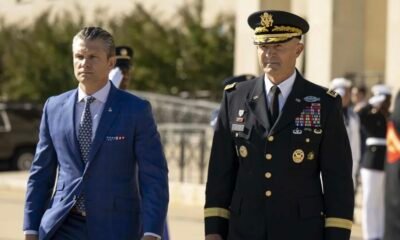
U.S. Defense Secretary Pete Hegseth is facing widespread scrutiny after delivering a Pentagon prayer that closely resembled a famous monologue from Pulp Fiction rather than an actual Bible verse.
The incident occurred during a Pentagon worship session tied to ongoing military operations involving Iran. Pete Hegseth presented the prayer as being inspired by the Book of Ezekiel, specifically Ezekiel 25:17. However, observers quickly noted striking similarities to the iconic speech delivered by Samuel L. Jackson’s character in the film Pulp Fiction, directed by Quentin Tarantino.
The “Verse” That Wasn’t
The original biblical passage from Ezekiel 25:17 is relatively brief and focused on divine justice. In contrast, the version recited by Pete Hegseth mirrored the extended, dramatized monologue popularized in Pulp Fiction, which itself is a stylized and fictional adaptation loosely inspired by scripture.
Hegseth’s version included phrases about “the path of the downed aviator” and “great vengeance and furious anger,” echoing the film’s language almost word-for-word. The speech was reportedly framed as a traditional military prayer used in combat search-and-rescue missions.
Dan Driscoll Refuses to Resign as Pentagon Tensions With Pete Hegseth Intensify
The blending of religious text with cinematic dialogue quickly drew attention online, with critics questioning the appropriateness of using a Hollywood script in a formal government setting.
Pentagon Response and Political Fallout
Following the backlash, Pentagon press secretary Sean Parnell acknowledged that the prayer was “inspired” by Pulp Fiction, though he defended Pete Hegseth against accusations of misrepresentation.
The controversy comes amid heightened political tensions surrounding Pete Hegseth’s leadership, including criticism from lawmakers and ongoing debates over the role of religion in government and military messaging.
Critics argue that the incident reflects a broader trend of blending pop culture with political rhetoric, while supporters claim the message was symbolic and resonated with military personnel.
Religion, Media, and Messaging
Hegseth further fueled debate during a subsequent press briefing, where he invoked biblical references again, this time comparing members of the press to Pharisees, a group frequently mentioned in the New Testament.
His remarks criticized media coverage of U.S. military actions, suggesting that journalists were biased and overly negative. This rhetoric has intensified the already-strained relationship between government officials and the press.
The incident highlights the evolving nature of political communication in the digital age, where references to films, memes, and pop culture often intersect with serious policy discussions.
Whether viewed as a misstep or a calculated rhetorical choice, Pete Hegseth’s remarks have sparked a wider conversation about authenticity, accountability, and the boundaries between entertainment and governance.
As debates continue, the episode serves as a reminder of how quickly a single moment can go viral and reshape public discourse.