





Trump Presidency
Trump Threatens to Block Opening of New Windsor–Detroit Bridge
The project, which cost approximately $6.4 billion, has been fully funded by Canada’s federal government. Ownership, however, is shared publicly between Canada and the state of Michigan, with toll revenues expected to recover costs over time.

Donald Trump has ignited fresh tension with Canada after threatening to block the opening of the Gordie Howe International Bridge, a long-awaited border crossing between Windsor, Ontario, and Detroit, Michigan. The bridge, expected to open later this year, is designed to ease congestion and strengthen one of the most important trade corridors in North America.
Trump’s remarks, posted on social media, argue that Canada has benefited unfairly from the relationship and claim the United States should be “fully compensated” before the bridge is allowed to open. The statement has triggered swift pushback from Canadian officials and American lawmakers alike.
Bombardier in Talks With Ottawa After Trump Threatens Aircraft Decertification
A Critical Economic Link at Risk
The Gordie Howe Bridge is a six-lane crossing built to complement — and relieve pressure from — the heavily trafficked Ambassador Bridge, currently the busiest commercial land crossing between the two countries. Trade worth hundreds of billions of dollars moves annually through the Windsor–Detroit corridor, making the new bridge a cornerstone of cross-border commerce.
The project, which cost approximately $6.4 billion, has been fully funded by Canada’s federal government. Ownership, however, is shared publicly between Canada and the state of Michigan, with toll revenues expected to recover costs over time.
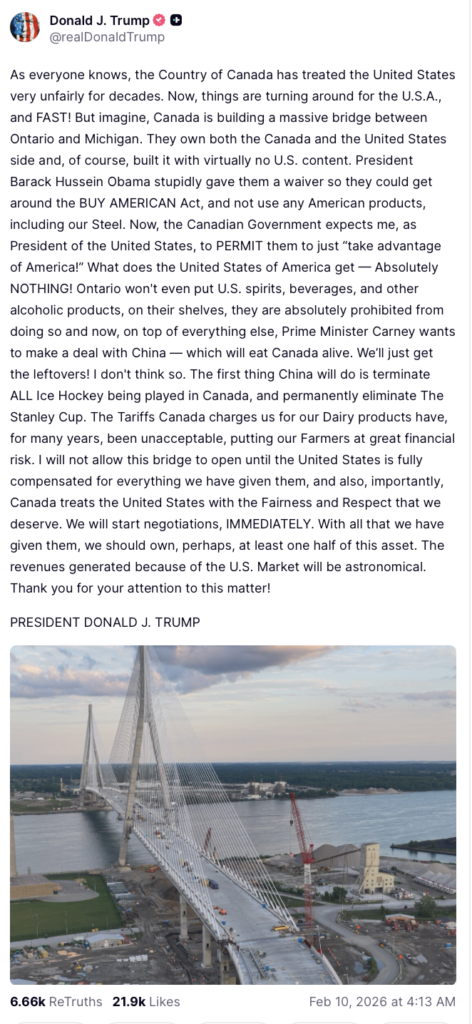
Trump’s threats to Canada on Truth Social
Dispute Over Fairness and Ownership
Trump has criticized the bridge for allegedly lacking U.S. content and suggested the United States should own a larger share of the asset. Local leaders dispute that claim, noting American materials and union labor were used, particularly on the Michigan side.
Windsor Mayor Drew Dilkens dismissed the threat as “factually incorrect” and warned that delaying the bridge would hurt both economies. Michigan officials echoed that concern, emphasizing the project’s role in supporting manufacturing jobs and the auto industry on both sides of the border.
Political Fallout on Both Sides
U.S. lawmakers from Michigan have warned that blocking the bridge would punish American workers and businesses. Critics argue the threat risks undermining years of bipartisan and international cooperation, especially as trade tensions resurface ahead of potential renegotiations of the Canada–U.S.–Mexico trade framework.
While Trump has previously issued economic threats against Canada — including tariffs and certification challenges — many have not been formally implemented. However, experts note the president may have the authority to delay or revoke permits related to border crossings, making the current situation more than rhetorical.
What’s at Stake for Trade and Travel
According to economic assessments, the new bridge is expected to reduce wait times, improve supply chain reliability, and save commercial trucks hundreds of thousands of hours each year. Any delay could disrupt logistics, raise costs for businesses, and strain an already congested border.
As final inspections continue and the anticipated opening approaches, officials in both Canada and the U.S. are urging cooperation rather than confrontation. Whether Trump’s threat becomes action remains unclear, but the episode underscores how infrastructure projects can quickly become flashpoints in broader political and trade disputes.








































Pingback: Trump Calls Canada's PM Mark Carney 'Future Governor'