










Trump Presidency
Trump’s White House Ballroom Deal Raises Transparency Concerns

A newly revealed contract tied to Donald Trump’s proposed White House ballroom project has ignited political and legal controversy, with critics questioning transparency, donor anonymity, and the limits of executive power. The secret contract, made public by the Trump Administration only after a court order following a lawsuit by watchdog group Public Citizen, outlines the framework for what could become one of the most significant structural changes to the White House in decades.
Contract Details Spark Oversight Debate
Documents indicate that the Trump administration had planned the demolition of the East Wing months before publicly disclosing the project. The formal contract governing the ballroom’s construction was signed shortly before demolition began, raising questions about timing and disclosure.
A key concern is the contract’s provision allowing donors to remain anonymous. While conflict-of-interest reviews apply to agencies like the National Park Service, they notably exclude the president and White House officials. Critics argue this creates a loophole that could shield influential contributors from scrutiny.
Legal experts have also flagged the agreement’s structure as potentially limiting congressional oversight. Some lawmakers say the arrangement appears designed to bypass traditional approval processes for major federal projects.
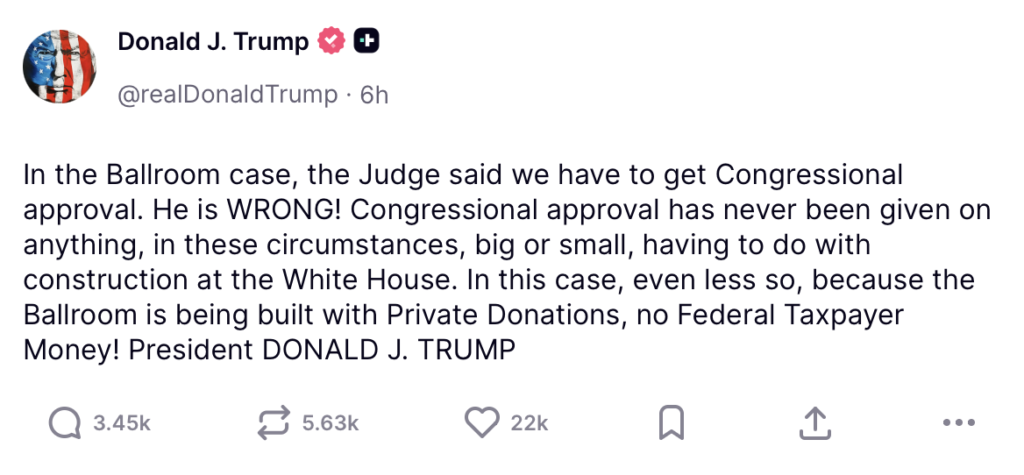
Trump Reacting to Judge Halting Ballroom Work
Anonymous Donations and Corporate Influence
The controversy deepens with reports that major corporations, including Amazon, Google, and Lockheed Martin, are among known contributors, though Trump’s secret contract allows others to remain undisclosed.
Critics argue that anonymous donations to a high-profile federal project could create perceived or real conflicts of interest, especially when donors hold lucrative government contracts.
Senators such as Elizabeth Warren and Richard Blumenthal have publicly called for greater transparency, warning that secrecy undermines public trust in government-funded or government-linked initiatives.
White House Defends ‘Privately Funded’ Project
The Trump White House has defended the ballroom project as a privately funded initiative aimed at enhancing the historic property without burdening taxpayers. Officials say donor anonymity is a standard practice in philanthropic efforts and insist the project represents a “beautification” effort.
Trump has reportedly stated that hundreds of millions of dollars have already been raised for the ballroom, which is expected to serve as a large-scale venue for official events.
Supporters argue that private funding reduces reliance on taxpayer money and accelerates development timelines. However, critics counter that even privately funded changes to federal property should be subject to rigorous oversight.
Trump Confirms ‘Massive’ Underground Military Complex Beneath White House Ballroom
Legal and Political Implications
The legal battle surrounding the ballroom is ongoing. A federal judge previously raised concerns about the project’s structure, though an appeals court has allowed construction to continue while litigation proceeds.
The dispute highlights broader tensions over executive authority, transparency, and the role of private funding in public infrastructure. It also reflects growing scrutiny of how large-scale government projects are planned and executed.
As the case unfolds, the White House ballroom project may set a precedent for how future administrations approach privately funded developments on federal property.