

Trump Presidency
Trump’s Crowd Size Claim Comparing Himself to Martin Luther King Jr. Sparks Fresh Controversy
By contrast, Trump’s own inauguration crowd sizes have long been debated. While no official count exists, independent analyses have suggested attendance was significantly lower than that of Barack Obama, whose 2009 inauguration drew an estimated 1.8 million people.

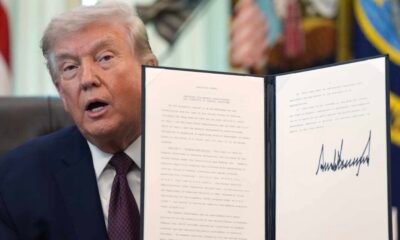
Donald Trump has once again stirred debate after claiming he attracted a larger crowd to Washington, D.C.’s National Mall than civil rights icon Martin Luther King Jr. during the historic March on Washington for Jobs and Freedom. Trump has been indulging in crown comparisons with Barack Obama’s inauguration and now Martin Luther King Jr.
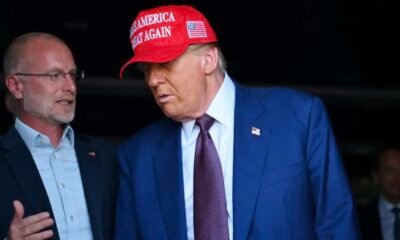
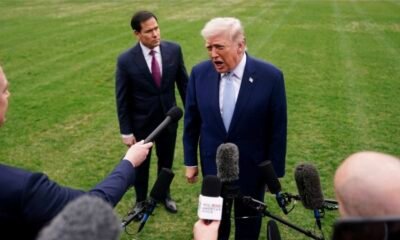
Speaking during an Oval Office press briefing, Trump referenced King’s legendary “I Have a Dream” speech, stating: “He had a million people… I had the same exact crowd. Maybe a little bit more.” The remarks came while Trump discussed renovations to the Lincoln Memorial Reflecting Pool.
Historical Facts vs Political Claims
Trump’s crown comparison comments quickly drew scrutiny, as official estimates from the National Park Service place attendance at the 1963 March on Washington at approximately 260,000 people, not one million, as Trump suggested.
The landmark event, organized by civil rights leaders including Bayard Rustin and A. Philip Randolph, remains one of the most significant gatherings in American history. It played a crucial role in advancing civil rights legislation, including the eventual passage of the Civil Rights Act of 1964.
NAACP Calls for Trump’s Removal Under 25th Amendment in Historic First
By contrast, Trump’s own inauguration crowd sizes have long been debated. While no official count exists, independent analyses have suggested attendance was significantly lower than that of Barack Obama, whose 2009 inauguration drew an estimated 1.8 million people.
View this post on Instagram
Critics Call Out “Distraction Politics”
Political analysts and critics argue that Trump’s repeated focus on crowd comparison and sizes reflects a broader communication strategy. According to commentators, such statements often serve to dominate headlines and shift attention away from policy discussions.
Brandon Weathersby of American Bridge 21st Century noted that while Trump emphasizes optics, many Americans remain concerned about everyday economic issues such as inflation and the cost of living.
Similarly, Marcus Board Jr. described the remarks as “provocative rhetoric designed to generate reaction,” suggesting they may distract from upcoming electoral challenges.
Broader Debate Over Historical Legacy
Trump’s comparison to Martin Luther King Jr. has also reignited conversations about the legacy of the civil rights movement and how historical figures are referenced in modern politics. Critics argue that equating political rallies with the moral and social significance of the March on Washington risks trivializing its impact.
Supporters, however, defend Trump’s remarks as typical of his rhetorical style, emphasizing his focus on personal achievements and public engagement.
Optics vs Legacy
The latest controversy highlights an ongoing tension in political discourse—between spectacle and substance. While crowd sizes remain a recurring talking point for Trump, historians and analysts stress the importance of preserving the factual and symbolic weight of events like the March on Washington.
As debates continue, one thing is clear: comparisons involving figures like Martin Luther King Jr. are unlikely to fade quietly, especially in an increasingly polarized political landscape.