









Trump Presidency
U.S.-Iran Ceasefire on the Brink as Gulf Attacks and Ship Seizure Escalate Tensions

A fragile ceasefire between the US and Iran is rapidly unraveling after a series of maritime clashes in the Gulf region, raising fears of a renewed military conflict. Nearly 50 days into the ongoing crisis, disruptions in the Strait of Hormuz, a critical artery for global energy supply, have intensified uncertainty in international markets. It all started when the US seized an Iranian cargo Ship.
Iran initially declared the strait open to commercial traffic, triggering a sharp drop in oil prices. However, the situation reversed within 24 hours as Tehran reinstated restrictions, citing the continued U.S. naval blockade of its ports. The sudden shift stalled shipping traffic and left vessels vulnerable to attacks mid-transit.
U.S. Seizes Iranian Vessel Amid Escalation
The situation escalated further when US naval forces intercepted and seized an Iranian-flagged cargo ship in the Gulf of Oman. The move drew strong condemnation from Tehran, which warned of retaliation. Donald Trump labeled Iran’s actions a “total violation” of the ceasefire and threatened additional strikes if negotiations fail.
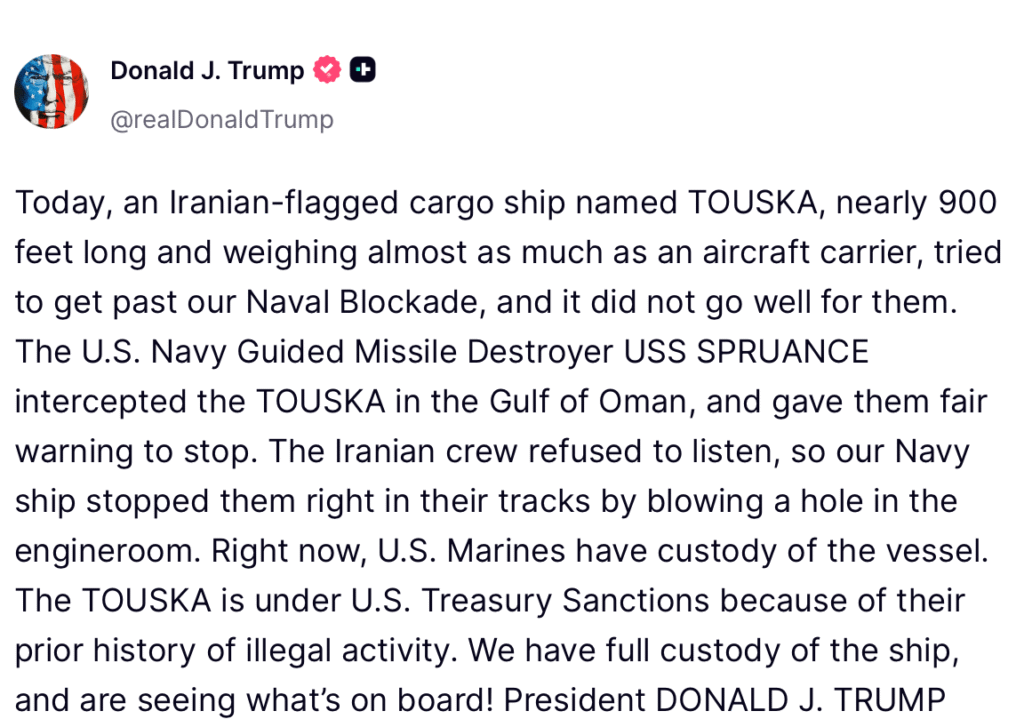
Trump On Truth Social
Naval experts suggest the seized Iranian ship could be held under wartime maritime laws, potentially becoming U.S. property after inspection. The fate of the crew remains uncertain, depending on nationality and involvement in any alleged activities.
Oil Markets React to Supply Shock
Global oil markets responded swiftly to the renewed tensions. Prices surged, with benchmark crude climbing sharply amid fears of prolonged supply disruptions. The Strait of Hormuz typically carries nearly one-fifth of the world’s oil, and ongoing instability has already removed millions of barrels per day from the market.
Energy analysts warn that even if a deal is reached, the cumulative loss, estimated at over 500 million barrels, could take months to recover. The prolonged disruption has already driven oil prices up significantly, increasing inflationary pressures worldwide.
Diplomatic Talks Hang in Balance
Diplomatic efforts to salvage the ceasefire face significant hurdles. A planned round of negotiations in Islamabad remains uncertain, with Iran signaling reluctance to participate due to what it calls “unrealistic demands” from Washington.
Key sticking points include Iran’s uranium enrichment program and the lifting of economic sanctions. While the US has proposed long-term restrictions on Iran’s nuclear activities, Tehran has rejected these terms, deepening the impasse.
Experts warn that both sides appear locked in a cycle of escalation, with limited trust and conflicting objectives undermining progress. The risk of a return to full-scale hostilities remains high.
View this post on Instagram
Global Economic Risks Mount
The ongoing crisis is not just a regional concern; it carries significant global economic implications. The International Monetary Fund has cautioned that prolonged instability in the Gulf could slow global growth and keep energy prices elevated.
Market optimism about a quick resolution is fading, with analysts warning that structural damage to supply chains and energy markets may persist even after tensions ease.
As the ceasefire deadline approaches, the situation in the Gulf stands at a critical juncture. Continued maritime clashes, stalled diplomacy, and rising economic costs suggest that the path forward is uncertain.
Without a breakthrough in negotiations, the world could soon witness a dangerous escalation—one that risks transforming a fragile truce into a broader conflict with far-reaching consequences.



































Pingback: US Bomb Strikes Iran Again Despite Active Ceasefire Talks