



immigration Politics
White House Faces Backlash After Posting Altered Photo of Minnesota Protester’s Arrest

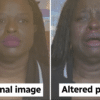
Donald Trump’s White House is facing mounting criticism after posting a digitally altered fake AI image of a Minnesota protester’s arrest that appeared to falsely show her crying, igniting renewed concerns over AI manipulation, misinformation and the ethics of official government communication.
The image, shared on X (formerly Twitter) on Thursday, depicted civil rights attorney and activist Nekima Levy Armstrong being arrested during a protest against U.S. Immigration and Customs Enforcement (ICE) at a St. Paul church. While the original arrest photo showed Armstrong with a neutral facial expression, the version shared by the White House appeared to add tears and visible distress, dramatically changing the emotional tone of the moment.
Altered Image Quickly Flagged Online
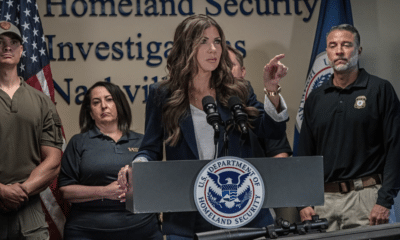
The altered photo was posted roughly 30 minutes after Homeland Security Secretary Kristi Noem shared the original image. The White House caption labeled Armstrong a “far-left agitator,” and the post was later reshared by Vice President JD Vance.
Trump Threatens to Invoke Insurrection Act Amid Anti-ICE Protests in Minnesota
Almost immediately, users on X questioned the authenticity of the image, prompting a Community Notes fact-check stating the photo had been digitally altered. The note linked to the unedited version, confirming Armstrong was not crying at the time of her arrest.
When asked by CBS News whether the image had been manipulated, the White House press office declined to directly address the alteration, instead pointing reporters to a post by spokesman Kaelan Dorr, who referred to the image as a “meme.”
“Enforcement of the law will continue. The memes will continue,” Dorr wrote.
Experts Warn of Growing AI Misinformation Risk
Digital forensics expert Hany Farid, a professor at UC Berkeley and co-founder of GetReal Security, said the image was likely altered using artificial intelligence tools.
“This is not the first time that the White House has shared AI-manipulated content,” Farid said. “This trend is troubling. It undermines public trust and makes it harder for citizens to know what is real.”
The incident adds to growing fears that AI-generated or AI-enhanced images, when shared by official government accounts, blur the line between satire, propaganda and factual reporting.
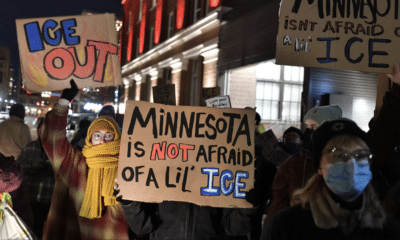
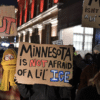
Armstrong’s arrest came amid protests across Minnesota following the fatal shooting of Renee Good by an ICE officer earlier this month. Armstrong, a former president of the Minneapolis NAACP, helped lead a demonstration during a Sunday service at Cities Church, where a local ICE officer reportedly serves as a pastor.
She has been charged under 18 USC 241, a federal statute related to conspiracy against constitutional rights, though she is expected to be released after a judge denied a detention hearing. Two other protesters were also arrested, while a magistrate judge declined to approve charges against journalist Don Lemon, citing protected press activity.
View this post on Instagram
Broader Pattern of Meme Politics
President Donald Trump has previously shared AI-generated imagery, including a recent post depicting him holding an American flag in Greenland alongside senior officials. Critics argue the administration’s use of memes and altered visuals reflects a broader strategy of turning governance into viral spectacle, often at the expense of accuracy.
As governments increasingly communicate through social platforms, the controversy raises a pressing question: Should official state power ever be exercised through manipulated images?