






News
Trump Threatens Iran an AI Post With Him Holding a Gun!

A provocative social media post by Donald Trump has intensified already fragile geopolitical tensions, after the U.S. president shared an AI-generated image depicting Trump holding a gun alongside a threat aimed at Iran. The post, published on Truth Social, featured the phrase “No more Mr. Nice Guy!”, signaling a hardening stance amid stalled nuclear negotiations and escalating regional conflict.
A Digital Message With Real-World Implications
The AI-generated image, coupled with Trump’s statement urging Iran to “get smart soon,” marks a new phase in political communication, where digital symbolism carries tangible geopolitical weight. The timing is critical, as diplomatic efforts between Washington and Tehran have recently faltered, with planned negotiations abruptly canceled.
The standoff is further complicated by the ongoing blockade of the Strait of Hormuz, a vital artery for global energy supplies. Iran has reportedly suggested reopening the route in exchange for easing U.S. restrictions, but the proposal has yet to gain traction in Washington.
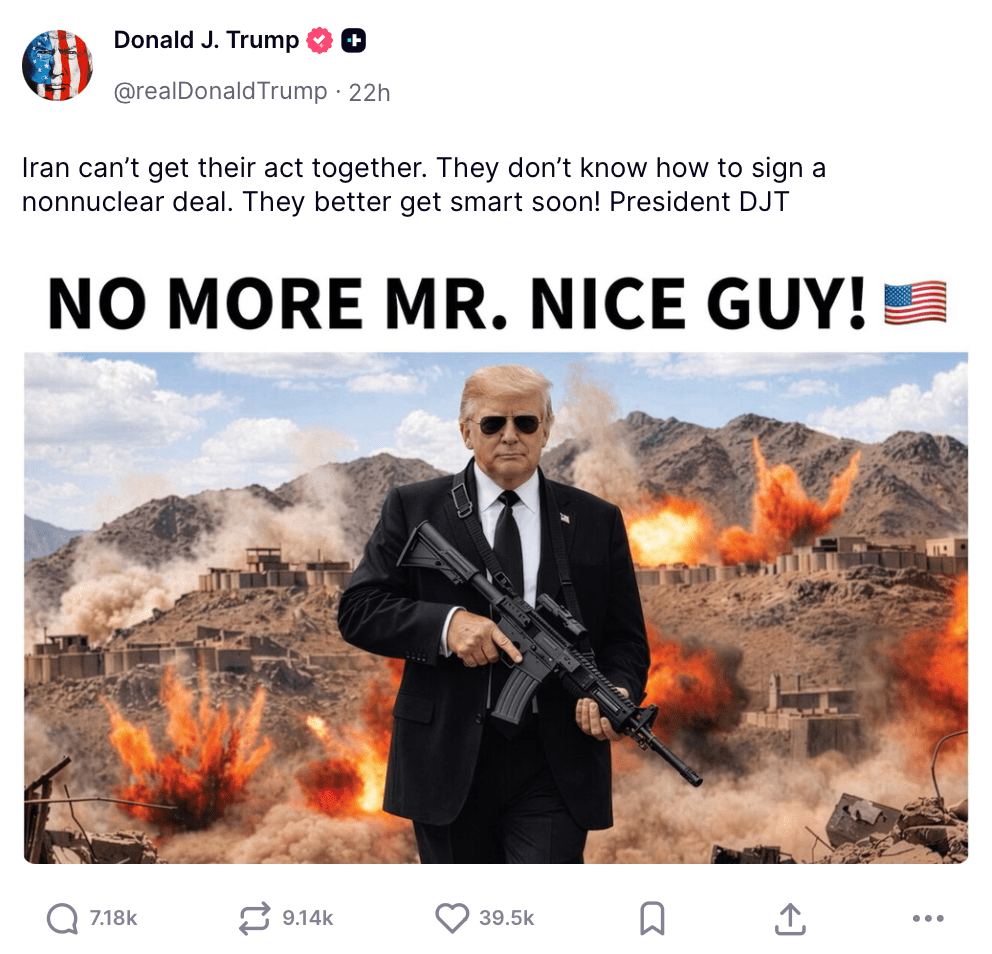
Trump’s AI threat to Iran
Oil Markets React to Rising Uncertainty
Financial markets responded swiftly to the heightened rhetoric. Benchmark crude prices surged, reflecting investor anxiety over potential disruptions in oil supply. Analysts point out that the geopolitical risk premium has grown significantly, especially after the United Arab Emirates recently announced its exit from OPEC, adding further uncertainty to global energy dynamics.
With tensions mounting in the Gulf, even symbolic gestures, such as an AI-generated image, can influence market sentiment and trigger volatility.
Is Iran Winning the Meme War? AI Propaganda and Name Calling Catches Up with Trump
Diplomatic Deadlock and Strategic Posturing
Despite earlier rounds of talks led by U.S. officials, including Vice President JD Vance, negotiations have failed to produce a breakthrough. Trump’s latest threat suggests a shift toward a more confrontational approach, emphasizing U.S. leverage while dismissing Iran’s conditions for dialogue.
White House Press Secretary Karoline Leavitt confirmed that Tehran’s proposal to delay nuclear discussions in favor of immediate de-escalation measures remains under review, but no agreement appears imminent.
The Risks of Escalatory Rhetoric
Trump’s use of AI imagery in geopolitical messaging underscores a broader transformation in how leaders communicate during crises. While such tactics may aim to project strength, they also risk inflaming tensions and narrowing diplomatic options.
In an era where digital content spreads rapidly and shapes public perception, the line between symbolic expression and real escalation is increasingly blurred. For global stakeholders, the concern is not just the message itself, but the potential consequences it may trigger, both politically and economically.
As the U.S. and Iran navigate this critical juncture, the challenge lies in balancing assertiveness with restraint. The stakes extend far beyond rhetoric, affecting global markets, regional stability, and the future of nuclear diplomacy.













































Pingback: Trump Loses His MAGA Megaphone: Karoline Leavitt To Leave