






Aviation
Air India Phuket-Delhi Flight Hits Severe Turbulence, 17 Injured as DGCA Launches Investigation

Indian aviation authorities have launched an investigation after an Air India flight from Phuket to Delhi encountered severe turbulence that injured 17 people and briefly caused the aircraft to lose altitude before landing safely in the national capital.
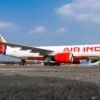
The incident involved Air India flight AI2379, operated by an Airbus A320neo, carrying 137 passengers and eight crew members from Phuket to Delhi. According to the airline, the aircraft experienced a turbulence-related event during its cruise phase, resulting in a temporary change in altitude. Despite the scare, the flight landed safely at Delhi’s Indira Gandhi International Airport, where passengers and crew disembarked without further incident.
17 Passengers and Crew Receive Medical Attention
Air India confirmed that 13 passengers and four crew members sustained injuries during the Phuket-Delhi flight turbulence. The airline said there were no reports of life-threatening injuries.
The injured were initially examined at the airport’s medical facility before several were transferred to Fortis Hospital in Vasant Kunj and Medanta Hospital in Gurugram for further evaluation and treatment.
By Tuesday evening, the airline said five passengers had already been discharged, while the remaining injured individuals continued to receive medical care as a precaution.
The airline reiterated that passenger and crew safety remains its highest priority and said it is extending full assistance to those affected.
Aircraft Reportedly Lost Altitude Mid-Flight
According to preliminary information from aviation sources, the aircraft experienced a sudden loss of approximately 300 feet in altitude while flying over Odisha at around 36,000 feet.
Officials from the Directorate General of Civil Aviation (DGCA) said one cabin crew member suffered a serious injury during the turbulence. The regulator has initiated a detailed technical investigation into the incident.
The aircraft has since been moved to a maintenance hangar, where investigators have secured both the Flight Data Recorder (FDR) and Cockpit Voice Recorder (CVR) to reconstruct the sequence of events.
Air India stated it is cooperating fully with the DGCA and other relevant authorities. Airbus, the aircraft manufacturer, has also been informed of the occurrence.
View this post on Instagram
Passengers Recall Frightening Moments
Several passengers described moments of panic as the aircraft encountered violent turbulence.
One traveller said the cabin shook unexpectedly after the flight had been airborne for around 90 minutes, adding that many passengers had been asleep when the aircraft suddenly began rocking for several minutes.
Another passenger’s family member recounted that people were thrown from their seats during the turbulence, with some suffering head injuries and facial wounds. She described scenes of panic inside the cabin, saying many feared the aircraft might crash.
While such accounts reflect passengers’ experiences, investigators will rely on flight data and cockpit recordings to determine the precise sequence of events.
Civil Aviation Ministry Monitors Situation
Civil Aviation Minister Ram Mohan Naidu Kinjarapu and senior ministry officials visited injured passengers in hospital following the incident.
The Ministry of Civil Aviation said authorities are coordinating with Air India and hospital staff to ensure injured passengers receive appropriate medical care.
In a statement, the ministry confirmed that the aircraft had been grounded pending inspection and that the DGCA’s investigation would examine all aspects of the turbulence event, including aircraft systems, weather conditions and operational procedures.
Understanding Aircraft Turbulence
Turbulence is a common phenomenon encountered during commercial flights and is caused by irregular air movement resulting from atmospheric conditions such as jet streams, thunderstorms, mountain waves or strong wind patterns.
Most turbulence is classified as light or moderate and poses little risk to aircraft, which are engineered to withstand far greater aerodynamic forces than typically experienced during routine operations.
However, injuries can occur when passengers or crew members are not seated or are moving around the cabin during unexpected turbulence. Aviation safety experts consistently recommend keeping seatbelts fastened whenever seated, even after the seatbelt sign has been switched off.
Investigation to Determine Cause
The DGCA’s investigation will analyse cockpit recordings, flight data, weather information and aircraft performance to establish the exact cause and severity of the turbulence.
The findings could also help determine whether additional operational recommendations are needed to enhance passenger safety during unexpected weather events.
While serious turbulence-related injuries remain relatively uncommon in commercial aviation, the Air India incident serves as a reminder of the importance of following in-flight safety instructions and remaining seated with seatbelts securely fastened whenever possible.