

MAGA
Kid Rock Helicopter Stunt Could Derail Army General’s Promotion
The controversy began in late March when two AH-64 Apache attack helicopters assigned to the 101st Combat Aviation Brigade at Fort Campbell conducted a low-altitude maneuver near Kid Rock’s Nashville-area property. Members of the aircrew were reportedly suspended but subsequently reversed after intervention from Defense Secretary Pete Hegseth.

A US Army helicopter stunt involving Kid Rock has exploded into a much bigger controversy, with a four-star Army general’s future reportedly hanging in the balance.
The March flyover near Kid Rock’s Tennessee-area home initially looked like a bizarre celebrity moment. Months later, however, a new report has raised questions about whether pressure to end an Army investigation into the incident contributed to the firing of Army Chief of Staff Gen. Randy George.
The fallout could now threaten the prospects of Gen. Chris LaNeve, who was appointed acting Army chief after George’s removal.
Kid Rock’s Apache Flyover Sparks Investigation
The controversy began in late March when two AH-64 Apache attack helicopters assigned to the 101st Combat Aviation Brigade at Fort Campbell conducted a low-altitude maneuver near Kid Rock’s Nashville-area property.
The aircraft were reportedly involved in a training exercise but deviated from the planned routine, bringing them close to the entertainer’s estate.
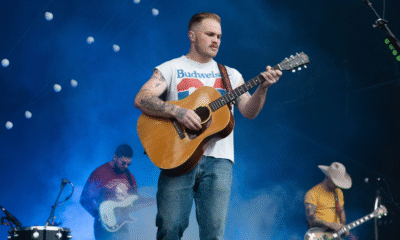
Kid Rock, whose real name is Robert James Ritchie, celebrated the flyover on social media. In a post accompanying footage of the helicopters, he portrayed the maneuver as a sign of respect and contrasted it with California Gov. Gavin Newsom.
The incident quickly drew attention because of the aircraft involved, the unusual location, and questions about whether the crew followed established military safety procedures.
An Army review followed, and the aircrew members were reportedly suspended. The action was subsequently reversed after intervention from Defense Secretary Pete Hegseth.
Report Links Probe to General’s Removal
The controversy took a dramatic turn after The Washington Post reported that LaNeve spoke with George shortly before his removal.
According to sources cited by the newspaper, Gen. Chris LaNeve encouraged Chief of Staff Gen. Randy George to abandon the investigation into the helicopter maneuver, saying Hegseth wanted the probe stopped.
Randy George reportedly resisted because he believed the Army needed to determine whether it had violated safety regulations.
Days later, Pete Hegseth removed George as Army chief of staff without publicly providing a detailed explanation. Chris LaNeve was then named acting chief.
The sequence has fueled speculation that the helicopter investigation may have played a role in Randy George’s dismissal, although the reported connection has not been publicly established as the official reason for his firing.
LaNeve’s Promotion Now Under Pressure
The latest revelations could prove particularly damaging for Chris LaNeve because he has been viewed as a leading candidate to become the Army’s permanent chief of staff.
His nomination, however, has not yet been formally submitted to the Senate, where he already faces opposition.
The Pentagon has rejected suggestions that the nomination process is stalled, telling The Washington Post that it is coordinating with senators and intends to formally submit Chris LaNeve’s nomination.
The reported conversation with George could now put senators under greater scrutiny as they consider whether LaNeve should take permanent command of the Army.
View this post on Instagram
Kid Rock Controversy Gets Bigger
The incident has also intensified a broader debate over military independence and political influence.
Randy George’s removal was already part of a controversial shake-up of senior military leadership under the Trump administration. Critics have accused the Pentagon of politicizing the armed forces, while Hegseth and his supporters have rejected those claims.
For Kid Rock, the Apache stunt has transformed from a viral social-media moment into a national military controversy.
The biggest unanswered question is whether the helicopter incident was simply an unusual training maneuver—or whether the fallout from investigating it helped trigger a chain of events that could ultimately determine who leads the U.S. Army.