










News
US House Passes War Powers Resolution Challenging Trump’s Authority in Iran Conflict
In a 215-208 vote, Republican Representatives Thomas Massie of Kentucky, Brian Fitzpatrick of Pennsylvania, Warren Davidson of Ohio, and Tom Barrett of Michigan broke with their party leadership to support the resolution.

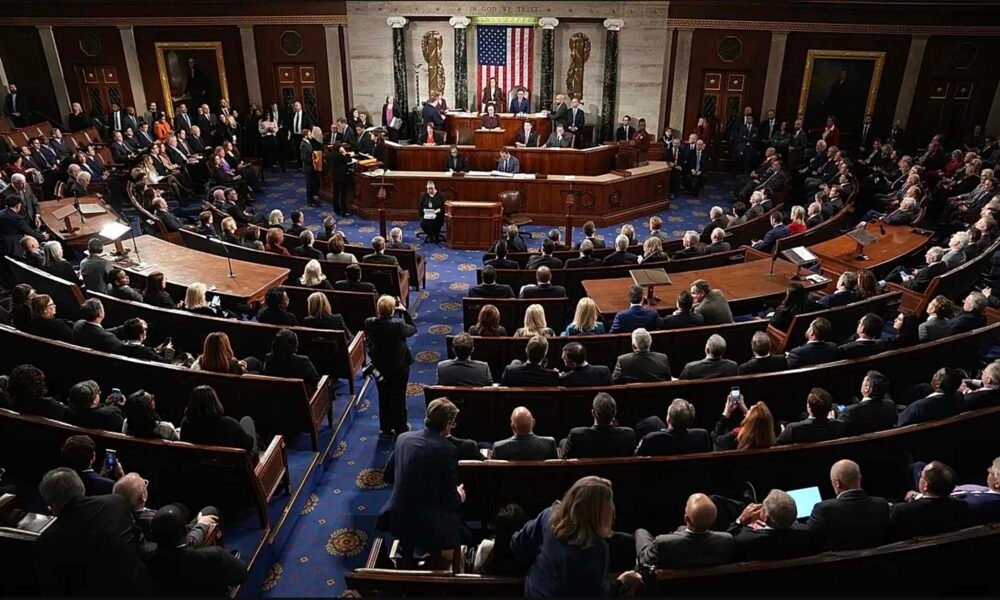
The U.S. House of Representatives has passed a war powers resolution aimed at restricting Donald Trump’s ability to continue military operations against Iran without congressional approval, marking one of the most significant bipartisan challenges to the administration’s foreign policy in recent months.
The resolution passed by a narrow 215-208 vote, with four Republican lawmakers joining Democrats in support of the measure. The vote reflects growing concern among members of Congress about the scope of executive authority in a conflict that has now entered its third month.
Republican Representatives Thomas Massie of Kentucky, Brian Fitzpatrick of Pennsylvania, Warren Davidson of Ohio, and Tom Barrett of Michigan broke with their party leadership to support the resolution.
Growing Congressional Pushback
The US House vote comes after Republican leaders previously postponed consideration of the measure amid concerns that they lacked enough votes to defeat it. Its eventual passage highlights increasing bipartisan frustration over the administration’s handling of the Iran conflict and the lack of a formal congressional authorization for continued military action.
House Democratic leaders, including Hakeem Jeffries, Katherine Clark, and Pete Aguilar, praised the outcome as an important step toward reasserting Congress’s constitutional role in decisions involving war and military engagement.
The resolution now heads to the Senate, where lawmakers have already demonstrated a willingness to challenge the administration on war powers. Earlier efforts in the upper chamber gained support from several Republican senators who joined Democrats in demanding greater congressional oversight of military operations.
Thank you @RepTomBarrett for respecting the Constitution. https://t.co/fLjKiueYU8
— Thomas Massie (@RepThomasMassie) June 4, 2026
Understanding the War Powers Debate
At the center of the dispute is the War Powers Resolution of 1973, a law designed to limit a president’s ability to engage U.S. forces in prolonged hostilities without congressional approval.
Under the legislation, presidents are generally required to seek authorization from Congress if military engagements continue beyond 90 days. Critics of the administration argue that the ongoing conflict with Iran has exceeded that threshold.
The White House has rejected those claims, pointing to a ceasefire that has technically been in place since April. However, repeated violations and sporadic military exchanges have led opponents to argue that active hostilities remain ongoing.
Symbolic but Politically Significant
While the practical legal impact of the House resolution remains uncertain, political analysts view the vote as highly significant. The measure serves as a public demonstration that some Republicans are increasingly willing to oppose Trump on key national security issues.
The president has traditionally maintained a strong influence over congressional Republicans, making defections relatively rare. The vote, therefore, represents a notable shift in the political landscape as lawmakers weigh growing public concerns over the conflict’s costs and consequences.
Iran Conflict Continues to Raise Concerns
The House action comes as diplomatic efforts to end the conflict remain stalled. Although administration officials have repeatedly suggested that negotiations with Iran are progressing, no comprehensive agreement has been reached.
Meanwhile, disruptions in the Strait of Hormuz and rising energy concerns have added pressure on policymakers. Public opinion surveys have consistently shown limited support for prolonged military involvement, particularly as economic concerns remain a key issue ahead of upcoming elections.
As the Senate prepares to consider the resolution, the debate over presidential war powers, congressional authority, and the future of U.S. policy toward Iran is expected to intensify.
















































Pingback: Oil Prices Surge After Trump Declares Iran Ceasefire Over