







Business
Ancient Port, Smart Manufacturing: Ningbo Expands Global Trade Through the Maritime Silk Road
The event reflected how centuries-old maritime connections between Ningbo and Colombo are evolving into modern economic partnerships driven by advanced manufacturing, technology and innovation.

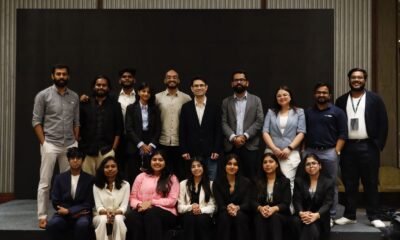
China’s historic port city of Ningbo has showcased its ambitions to become a global hub for smart manufacturing and high-value exports, using the ancient Maritime Silk Road as the foundation for a new era of international trade. The vision was highlighted during the “Encounter & Insight: Dialogue Between Ningbo, China and Colombo, Sri Lanka” event held in Colombo on July 4. The forum brought together government representatives, business leaders and cultural stakeholders from both cities to discuss integrated port-city development, trade cooperation and cultural exchanges.
The event reflected how centuries-old maritime connections between Ningbo and Colombo are evolving into modern economic partnerships driven by advanced manufacturing, technology and innovation.
From ancient maritime trade to AI-powered exports
For centuries, China‘s Ningbo served as one of the most significant departure points on the ancient Maritime Silk Road. Historical records show that merchant ships once carried celadon porcelain, silk, and handicrafts from Mingzhou Port to Sri Lanka and beyond, while gemstones and spices returned through the same route.
Today, the composition of those exports has changed dramatically.
Instead of ceramics and textiles dominating shipments, Ningbo now exports industrial robots, intelligent machinery, digital home appliances, and advanced manufacturing equipment to markets across Asia, Europe, and the Middle East.
Officials highlighted that the city’s exports of intelligent equipment, including industrial robots and robotic arms, recorded significant growth in 2025, while exports of mechanical and electrical products continued to account for a major share of Ningbo’s overseas trade.
The new energy sector has also emerged as a major growth engine, with exports of electric vehicles, lithium batteries and photovoltaic products witnessing sharp increases over the past year.
Smart manufacturing becomes Ningbo’s competitive edge
Rather than relying solely on cost advantages, Ningbo’s manufacturers are increasingly focusing on technological innovation and digital transformation to remain competitive in international markets.
Over the past decade, industrial enterprises across the city have undergone extensive digital upgrades, incorporating automated production systems, flexible manufacturing lines and AI-assisted operations.
Many factories now operate highly automated production facilities capable of running with minimal human intervention, improving productivity while maintaining consistent quality.
Industry observers say this transition has enabled Ningbo manufacturers to move beyond traditional contract manufacturing and establish stronger positions in overseas markets through proprietary technologies and specialized products.
Several local enterprises specializing in advanced materials, industrial inspection technologies and precision engineering have also emerged as key contributors to the city’s export growth.
Colombo serves as a gateway for international markets
Sri Lanka continues to play an important role in Ningbo’s global trade strategy.
With Colombo Port functioning as one of South Asia’s busiest transshipment hubs, products manufactured in Ningbo are increasingly reaching customers across Europe, the Middle East and Africa through the island nation.
During the exhibition held alongside the forum, visitors explored a wide range of products representing Ningbo’s changing export profile.
Among the displays were AI-powered translation glasses, intelligent outdoor equipment, digital household appliances, and smart utility technologies.
Officials noted that Ningbo-made smart water meters are already widely deployed across Sri Lanka, while consumer electronics and smart kitchen products are steadily entering local households.
Cultural exchange complements business cooperation
Beyond commercial ties, organizers emphasized the importance of strengthening cultural understanding alongside economic collaboration.
One of the key announcements during the event was the launch of Sri Lanka’s first “One-Meter Cultural Space,” a compact cultural exhibition concept designed to introduce international audiences to Ningbo’s heritage alongside its technological achievements.
The initiative combines traditional crafts, city history, and modern innovations to present a more comprehensive image of Ningbo to overseas visitors.
Entrepreneurs, designers, and cultural representatives from both countries also shared experiences of cross-border collaboration, highlighting how business partnerships are creating deeper people-to-people connections.
Maritime Silk Road enters a new digital chapter
The Colombo dialogue reflects a broader transformation taking place across China’s manufacturing landscape.
Rather than exporting products alone, cities like Ningbo are increasingly promoting integrated business ecosystems that combine technology, branding, logistics, and after-sales services.
Analysts believe this approach could strengthen China’s position in global supply chains while creating more resilient international partnerships.
As Ningbo continues to build upon its legacy as one of the ancient Maritime Silk Road’s most influential ports, its focus on intelligent manufacturing, digital innovation and cultural diplomacy may serve as a model for future port-city development and global trade expansion.